We have all been there. You are out with friends or in the middle of a workday, and you feel that familiar, rising heat. It starts as a subtle warmth at the nape of your neck and quickly evolves into a concern that distracts you from the moment: “Is my wig slipping? Is there an odor? Can I scratch this itch without anyone noticing?”
For many, the physical sensation of heat and the anxiety surrounding hygiene are the biggest hurdles to wearing a wig with confidence. But here is the good news: discomfort isn’t a requirement of wig wearing. Maintaining a healthy environment for your head is crucial for long-term wear, making Comfort & Protection: Wig Caps, Liners & Scalp Preparation for Optimal Wear an essential foundation for any successful style. By understanding the science of scalp hygiene and upgrading the materials you place against your skin, you can transform your experience from enduring the day to enjoying it.
The Invisible Battle: Why Sweat and Odor Happen
To solve the problem, we first have to understand the biology behind it. Many new wig wearers assume that odor is simply a result of “being dirty,” but that is rarely the case. The real culprit is basic chemistry occurring in a low-oxygen environment.
Your scalp is a micro-biome. Even under the best conditions, it produces sebum (natural oils) and sweat to regulate temperature and protect the skin. When you place a wig over your scalp, you are essentially creating an occluded environment—an enclosed space where airflow is restricted.
Here is the “Odor Chemistry” breakdown:
- Trapped Moisture: Sweat cannot evaporate as quickly as it does on uncovered skin.
- Bacterial Breakdown: Harmless bacteria that live on everyone’s skin begin to break down the sweat and sebum.
- The Result: This biological process releases byproducts that cause that distinct “unfresh” scent.
Understanding this helps us realize that the solution isn’t just “washing more”—it is about material science and airflow management.
Decoding Wig Cap Materials: Nylon vs. Bamboo
When you first start your wig journey, it is natural to pick up a standard dome wig cap from a local retailer like Walmart or a beauty supply store. These are accessible and inexpensive. However, for daily wearers or those in warm climates, these standard caps often contribute to the problem rather than solving it.
The “Plastic Wrap” Effect of Nylon
Most standard drugstore wig caps are made of nylon. While durable, nylon is a synthetic polymer—essentially a plastic derivative. It is hydrophobic, meaning it repels water rather than absorbing it. When you sweat under a nylon cap, that moisture sits on top of your skin, trapped by the heat. It creates a greenhouse effect that accelerates the bacterial breakdown mentioned above.
The Bamboo Upgrade
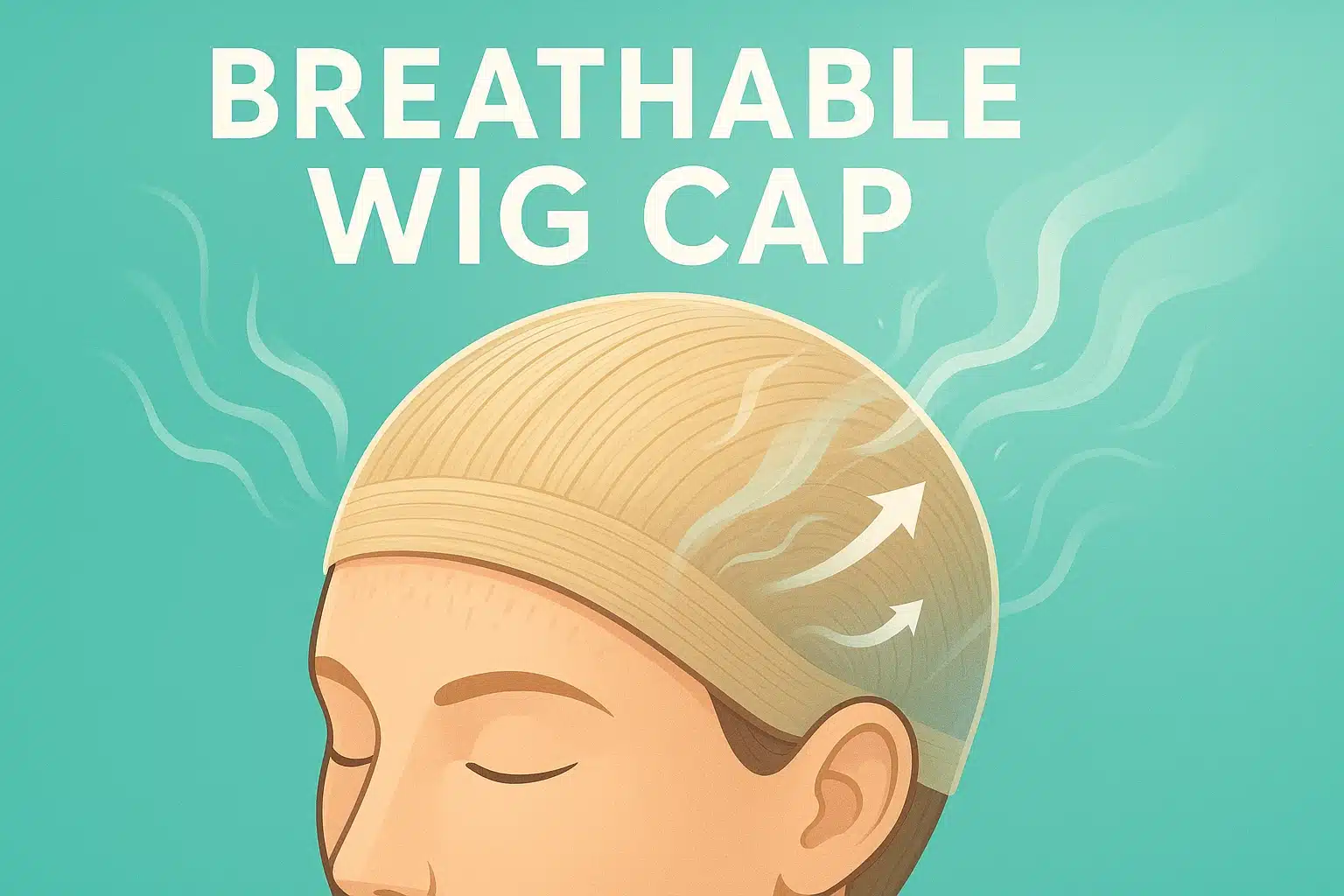
If you are struggling with heat, swapping to a bamboo wig cap can be a game-changer. Bamboo is a cellulose-based fiber with a unique microstructure that allows for capillary action.
- Moisture Wicking: Unlike nylon, bamboo physically pulls moisture away from the skin and disperses it into the fabric, where it can evaporate more easily.
- Thermal Regulation: Bamboo fibers are naturally breathable, allowing heat to escape rather than banking it against your scalp.
- Antibacterial Properties: Bamboo has natural properties that help resist the growth of odor-causing bacteria.
Think of it as the difference between wearing a plastic rain poncho (nylon) versus a high-performance athletic shirt (bamboo/viscose) during a workout. One traps heat; the other manages it.
The “Shield” Method: A 3-Step Scalp Prep Protocol
Once you have the right materials, the next step is preparing the canvas. We recommend a protocol we call the “Shield Method” to protect your skin and prolong the freshness of your wig.
1. Cleanse (The Astringent Step)
Before putting on your cap, ensure your scalp is free of excess oils. A quick swipe with alcohol-free Witch Hazel is excellent for this. It acts as a gentle astringent, removing oil without drying out the skin like alcohol would. It also balances the pH of your scalp, making it less hospitable to odor-causing bacteria.
2. Prime (The Barrier)
Just as you wear antiperspirant under your arms, your scalp can benefit from sweat control. There are specialized scalp antiperspirants and primers designed specifically for wig wearers. These form a micro-barrier that reduces sweat production without clogging pores. This is especially vital for those 12-hour days or humid summer afternoons.
3. Barrier (The Liner)
This is where you apply your bamboo cap or specialized mesh liner. If you have sensitive skin or no bio-hair, consider a “headless” liner or a gel band which lifts the wig slightly off the scalp to encourage airflow channels.
The “No-Sweat” Routine for All-Day Wear
Even with the best preparation, body temperature fluctuates. Here are a few professional insights for maintaining your cool throughout the day.
The Pulse-Point Trick
If you feel your core temperature rising and you cannot remove your wig, head to a restroom and run cold water over the inside of your wrists for 30 to 60 seconds. Your blood vessels are close to the surface here, and cooling them cools the blood circulating through your body, lowering your overall temperature effectively without messing up your hair.
The Hygiene Emergency Kit
Keep a small pouch in your bag with these essentials:
- Oil-blotting sheets: Use these to dab the forehead along the hairline.
- Spare Liner: Changing your wig cap halfway through the day is the equivalent of changing your socks—it instantly resets your comfort level.
- Cooling Spray: A travel-sized mist of water and a drop of menthol or tea tree oil (if your skin tolerates it) can provide instant relief.
Troubleshooting: Is it Sweat or Contact Dermatitis?
Sometimes, the itch isn’t about heat. If you have switched to breathable materials and are keeping your scalp clean but still experience intense itching, you might be dealing with Contact Dermatitis.
This is an allergic reaction to the materials in the wig cap, the wig itself (dyes or latex), or the laundry detergent used to wash your liners. If you notice redness, bumps, or dry patches that persist after the wig is removed, it may be time to consult a dermatologist or switch to hypoallergenic medical-grade wig materials.
Frequently Asked Questions
Does wearing a wig cap make you sweat more?
It depends on the material. A nylon cap can trap heat and increase sweating. However, a high-quality bamboo or mesh liner can actually reduce the feeling of sweat by wicking moisture away from your skin, making you feel cooler and drier than wearing the wig directly on your scalp.
How often should I wash my wig cap?
If you wear your wig daily, your cap should be treated like underwear—washed after every use. This prevents the buildup of oils and bacteria that cause odor and scalp irritation.
Can I use dry shampoo on my wig to stop odor?
Dry shampoo can help mask odors temporarily on the wig fiber itself, but it shouldn’t be used as a substitute for washing your wig or cleaning your scalp. Overuse can cause buildup on the wig cap, blocking the breathable pores of the fabric.
Taking the Next Step in Your Journey
Comfort isn’t a luxury; it’s a necessity for feeling like yourself. By moving away from standard synthetic caps and adopting a scalp-first hygiene routine, you are protecting not just your skin, but your confidence.
As you explore different caps and liners, remember that every scalp is unique. It may take some experimentation to find the perfect combination of cleanser, primer, and material that works for your body chemistry. Treat this discovery process with patience—you are learning the language of your own comfort.