You have likely spent hours researching styles, comparing colors, and envisioning your new look. But there is a hidden component to your decision-making process that is arguably just as important as the hair itself: what happens between the wig and your scalp.
The reality of wig wearing is that even the most exquisite best human hair wigs can feel uncomfortable if the foundation isn’t right. For our clients—whether you are navigating hair loss due to medical reasons or simply seeking an aesthetic change—comfort isn’t a luxury; it is a requirement for daily wear.
Through our nearly two decades of experience, we have learned that the “under-layer” is where confidence is truly secured. This guide moves beyond surface-level aesthetics to provide authoritative advice on wig caps, liners, and scalp preparation methods that ensure your investment feels as natural as it looks.
The Science of Scalp Health and Comfort
Why do we place such heavy emphasis on the layer touching your skin? Research indicates that approximately 83% of women and 65% of men report hair or scalp concerns that impact their wellbeing. When you introduce a wig into this equation, the environment of your scalp changes. Factors like airflow, friction, and temperature regulation become critical.
A healthy scalp correlates directly with comfort. If you are experiencing stress-related hair loss or undergoing medical treatments, your scalp may be hypersensitive. The goal is to create a barrier that protects the skin’s microbiome while ensuring the wig remains secure. Ignoring this step often leads to the two most common complaints among new wearers: itchiness and slippage.
Decoding Wig Cap Constructions
When we talk about “caps,” there are two distinct categories to evaluate: the construction of the wig itself, and the separate liner you wear underneath. Let’s first look at the wig construction, as this dictates the breathability and friction levels you will experience.
Basic vs. Advanced Construction
Traditional wefted caps are durable and provide excellent volume, but they can sometimes lack the softness required for sensitive scalps. For those prioritizing comfort above all else, we often recommend looking at hand tied wigs.
In a hand tied human hair wig, every single strand is knotted individually into a soft mesh cap. This eliminates the rows of wefting found in standard wigs, significantly reducing the weight and friction against the scalp. Because the material stretches and moves with you, these caps are widely considered the gold standard for anyone with total hair loss or extreme sensitivity.
Monofilament Options
Sitting between basic and hand-tied options are monofilament tops. These feature a sheer, soft mesh section (usually at the crown or part) where hair is hand-tied. This provides a cooling effect and the appearance of natural growth, offering a balance of comfort and realistic styling.
The Critical Layer: Choosing the Right Liner
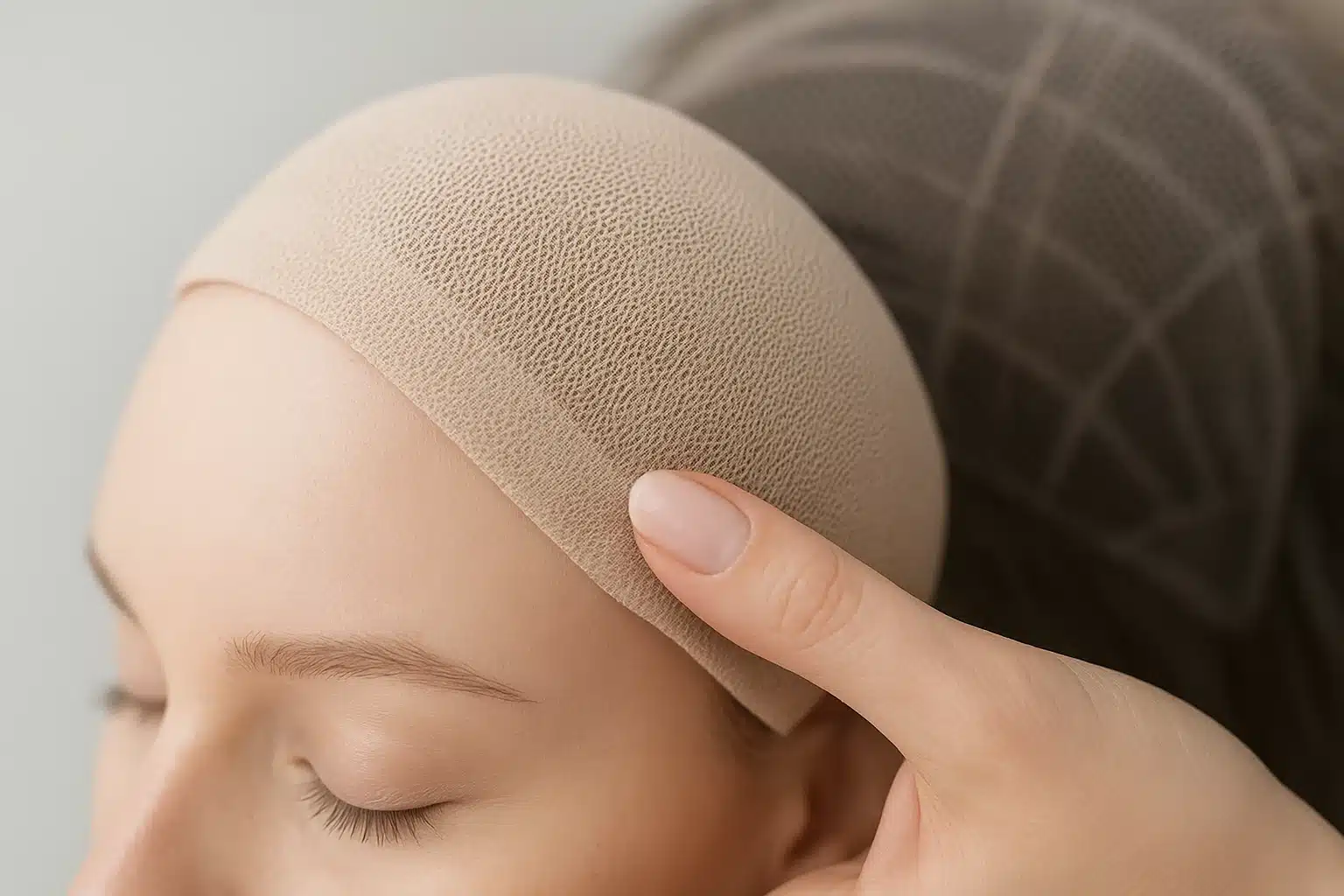
If the wig cap is the structure, the wig liner (often called a wig cap by customers) is the protective shield. Not everyone needs a liner, but for many, it is the key to preventing irritation and keeping the wig sanitary.
Material Matters
The days of relying solely on tight, itchy nylon are over. Modern material science has introduced hypoallergenic options designed for prolonged wear:
- Bamboo & Viscose: These are game-changers for medical hair loss. Bamboo is naturally antimicrobial, wicks moisture away from the skin, and regulates temperature. If you are prone to hot flashes or have a sensitive scalp, this is your best option.
- Mesh & Netting: Ideal for those who still have biological hair. The open weave allows the scalp to breathe and prevents heat from getting trapped, while the friction helps grip natural hair.
- Nylon: The standard choice for occasional wear. It creates a smooth surface and is excellent for containing biological hair, though it can be less breathable than natural fibers.
The Fit Factor
A liner that is too tight can cause headaches (the “wig band” effect), while one that is too loose creates slippage. We see a rise in demand for “3D fit” concepts—liners designed with anatomical shaping rather than a simple tube structure—to enhance stability without pressure.
Scalp Preparation: The Pre-Wear Ritual
Preparing your scalp is just as vital as priming a canvas before painting. Proper prep reduces the risk of folliculitis (inflammation of hair follicles) and keeps your wig cleaner for longer.
- Cleanse and Balance: Use a gentle cleanser to remove excess oils. A buildup of sweat and oil under a wig cap can disrupt the scalp’s pH balance, leading to irritation.
- Moisturize and Protect: If you have no biological hair, apply a lightweight, non-greasy scalp moisturizer. Look for ingredients like aloe or hyaluronic acid. Avoid heavy oils that could transfer to the wig cap and loosen the knots.
- The Barrier Method: For areas of high friction (like the hairline or behind the ears), some wearers utilize silicone grip bands or specialized scalp tapes. These serve a dual purpose: they anchor the wig firmly and physically separate sensitive skin from the wig materials.
Solutions for Biological Hair
One of the most frequent questions we receive is how to wear a wig comfortably over thick or long natural hair. The goal is to create a flat, neutral base to prevent the wig from looking “bumpy” or sliding back.
- The Flat Pin Curl: Dividing hair into small sections and pin-curling them flat against the head distributes volume evenly.
- Cornrows or Braids: For thicker hair, small, flat braids are effective. They provide a sturdy anchor for wig combs or clips to grip into.
- The Wig Grip: A velvet wig grip band is incredibly effective for securing a wig over smooth, fine biological hair that tends to be slippery. It eliminates the need for glues or tapes, which can be damaging to fragile hair.
Frequently Asked Questions
Do I really need to wear a wig cap/liner?
Not necessarily. If you are wearing a hand tied human hair wig with a soft interior, you may find it comfortable enough to wear directly against the skin. However, a liner makes washing your wig easier, as it absorbs the majority of oils and sweat, reducing the frequency with which you need to wash the wig itself.
How do I stop my scalp from itching?
Itchiness usually stems from three sources: a dry scalp, heat buildup, or friction. Ensure you are moisturizing your scalp (when not wearing the wig) and washing your liners after every use. Switching to a bamboo liner is often the immediate cure for friction-based itching.
I’m looking for local advice; shouldn’t I just go to a store?
We understand the instinct to search for “best wig stores near me” or look for local providers like “custom wigs mechanicsville” to try things on. However, physical retailers often have limited inventory. By shopping with a specialized online provider, you gain access to a global inventory of premium caps and liners, along with virtual expert guidance that ensures you get the correct medical-grade materials that local fashion boutiques may not stock.
Will wearing a wig stop my natural hair from growing back?
No, provided you practice good scalp hygiene. In fact, wearing a wig can protect fragile new growth from environmental damage and over-styling. The key is ensuring your scalp can breathe—which is why choosing the right cap construction and liner is essential.
Final Thoughts
Comfort is subjective, but the physics of friction and airflow are not. By selecting the right foundation—starting with a high-quality wig construction and pairing it with breathable, skin-friendly liners—you transform your wig from a mere accessory into a seamless part of your life.
Your confidence relies on how you feel throughout the day, not just how you look in the mirror. If you are currently evaluating which solution is right for you, we encourage you to prioritize what touches your skin.