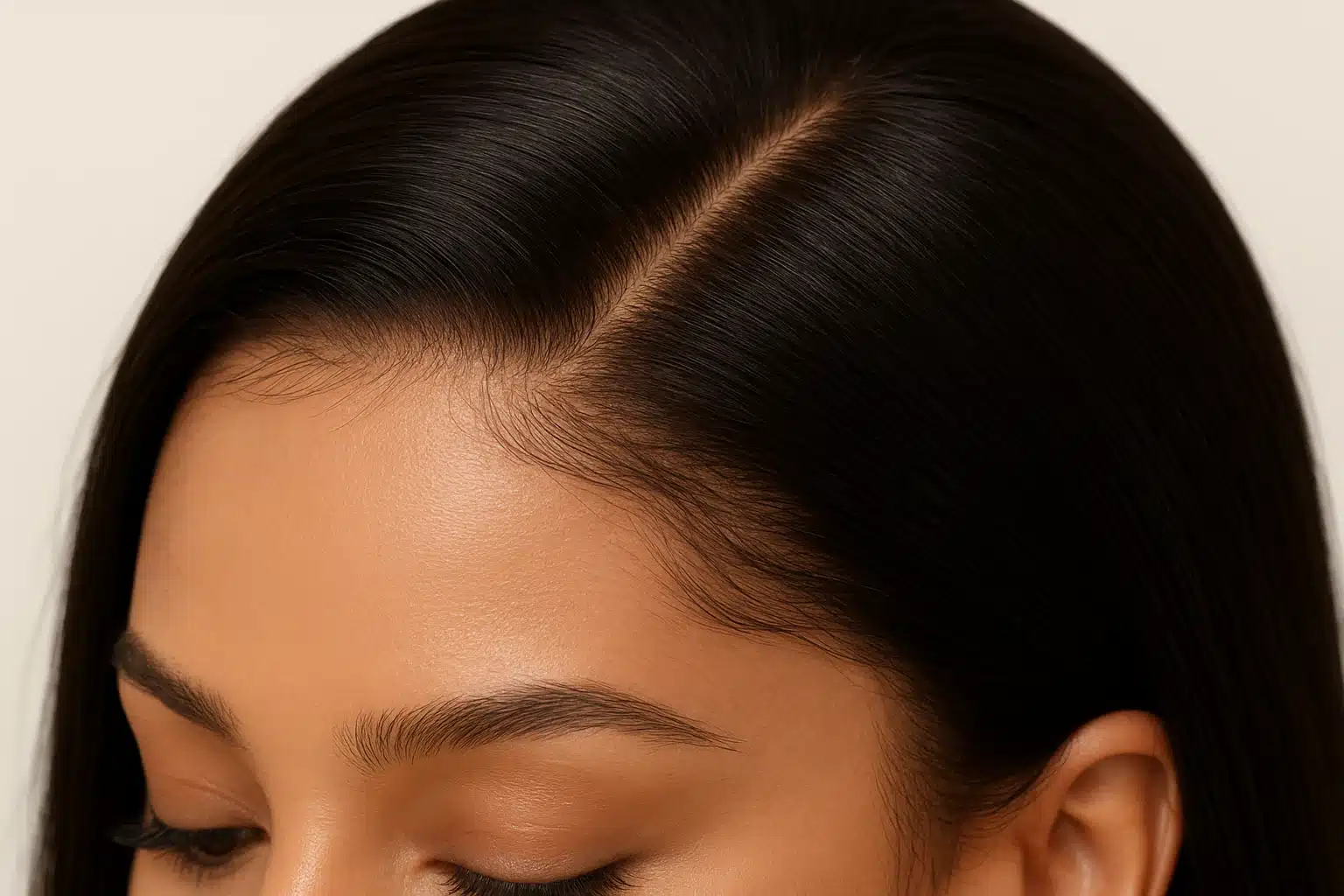
For the discerning wig wearer, the ultimate goal isn’t just finding a beautiful style—it is achieving undetectability. The “tell” of a wig is almost always found at the hairline and the part. When these areas are dense, straight, or overly perfect, they break the illusion of natural growth.
With the global wig market projected to reach nearly $20 billion by the mid-2030s, the demand has shifted from simple utility to high-end customization. Consumers are no longer satisfied with “out of the box” density; they require the techniques that professional stylists use to mimic the randomness of biological hair.
Whether you are evaluating a high-end human hair investment or looking to elevate a synthetic piece, the difference between a “wiggy” look and a seamless appearance lies in four critical areas: knot visibility, hairline density, parting precision, and skin blending.
The Foundation: Selecting the Right Lace
Before a single hair is plucked, the realism of your hairline is dictated by the lace material. The industry has moved rapidly toward High Definition (HD) and transparent Swiss lace, which offer superior melt capabilities compared to traditional, thicker lace bases.
When evaluating your options, consider that HD Lace is the thinnest, most fragile, and most invisible material available. It disappears into the skin almost instantly but requires delicate handling. Swiss Lace is slightly more durable and, when tinted correctly, offers an excellent balance between longevity and realism.
If your goal is a truly undetectable part, ensure the wig construction allows for deep parting (typically 4 to 6 inches). This depth is essential for creating the illusion that the hair is growing directly from your scalp, rather than sitting on top of it.
The Chemistry of Realism: Bleaching the Knots
If you look closely at the base of a hand-tied wig, you may see tiny black dots where each hair strand is secured to the lace grid. These knots are the most significant giveaway that you are wearing a hair system.
To eliminate this visual friction, professionals use a chemical process known as bleaching the knots. By carefully applying a lightening agent to the underside of the lace, the dark knot is stripped of color, turning a light blonde or translucent shade. When placed against your skin, these lightened knots become invisible.
The Professional Approach to Bleaching
While many guides suggest this as a DIY project, it requires precision. Over-bleaching can compromise the integrity of the knot, leading to premature shedding. The goal is to lift the color just enough to hide the knot without weakening the root.
- Tip: If you are hesitant to use chemicals, or if you are working with a synthetic wig where bleaching is impossible, the “grid method” using a dense concealer on the inside of the lace can mimic this effect temporarily.
Sculpting the Hairline: The Art of Plucking
Biological hair does not grow in a solid, dense line across the forehead. It graduates from fine, sparse hairs into thicker density. Most wigs, however, are manufactured with a uniform density to ensure longevity. To correct this, we must simulate natural graduation through plucking.
This process involves removing excess hair from the hairline to reduce density and create a staggered, irregular edge.
Creating a Gradient Density
- Sectioning: Separate the first quarter-inch of the hairline from the rest of the hair.
- The Canvas: Pin the wig to a canvas block head to visualize the curvature.
- Tweezing: Using high-quality slanted tweezers, remove hairs sporadically. Never pluck in a straight line. The objective is to create “valleys and peaks” that mimic a natural growth pattern.
- Expert Insight: The goal is to see a bit of the lace (which will look like scalp) between the hairs at the very front. This transparency is what tricks the eye into seeing natural growth.
Blending and Tinting: The Skin Match
A seamless transition requires that the lace matches your skin tone perfectly. While transparent lace is a great start, it often appears too ashy or white against warm or dark skin tones.
Lace Tinting is the solution. Tinting sprays or mousse can be applied to the underside of the lace to deposit pigment that matches your complexion. Alternatively, careful application of your daily powder foundation along the part line can bridge the gap between the textile and your skin.
For those who integrate hairpieces with their biological hair, color matching is equally vital. Whether you are blending a topper or looking for the best hair extensions for thin hair, the principle remains the same: the transition point must be invisible. If the texture or color shifts abruptly at the root, the illusion fails.
The Finishing Touches: Baby Hairs and Parting
The final step in customization is styling the fine hairs around the perimeter, known as baby hairs. When done correctly, these soften the harsh edge of the lace and cover any lifting that might occur during daily wear.
Styling Baby Hairs for Realism
Avoid the heavy, dramatic swoops often seen in highly stylized editorial looks if your goal is everyday naturalism. instead, trim a very thin section of hair at the temples to about half an inch. Use a light mousse or edge control to sweep them softly back or down, mimicking the shorter breakage often found at the hairline.
Defining the Part
A “plucked part” is just as important as a plucked hairline. Often, the parting space on a wig is too tight. By plucking a clear, clean line down your desired part, you create the “scalp” visibility necessary for a realistic look. Finish this by applying a small amount of concealer with an angled brush directly to the exposed lace in the part to highlight the “scalp.”
Maintenance and Longevity
Achieving a natural look is one thing; maintaining it is another. Product buildup (glue, gel, makeup) on the lace can create a dark, grimy line that ruins the illusion you worked so hard to create.
Proper cleaning is non-negotiable. Alcohol-free removers should be used to clean the lace without drying out the hair. Furthermore, understanding how to care for human hair wig fibers ensures that the hair remains hydrated and the knots stay tight. When hair becomes dry and brittle, it breaks off at the root, leaving bald patches in your carefully customized lace.
Frequently Asked Questions
Can I bleach the knots on a synthetic wig?
No. Synthetic fiber is plastic and will not lift with bleach; the chemicals will likely destroy the fiber. For synthetic wigs, rely on plucking and using the concealer method on the inside of the lace to hide the knots.
How do I stop the lace from lifting during the day?
If you prefer a glueless install, ensure your wig has an adjustable elastic band sewn inside. This pulls the lace flat against the head without adhesive. For added security, a light layer of melting spray or strong-hold hairspray along the hairline can keep the lace flush against the skin.
Is it better to cut the lace in a straight line or jagged?
Always cut the lace using pinking shears or manual jagged motions (tiny zig-zags). A perfectly straight cut is easier for the eye to detect, whereas an irregular line blends better with the natural texture of the skin.
How much hair should I pluck?
Start with less than you think. You can always remove more hair, but you cannot put it back. Step away from the mirror frequently to assess the density from a distance.
Conclusion
The journey to a natural hairline is a balance of art and technique. By selecting the right base materials and applying these customization principles—bleaching, plucking, and tinting—you transform a manufactured product into a personalized extension of yourself. At Wig Superstore, we believe that the best wig is the one that gives you the confidence to walk into any room without a second thought about your hairline.