Imagine the scenario: You’re at a windy outdoor event, or perhaps leaning in for a hug, and that sudden, sinking feeling hits you—is my wig shifting? For anyone new to wearing hair, the fear of a “wardrobe malfunction” is the number one barrier to confidence. For years, the industry standard for security was heavy adhesive: messy glues and tapes that promised a stronghold but often came at the cost of your edges and your patience.
But the landscape of hair replacement has evolved. You no longer have to choose between a secure fit and the health of your scalp. By understanding the mechanics of friction and tension, and mastering Seamless Wig Blending & Realistic Hairline Techniques, you can achieve a flawless look that stays put all day—completely glue-free. This guide will walk you through the science of the “glueless” install and the tools you need to wear your hair with absolute freedom.
The Physics of Security: Why Wigs Stay On
Before we dive into the “how-to,” it is vital to understand the “why.” Many beginners believe that without a sticky agent, a wig is just balancing precariously on the head. In reality, a secure glueless install relies on two physical principles: friction and tension.
Friction vs. Adhesion
Adhesion (glue) chemically bonds the lace to your skin. It’s secure, but it’s invasive. Glueless methods replace adhesion with friction. The goal is to create a surface between your biological hair (or scalp) and the wig cap that resists sliding. This is why wearing a wig directly over silky, fine biological hair often leads to slippage—there isn’t enough texture to “grab” the wig.
The Role of Tension
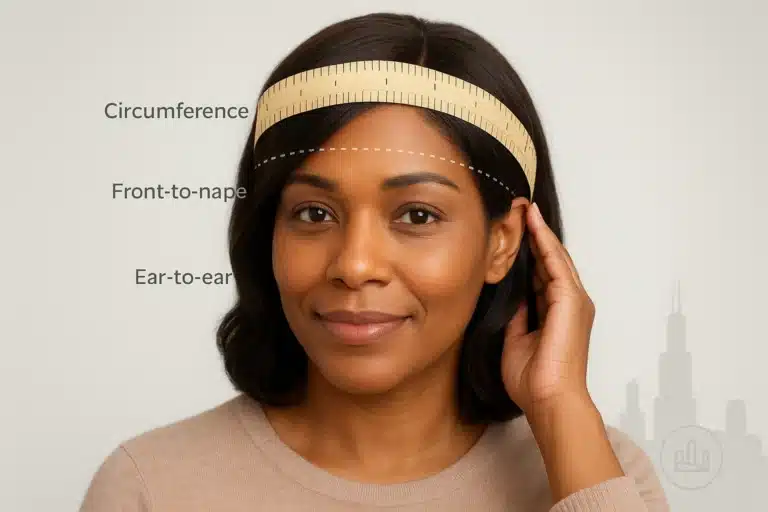
Tension refers to the snugness of the fit. A glueless wig must rely on its internal structure—specifically the adjustable straps at the nape and the elasticity of the cap—to hug the circumference of your head. The “aha moment” for most wearers comes when they realize that security isn’t about pasting the wig down; it’s about creating a custom mold that fits their unique head shape perfectly.
Foundation First: The Secret is Underneath
If you built a house on a hill, it would eventually slide. The same logic applies to your wig. The number one cause of a shifting wig isn’t the wind—it’s a bulky foundation.
To ensure your wig sits flat and secure, you must reduce the volume of your biological hair as much as possible.
- The Flat Twist or Braid: For those with longer hair, creating small cornrows or flat twists straight back allows the wig to sit closer to the scalp. This reduces the “dome” effect that causes wigs to rock back and forth.
- The Wig Cap: A nylon wig cap does more than just contain your hair; it acts as a friction barrier. It smooths out the texture of your braids and provides a uniform surface for your wig to grip.
The Glueless Toolkit: A Matrix for Every Lifestyle
Not all glueless methods are created equal. Your choice of tools should depend on your daily activity level. Here is a breakdown of the non-adhesive tools available to you.
1. The Velvet Wig Grip (The MVP)
For 90% of daily wearers, this is the game-changer. A wig grip is a headband made of double-sided velvet.
- How it works: The direction of the velvet nap creates intense friction. One side grips your skin/hair, and the other side grips the inside of the wig cap.
- Best for: Daily wear, office work, and anyone prioritizing comfort. It eliminates the need for tight clips or combs that can irritate sensitive scalps.
2. The Elastic Band Method
If you need your frontal to lay completely flat without glue, the elastic band is your best friend.
- How it works: An adjustable elastic band is sewn inside the wig, connecting near the ear tabs. This pulls the lace frontal down flush against your forehead using tension from the back of the head.
- Best for: Lace front wigs where you want that “melted” look without the chemical melt. It provides the security needed for windy days or active movement.
3. Temporary “Melting” Sprays
These are often confused with glues, but they are actually strong-hold hairsprays designed to dissolve with water.
- How it works: You spray a thin layer along the hairline, press the lace down, and tie it with a scarf until dry. It creates a temporary bond that is tacky but not gummy.
- Best for: Special occasions where you want a high-definition, undetectable hairline for photos, but want to remove the wig easily at night.
Visual Blending: The “What Lace?” Technique
Security keeps the wig on, but blending makes it undetectable. A glueless install is only successful if the hairline mimics nature.
The Zig-Zag Cut
Factory-made wigs often come with excess lace cut in a straight line. Nothing in nature grows in a perfectly straight line. When trimming your lace, use small scissors (or pinking shears) to cut a jagged, irregular line that follows your natural hairline shape. This “imperfection” helps diffuse light and makes the edge of the lace disappear against your skin.
Tinting and Camouflage
Lace is a fabric, and it usually comes in a neutral shade that may not match your skin tone.
- The Hack: Use a powder foundation that matches your skin tone and lightly brush it onto the inside of the lace frontal. This ensures that when the lace sits on your forehead, it blends seamlessly rather than appearing as a greyish or chalky line.
Step-by-Step: Your Daily Installation Ritual
- Prepare Your Base: Secure your biological hair flat and put on your wig cap. Ensure the cap is positioned exactly where you want your hairline to start (usually 4 fingers width from your eyebrows).
- Apply Your Grip: Place your velvet wig grip just behind your hairline. It should feel snug but not headache-inducing.
- Position the Wig: Hold the wig by the ear tabs and flip it over your head, aiming the front of the wig at your forehead first, then pulling the back down over the nape.
- Align the Ear Tabs: Check the hard ear tabs on the sides. They should sit level and close to your temples but never over your ears. If they are over your ears, the wig is too big or positioned too low.
- Secure and Melt: Fasten the adjustable straps at the nape. If using a temporary spray, apply it now, tie down with a silk scarf for 10 minutes, and then remove for a flawless finish.
Troubleshooting Common Glueless Glitches
Q: My wig keeps sliding backward throughout the day.
A: This usually means the circumference is too loose or the wig grip is dirty. Oils from your skin can reduce the friction of the velvet grip. Wash your grip regularly, and tighten the adjustable straps at the nape of the wig by half an inch.
Q: The lace is lifting at the corners
.A: This is common with glueless installs. You can use a tiny dot of got2b gel or a similar non-adhesive styling gel just at the ear tabs for extra hold, or sew an elastic band inside the wig to pull those corners flat.
Q: It looks “wiggy” at the top.
A: “Wiggy” usually means too much volume at the root. Use the heat from your hands (or a warm curling iron, carefully) to press the hair at the part line flat. A flat installation is key to realism.
Continuing Your Journey
Mastering the glueless install is a skill that improves with time. The first few times might take twenty minutes; eventually, it will take two. By relying on friction and proper fit rather than adhesive, you are protecting your natural hair and investing in a routine that is sustainable, comfortable, and undeniably beautiful. Remember, the goal isn’t just to wear a wig—it’s to wear it with such confidence that the world sees only you.