If you live in Southwest Missouri, you already know the unique wardrobe challenges our seasons bring. Between the intense humidity of an Ozark summer and the heavy wool coats required for our freezing winters, keeping your hair looking flawless is a year-round battle. But when you are exploring alternative hair—whether due to medical hair loss, thinning, or simply wanting a fresh, effortless style—the stakes feel even higher. You are suddenly faced with a confusing choice: spend a small fortune at a local salon, or risk buying a plastic-looking hairpiece that frizzes after a week.
When navigating alternative hair for medical needs, alopecia, or daily fashion, exploring the ultimate guide to the best wig stores in Springfield, MO allows shoppers to balance in-person boutique fittings with the vast inventory and budget advantages of specialized online wig retailers. Today, we’re going to demystify the best-kept secret in the alternative hair world: heat-friendly synthetic wigs. We will show you exactly how they work, how to care for them, and how to shop for them strategically in the Springfield area.
Demystifying Wig Fibers: What Actually Makes a Wig Look Real?
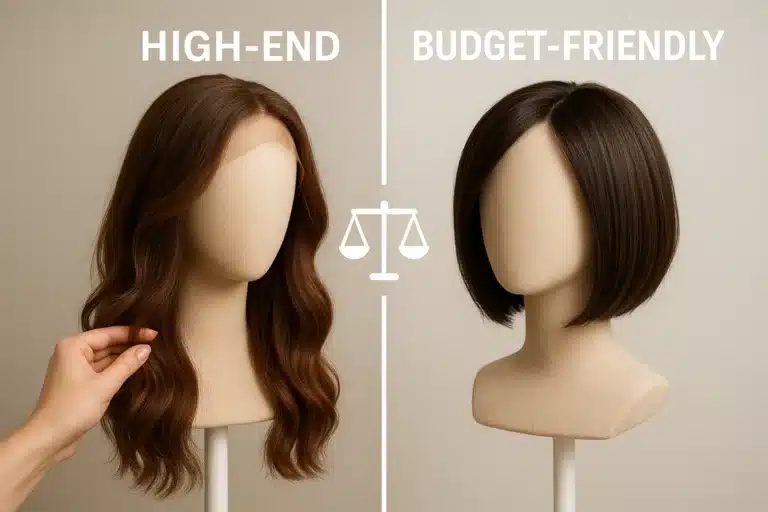
Before you step foot in a boutique or click “add to cart,” it’s crucial to understand what you’re actually buying. Wigs generally fall into three distinct categories, and understanding the cost-per-wear equation for each will transform how you shop.
Traditional Synthetic Hair
Traditional synthetic wigs come pre-styled and possess “style memory,” meaning they bounce back to their original shape after washing.
- The Catch: They have zero heat tolerance. If you open a hot oven door while wearing one, the burst of heat can permanently melt the fibers.
- Cost & Lifespan: Typically $50–$150, lasting 3–6 months with daily wear.
Human Hair Wigs
Human hair offers the ultimate styling versatility and longevity, looking and moving exactly like biological hair.
- The Catch: They require the exact same daily maintenance as biological hair (blowouts, heat styling, color upkeep) and come with a steep price tag. When factoring in a $1,200 initial cost plus salon upkeep, you’re looking at roughly $6.50 per day over six months.
- Cost & Lifespan: $800–$3,500+, lasting 1–3 years.
Heat-Friendly Synthetic Fibers
This is the “sweet spot” for most shoppers. Engineered with specialized modacrylics and high-heat polymer blends (often labeled as Tru2Life® or HD fiber), heat friendly synthetic wigs offer a natural matte finish that eliminates the dreaded “plastic shine” of older synthetics.
- The Catch: They require specific, low-heat styling techniques to maintain their texture.
- Cost & Lifespan: Ranging from $80–$280. With proper DIY maintenance, the cost-per-wear drops to an incredibly affordable ~$0.85 per day over six months.
The “Glass Transition” Secret: How to Style Heat-Friendly Wigs
The most common frustration beginners face is running a curling iron through their new heat-friendly wig, dropping the curl, and watching it fall completely straight.
To understand why this happens, we have to look at the “Glass Transition” principle. Heat-resistant synthetic fibers are made of polymers. When you apply heat, the polymer becomes pliable. But—and this is the crucial part—the shape doesn’t lock in until the fiber cools completely back to room temperature. If you drop the curl while it’s still hot, gravity will pull the pliable plastic straight.
The 4 Golden Rules of Thermal Synthetic Styling
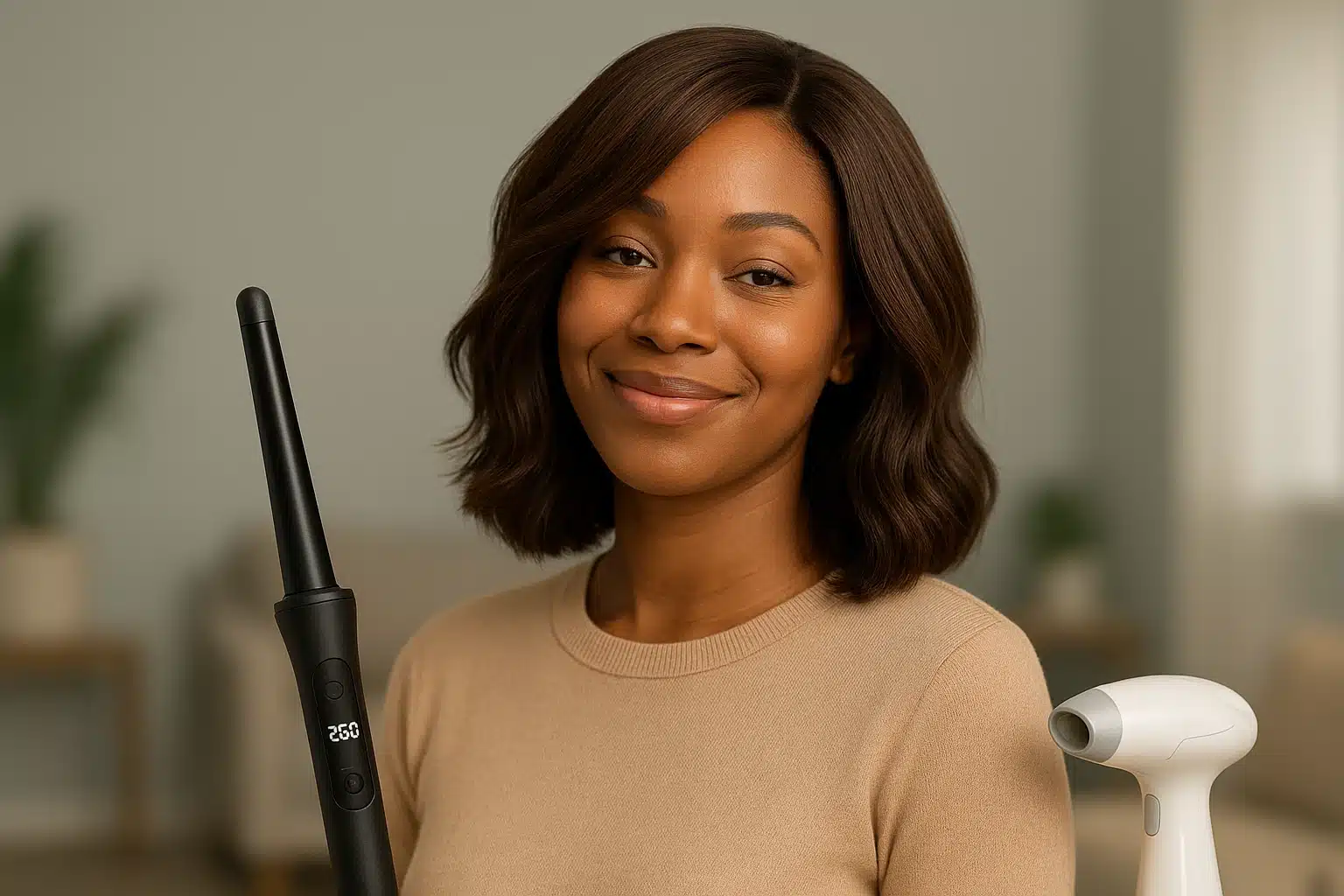
- Verify Your Temperature: Never guess your heat. Use styling tools with a digital dial locked safely in the “Sweet Spot” of 260°F to 280°F. Anything above the 350°F maximum limit enters the “Melt Zone,” where the fiber coating degrades and permanently melts.
- The Pin & Cool Rule: After curling a section of hair, slide it off the barrel and hold the curl coiled in the palm of your hand (or secure it with a metal bobby pin). Wait 3 to 5 minutes until it is completely cool to the touch. This locks the polymer bonds into their new shape.
- Use a Water Barrier: Lightly mist the hair with cool water before running flat irons or curling wands through it. This acts as a protective barrier against dry friction.
- Schedule Weekly Resets: Unlike standard synthetic hair, heat-friendly fibers need heat to survive. Running a ceramic flat iron at 250°F down the nape of the neck once a week acts like an iron on a wrinkled shirt, smoothing out friction crimping.
Beating “Friction Frizz”: Daily Care and the Steamer Revival
If you’ve ever worn a wig in the winter, you’ve likely experienced “friction frizz”—that ratty, tangled mess that forms at the nape of the neck where the hair rubs against high collars, scarves, and wool coats.
Proper wig care is your first line of defense. Always wash your wig in a lukewarm or cold water bath using a sulfate-free synthetic shampoo. Let it soak for 10 minutes, never rub or twist the fibers, and allow it to air dry naturally on a hollow wig stand.
But what happens when the nape inevitably gets frizzy? You don’t need to throw the wig away. You can perform a professional-level restoration at home in about five minutes.
The Handheld Steamer Trick
Proper synthetic wig care often involves a simple $20 handheld clothes steamer. Secure your wig to a canvas block head. While holding the hair taut, direct the steam nozzle over the frizzy section while simultaneously combing through it with a wide-tooth metal comb. The gentle steam heat perfectly relaxes the tangled polymer bonds without risking a total melt, smoothing the fiber back to its original silky state.
The Hybrid Shopping Strategy: Navigating Southwest Missouri
So, where do you actually buy these wigs? Springfield shoppers often feel forced to choose between the personalized care of a local salon and the budget-friendly variety of the internet. The smartest buyers use a hybrid approach.
Local Brick-and-Mortar Boutiques
Springfield has several notable in-person options. Boutiques like Brigitte’s Wig Boutique excel at personalized medical hair loss consultations and custom fittings, while Celebrity Hair Solutions offers an expansive 1,700-square-foot showroom. If you’re willing to take a short drive, the Freeman Health Pink Door Boutique in Joplin specializes in compassionate cancer care fittings.
These local stores are brilliant for your very first step: understanding cap construction. You can feel the difference between a breathable Basic Wefted cap (perfect for humid Ozark summers), a natural-looking Lace Front, or a Monofilament Top that mimics a realistic scalp.
Expanding Your Radius Online
While brick-and-mortar stores are excellent for sizing and discovering which cap constructions feel most comfortable against your scalp, local storefronts carry overhead costs that are often reflected in their retail prices. Furthermore, physical stores simply cannot stock every color variation of every style.
This is why many savvy Springfield locals adopt a hybrid strategy: they visit local shops to get professionally measured and discover which cap styles they prefer, then they turn to trusted online specialists like Wig Superstore to actually make their purchase. Shopping online provides total privacy, access to massive inventories of heat-friendly styles, full colorway options, and significantly lower markups.
Frequently Asked Questions (Beginner’s Guide)
Why didn’t my heat-friendly wig hold a curl?
You likely didn’t let it cool! Synthetic fibers only lock into a new shape once they return to room temperature. Always pin the curl to your head or hold it in your hand for 3-5 minutes until completely cool before letting it drop.
What temperature setting is safe for heat-friendly synthetics?
The ideal safe styling zone is between 240°F and 280°F. Never exceed 350°F, as this is the threshold where the synthetic coating will begin to permanently melt and degrade. Always use a tool with a precise digital temperature dial.
How do I stop synthetic hair from getting ratty at the collar line?
This is “friction frizz,” caused by the hair rubbing against your clothing. To prevent it, lightly comb the nape with a wide-tooth metal comb throughout the day. To fix it once it happens, use the handheld steamer trick or a flat iron set to 250°F to smooth out the damaged polymer bonds once a week.
Next Steps on Your Hair Journey
Experiencing hair loss or diving into the world of alternative hair can feel incredibly vulnerable, but it doesn’t have to be overwhelming. By understanding the science behind heat-friendly synthetic fibers and learning how to protect your investment from friction frizz, you are already miles ahead of the average shopper.
Take your time. Figure out your cap size, consider your budget, and remember that beautiful, natural-looking hair is completely within your reach—without breaking the bank.