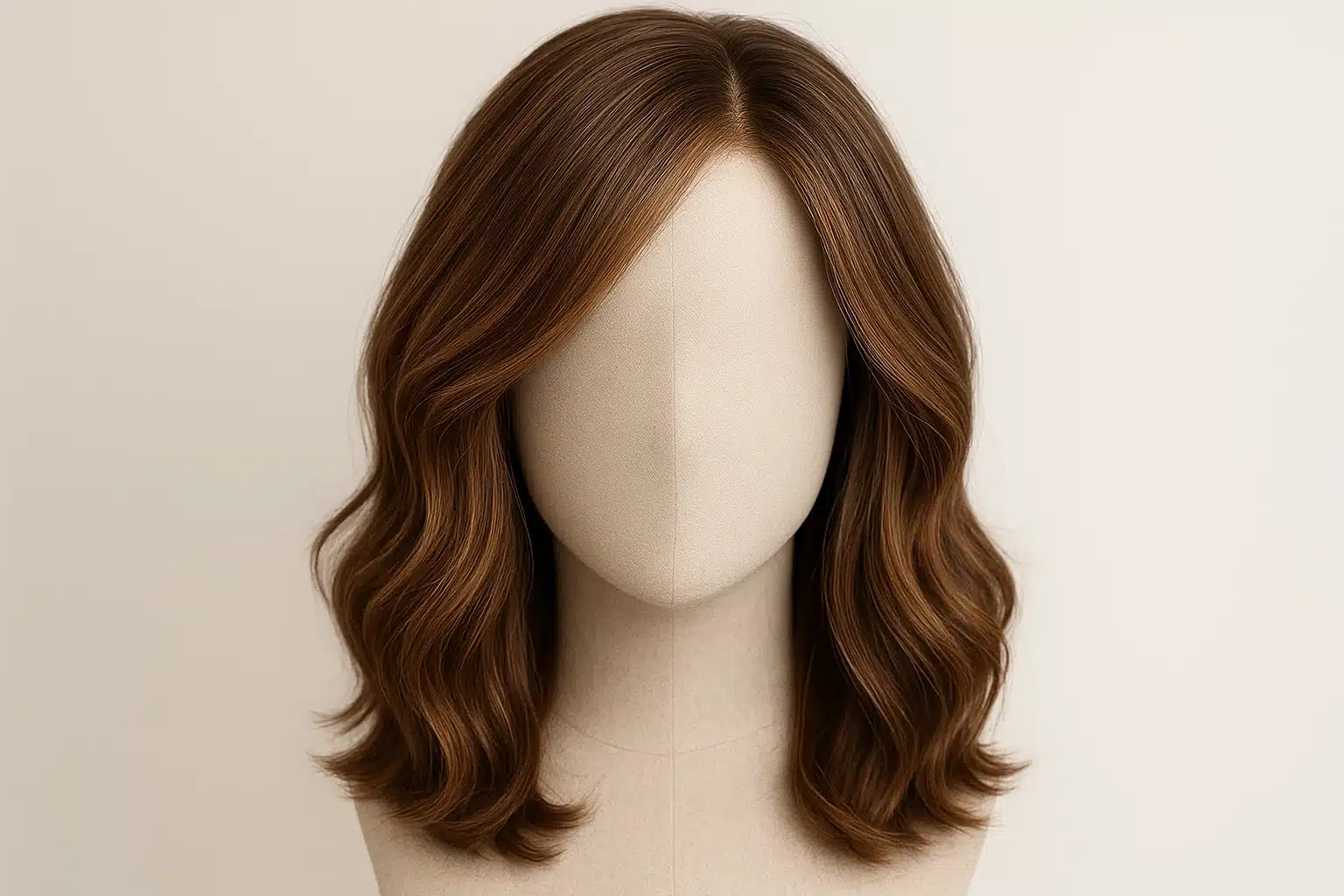
Have you ever spotted someone with flawless hair—perfect volume, vibrant color, and healthy movement—and wished yours looked just like that? There is a strong chance you were admiring a wig without even realizing it. For many first-time buyers, the biggest fear is the “unnatural shine” or the “stiff helmet” look associated with wigs of the past. But modern hair replacement has undergone a quiet technological revolution. Today’s premium pieces are less about covering up and more about engineering confidence through advanced materials and ergonomic design.
If you are just beginning to explore the world of alternative hair, it helps to understand what you are actually looking at. It isn’t just “fake hair”; it is a complex interplay of polymer science and textile engineering designed to mimic biology. While this article dives deep into the technical specifications, if you are looking for a broader overview of styles first, you can read The Definitive Guide to Hairdo Wigs: Choosing Your Perfect Style with Confidence to help you find the right look for your face shape. For those ready to understand the “why” behind the quality, let’s deconstruct the proprietary technology that makes Hairdo wigs unique.
Decoding the Tru2Life Fiber
The heart of any wig is the fiber. Standard synthetic wigs are often made from basic acrylics that retain a fixed style but can look plastic-y under bright lights. Hairdo utilizes a proprietary material known as Tru2Life® heat-friendly synthetic fiber. This is a polyester-based fiber that bridges the gap between the affordability of synthetic and the versatility of human hair.
The “7-11” Color Blend Technology
One of the distinct giveaways of a lower-quality wig is a flat, monochromatic color. Natural human hair is never just one shade; it is a composite of lowlights, highlights, and mid-tones that react to light.
To replicate this, Tru2Life fiber utilizes a sophisticated blending technique. Rather than dyeing the fiber a single color, each colorway is composed of 7 to 11 different shades blended together. This provides multi-tonal depth that creates a natural look, whether you are in direct sunlight or softer indoor lighting. This complexity prevents the “opaque” look common in budget synthetics.
Heat Resistance and the Matte Finish
Unlike standard synthetics which will melt if touched by a curling iron, Tru2Life fiber is engineered to withstand heat up to 350°F (180°C). However, the chemical structure of this fiber also contributes to its texture. It is designed with a specific denier (thickness) and a matte finish that mimics the light-reflecting properties of protein-rich human hair, eliminating the artificial shine often found in other synthetic fibers.
The Science of Styling: Understanding Thermal Limits
The ability to use thermal tools on your wig opens up a world of styling possibilities, but it also requires a specific understanding of how synthetic polymers behave compared to human hair. This is where many beginners struggle, often asking, “Why did my curls fall out immediately?”
The Cooling Phase: The Secret to Locking a Style
When you curl human hair, the heat breaks down hydrogen bonds, and the style sets as it dries or cools slightly. Heat friendly synthetic wigs function differently. The heat softens the fiber, making it pliable, but the “memory” of the fiber is only locked in during the cooling phase.
If you curl a Tru2Life strand and release it while it is still hot, gravity will pull the curl straight before it sets. To style successfully, you must:
- Heat the fiber (we recommend keeping tools between 250°F and 300°F for safety).
- Hold the curl in the desired shape (using a clip or your hand).
- Allow it to cool completely.
Once the fiber is cold, the style is “baked in.” You can wash the wig, shake it out, and that curl will remain until you apply heat again to straighten it.
Anatomy of a Hairdo Cap: Built for Comfort and Realism
While the fiber determines how the wig looks, the cap construction determines how it feels and moves. The engineering goal here is two-fold: scalp realism and long-wear ergonomics.
The Monofilament Part: Creating the Illusion of Growth
A common anxiety for wig wearers is the parting line. Traditional caps often have a dense, teased root to hide the fabric, which can look bulky. Many Hairdo styles feature a Monofilament Part.
This technology involves a fine, sheer mesh material at the parting area. Individual fibers are hand-tied into this mesh one by one. When you look down at the part, the sheer mesh reveals your own scalp tone underneath (or a wig cap matching your skin), creating the hyper-realistic illusion that the hair is growing directly out of your skin.
Open Wefting and Cooling
The main body of most Hairdo caps utilizes Open Wefting. Instead of a solid cap of fabric which can trap heat, the hair is attached to thin, elasticized strips (wefts) with spacing in between. This architecture allows for:
- Air Circulation: Heat travels away from the scalp, keeping you cool.
- Lighter Weight: Less fabric means less density and weight on the head.
- Stretch: The wefts flex, molding to the shape of your head for a secure fit without pressure points.
The Extended Neckline and “Wig Pop-Up”
A specific pain point for new wearers is the fear that the wig will ride up in the back when they look down. Hairdo addresses this with an Extended Neckline. This is a slightly longer piece of material at the nape, often lined with a soft velvet-like material. This design sits flush against the nape of the neck, providing extra coverage and using friction to gently grip the skin, preventing the wig from shifting during movement.
Maintenance Science: Protecting Your Investment
Understanding the technology behind your wig also changes how you care for it. Because the fiber is a polymer, it reacts to friction and heat differently than biological hair.
Friction Frizz and the Nape
The number one issue with longer synthetic wigs is “friction frizz” at the nape of the neck. This occurs when the fiber rubs against collars or skin, creating static and heat that slowly damages the fiber’s surface. To combat this, proper wig maintenance is essential.
You should use a wide-tooth comb to gently detangle daily, preventing the microscopic stretching that leads to frizz. Furthermore, while these fibers are heat-friendly, washing should always be done in cold water. Hot water during washing can cause the fibers to relax their shape or become unmanageable.
If you do encounter frizz over time, the heat-friendly nature of the fiber is your solution. Using a steamer or a flat iron on a low setting (with the help of a comb) can smooth the fibers back out, essentially “ironing” the damage away—a process often used for revitalizing synthetic wigs to extend their lifespan.
Frequently Asked Questions
Q: Can I use my regular shampoo on Tru2Life fiber?
A: It is not recommended. Regular hair care products are formulated to strip oils or hydrate biological keratin. Synthetic fibers require water-soluble formulas specifically designed to clean plastic polymers without leaving a dulling residue.
Q: How long will a Hairdo wig last?
A: With daily wear, a heat-friendly synthetic wig typically lasts 3 to 6 months. This lifespan relies heavily on how often you apply heat and how well you manage friction. Occasional wearers can see their wigs last a year or more.
Q: Can I dye the Tru2Life fiber?
A: No. The synthetic fiber is non-porous and “sealed” during manufacturing. It will not absorb hair dye. We recommend choosing a color close to your desire, relying on the 7-11 shade blend to provide the natural tone you need.
Q: Is the wig heavy?
A: Generally, no. Hairdo wigs are often lighter than a full head of biological hair of the same length. The open-wefted cap construction significantly reduces weight, making them comfortable for all-day wear.
Taking the Next Step
Understanding the technology inside a wig shifts the experience from “buying a product” to “investing in a solution.” When you know how the Tru2Life fiber handles heat and how the cap construction ensures comfort, you can wear your style with genuine confidence, knowing it won’t let you down.
Whether you are looking for a short, chic cut with a monofilament part or long, flowing waves that you can flat iron, the engineering behind these pieces is designed to make your life easier. We invite you to explore the collection and experience the difference that quality craftsmanship makes.