There is a specific lifecycle to owning a synthetic wig that almost everyone experiences but few people talk about. It starts with the “fresh out of the box” excitement—that moment when the lace lays perfectly flat, the curls are bouncy, and the texture feels incredibly realistic. But fast forward to day four or five, and you might notice a shift. The nape starts to feel a little rough, or a few strands have migrated from the hairline to your bathroom counter.
If you are experiencing this, don’t panic. It doesn’t mean you purchased a bad unit; it simply means your wig is interacting with the world. Outre wigs are renowned for their incredible style and High Tex heat-resistant fibers, but like all premium synthetic options, they require a specific “care dialect” different from human hair. Whether you are managing the delicate lace of a Melted Hairline unit or the volume of a Big Beautiful Hair style, understanding the science behind the fiber is key. For those looking for a broader overview of the brand’s unique construction and diverse collections, The Definitive Guide to Outre Wigs: From Melted Hairlines to Perfect Curls provides the necessary background on how these specific styles are engineered.
Foundation: Understanding Your Fibers
Before diving into fixes, we need to experience a small “aha moment” regarding what an Outre wig actually is. While human hair is made of keratin and relies on moisture (water and oils) to stay healthy, your Outre wig is likely crafted from High Tex synthetic fibers.
Think of High Tex fibers less like hair and more like a very sophisticated, fine fabric. This is a crucial distinction because the problems you face—frizz, tangling, and matting—are usually issues of static electricity and friction, not dryness. When you treat synthetic hair like fine fabric, the solutions become much clearer (and often much simpler).
The Frizz Factor: Why the Nape Mats First
The most common frustration for Outre wearers is the “kitchen” phenomenon—when the hair at the nape of the neck becomes matted, rough, or frizzy while the top remains perfect.
The Physics of Friction
This happens due to a combination of body heat and movement. As you turn your head, the High Tex fibers rub against your collar, scarf, or skin. This friction generates static electricity, which causes the fiber’s cuticle (the smooth outer coating) to roughen up. Once rough, the fibers act like Velcro, grabbing onto each other and creating mats.
Pro Tip: Pay attention to your clothing materials. Wool and heavy cottons create high friction. Silk or satin scarves at the nape can act as a barrier, significantly extending the life of the style.
The Steam Cure
Many beginners attempt to fix frizz with more conditioner, but that only coats the problem. To truly fix frizzy synthetic ends, you need to reset the fiber’s “memory.”
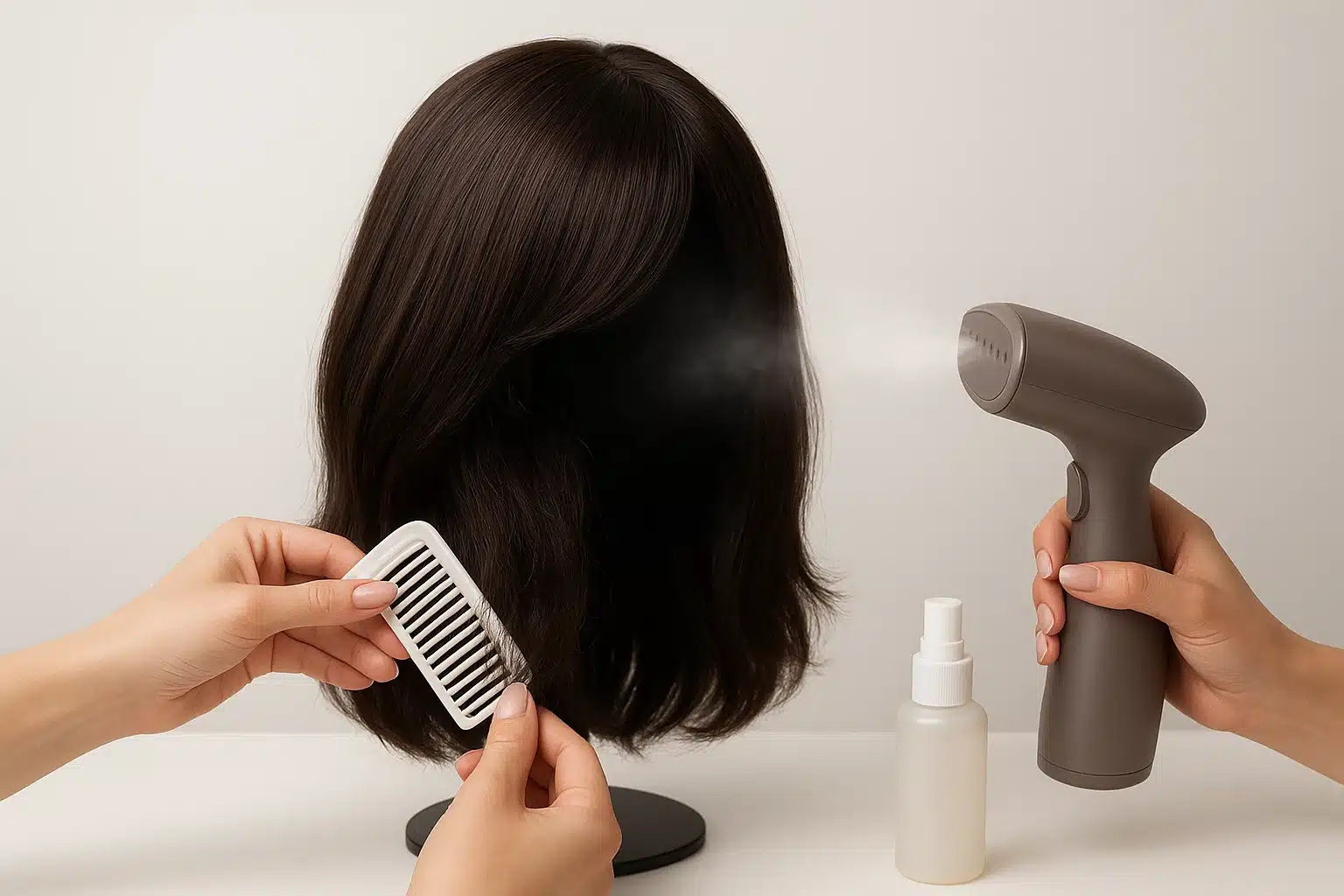
- Detangle Gently: Start with a wide-tooth comb.
- Apply Steam: Using a clothes steamer (never a direct iron plate on damaged fibers), direct steam at the frizzy ends while combing through.
- The Result: The heat from the steam relaxes the plastic polymers, smoothing the rough surface back down without melting the fiber. This returns the hair to its original, silky state.
The Tangling Toolkit
Tangling is inevitable, but matting is preventable. If your Outre wig feels unmanageable, you might be using the wrong toolkit.
The Fabric Softener “Aha” Moment
Since synthetic wigs are essentially fibers similar to acrylic or polyester, standard hair conditioners often just sit on the surface, making the wig greasy and attracting dirt.
The industry secret? Fabric softener.Fabric softener is chemically designed to reduce static cling in synthetic fibers. Mixing a capful of fabric softener with water in a spray bottle creates a powerful detangling solution that neutralizes the static charge causing the tangles in the first place. Note: Always do a patch test and rinse thoroughly if you have sensitive skin.
The “Cold Crimping” Concept
Be mindful of how you store your wig. If you toss it into a drawer or a bag while it’s still warm from your head, the fibers can cool in a bent, “crimped” position. This creates permanent kinks that look like frizz. Always let your wig cool completely on a wig stand to preserve the smooth texture.
The Shedding Solution
Shedding can be heartbreaking, especially with the ultra-realistic Melted Hairline or Perfect Hairline series. These units use hand-tied knots on delicate lace to mimic a natural scalp.
Knot Sealing 101
On a synthetic lace front, the knots are tiny. Over time, styling and brushing can loosen them. To prevent shedding before it starts, consider “sealing the knots.”
- Turn the wig inside out.
- Use a spray-on knot sealer (available at most beauty supply stores) or a light hold hairspray.
- Lightly mist the lace (avoiding the hair strands as much as possible).
- Let it dry completely before wearing. This locks the hair into the lace mesh.
The “Gentle Plucking” Warning
Customizing your hairline is a great way to make a wig your own. However, aggressive plucking can tear the delicate Swiss lace used in premium Outre wigs. If you tear the lace, you compromise the structural integrity of the hairline, leading to massive shedding later. Always pluck slowly, one hair at a time, and never pull against the resistance of the lace.
The Outre Heat Paradox
Outre’s High Tex fibers are “Heat Resistant,” often up to 400°F. However, just because the fiber can withstand that heat doesn’t mean it should.
The “Crunch Test”
Many wearers use high heat to try and smooth out tangles, but this actually “cooks” the fiber, causing the ends to become permanently crinkled and hard—a phenomenon known as the “crunch.”
- The Rule: Keep heat tools between 280°F and 350°F.
- The Test: Run your fingers through the ends. If they feel crunchy or prickly like straw, the fiber is heat-damaged, not just tangled. At this point, steaming or trimming the ends are your only options; more dry heat will only worsen the damage.
The 15-Minute Weekly Refresh
To keep your unit looking new for months rather than weeks, adopt this simple Sunday routine:
- The Dry Detangle: Gently comb from ends to roots to remove surface knots.
- The Static Guard: Lightly mist the nape with your water/fabric softener mix or a synthetic-safe leave-in spray.
- The Shape Up: If the curls have dropped, pin-curl them and hit them with a blast of steam. Let them cool completely before unpinning.
- The Storage: Place the wig on a stand away from direct sunlight and heat vents.
Frequently Asked Questions
Why is my new Outre wig matting at the back after only a week?
This is usually due to friction against clothing combined with body heat. The constant rubbing roughens the fiber surface. Try wearing silkier fabrics or applying a small amount of silicone-based serum to the nape area to reduce friction.
Can I use a flat iron on High Tex fibers?
Yes, High Tex fibers are heat friendly. However, never exceed 350°F. High heat can damage the integrity of the fiber over time. Always use a ceramic iron and move quickly; never let the iron sit on one section.
How do I remove the “crunchy” ends without cutting the wig?
If the ends are only slightly crunchy, a steam treatment (using a clothes steamer and a comb) can relax the fibers and smooth them out. If the fibers are severely “burnt” from friction or heat, a slight trim might be necessary to restore movement.
What is the best way to wash my Outre synthetic wig?
Avoid hot water, which can relax the curls. Use cool water and a shampoo specifically formulated for synthetic hair. Gently swirl the wig—never scrub or wring it, as this causes tangling. To dry, perform the “Log Roll”: lay the wig on a towel, roll the towel up to press out excess water, and then place the wig on a stand to air dry.
Why do you recommend silicone products?
Unlike natural oils (like coconut or olive oil) which penetrate human hair, oils simply sit on top of synthetic plastic fibers, making them heavy and greasy. Silicone-based serums coat the fiber, filling in scratches and creating a slippery surface that resists tangling.
Conclusion
Mastering the care of your Outre wig isn’t about having professional styling skills; it’s about understanding the unique needs of the material. By managing friction, controlling heat, and using the right products, you can extend the lifespan of your unit significantly. Remember, a little shedding and tangling is normal, but with these techniques, you can keep your style looking salon-fresh long after the unboxing.