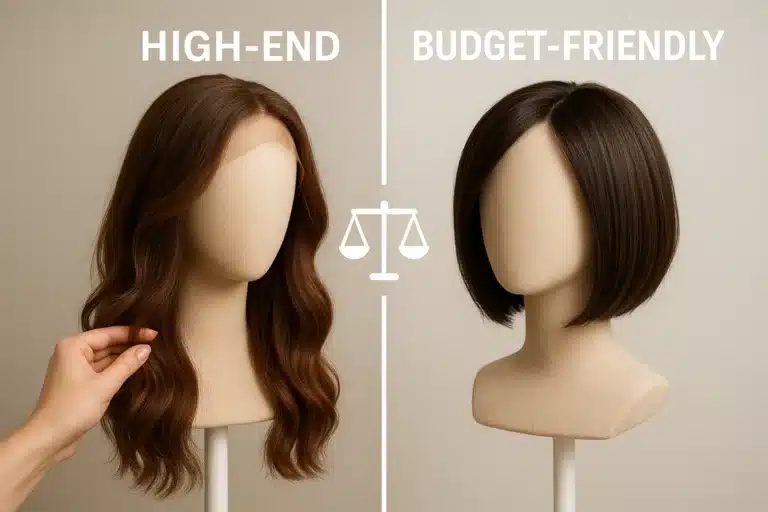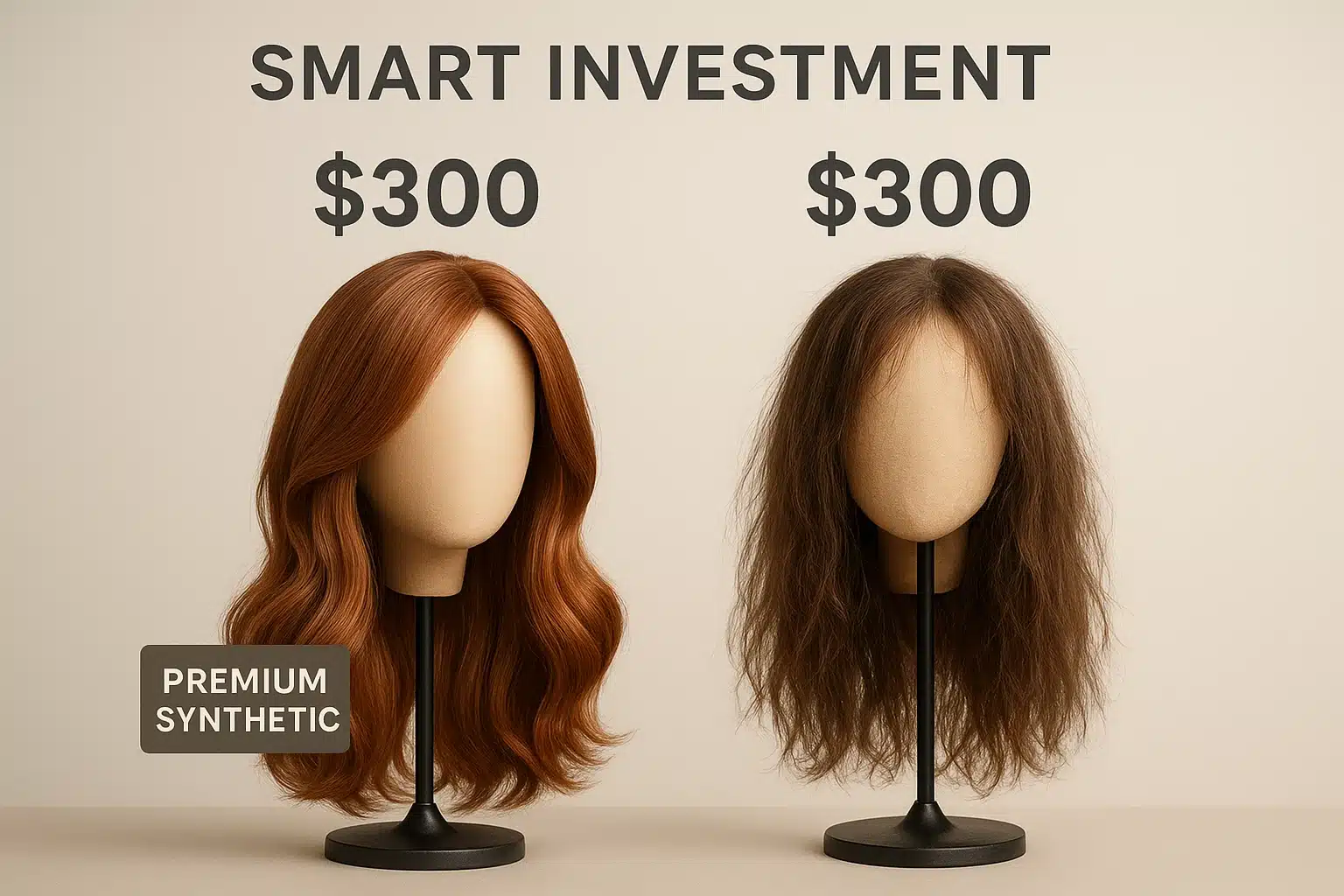
Imagine this: You are staring at two tabs on your computer screen. On the left is a beautiful, premium synthetic wig priced at $300. On the right is a human hair wig on clearance, also priced at $300.
If you are like most people beginning their hair loss or hair enhancement journey, your first instinct is probably to grab the human hair option. After all, society often tells us that human hair is the ultimate gold standard, while synthetic is just a cheaper backup, right?
Not necessarily.
When you are navigating hair loss, figuring out what the least expensive wig option is that still looks entirely natural can feel overwhelming. But what if we stopped looking at wigs as just a “synthetic vs. human hair” debate and started viewing them as a strategic financial investment?
Let’s grab a cup of coffee and break down exactly when and why investing in a high-quality synthetic wig might actually provide better value, superior longevity, and save you incredible amounts of time.
The Budget Fallacy: Why “Cheapest” Often Costs More
One of the most common pitfalls first-time wig buyers fall into is what we call the “Cheap Human Hair Trap.”
It is incredibly tempting to buy a bargain-bin human hair wig. However, low-cost human hair often lacks “Remy” quality—meaning the hair cuticles are not aligned in the same direction. What does this mean for you? After about three washes, that $150 “steal” often begins to feel like straw, tangling and matting at the nape of your neck.
While premium human hair wigs are absolutely magnificent investments that can last for years with proper care, low-grade human hair wears out significantly faster than premium synthetic options. You end up having to replace the cheap human hair wig in just a couple of months, ultimately spending more money over the course of a year.
Fiber Science for Beginners: The “Look-Real” Factors
If you have ever worried that a synthetic wig will look like shiny doll hair, you aren’t alone. But the synthetic fibers of today are marvels of modern science. Let’s look at the two factors that make a premium synthetic wig indistinguishable from biological hair:
1. The Denier (Thickness)
Denier is the measurement of a fiber’s thickness. Cheap Halloween wigs have a very thick denier, which makes them heavy, hot, and fake-looking. Premium synthetic wigs use an ultra-fine denier. This fine thickness perfectly mimics natural human hair and offers incredible breathability. If you are budgeting for a summer wig or dealing with hot flashes, a low-denier synthetic wig means significantly less “wig sweat” and much more comfort.
2. The Sheen Test
Budget synthetics often reflect light artificially, creating a plastic shine. Premium synthetic fibers (like high-quality Kanekalon or advanced heat-friendly HD fibers) are manufactured with a microscopic texture that diffuses light, giving off the natural, healthy luster of biological hair.
High-Utility Scenarios: When Synthetic Outperforms Human Hair
There are specific lifestyle moments—what we call “High-Utility Scenarios”—where a premium synthetic wig actually outperforms human hair, regardless of your budget.
The Travel Companion
When you travel, the last thing you want to do is pack a blow dryer, a curling iron, and an arsenal of styling products. Synthetic wigs have something called “Style Memory.” The style is baked into the physical property of the fiber itself, not sprayed on as a chemical coating. You can wash the wig in your hotel sink, hang it up to dry overnight, and wake up to perfect, bouncy curls without using a single styling tool.
The Humidity Hero
We all know what humidity does to biological hair. If you step outside into the rain or a humid summer day in a human hair wig, your carefully styled blowout will inevitably frizz or fall flat. Because of style memory, premium synthetic fibers are entirely weatherproof. The humidity has zero effect on your hairstyle.
The Medical Recovery Lifesaver
If you are dealing with medical hair loss or chemotherapy, you are already managing physical fatigue. The sheer ease of a “shake-and-go” synthetic wig provides incredible emotional and physical relief. You get a beautiful, consistent look with absolute zero effort.
The Cost-Per-Wear Deep Dive
To truly maximize your budget, you need to calculate your wig’s “Cost-Per-Wear.” This simple math shifts your perspective from the upfront price tag to the actual daily value of the piece.
Let’s look at a side-by-side math breakdown of a $300 Premium Synthetic wig versus a $300 Low-Quality Human Hair wig:
The $300 Premium Synthetic Wig
- Lifespan: Retains its peak look for about 6 months of daily wear.
- Math: $300 ÷ 6 months = $50 per month.
- Time Equity: 0 minutes of daily styling.
The $300 Low-Quality Human Hair Wig
- Lifespan: Often begins severe matting and tangling after 2 months due to stripped cuticles.
- Math: $300 ÷ 2 months = $150 per month.
- Time Equity: Requires 30–45 minutes of daily heat styling, plus potential costs for professional salon blowouts.
When you factor in your time, the cost of styling products, and the sheer frustration of fighting with tangles, the premium synthetic wig offers undeniably better value for mid-range budgets. Implementing a solid wig maintenance routine will only extend this value further.
Building Your Wig Wardrobe
If you have an annual budget set aside for your hair, how do you spend it wisely? The smartest approach is building a diverse wig wardrobe.
Instead of blowing your entire budget on one piece that you wear into the ground, consider dividing it up. For example, if you have a $1,000 budget, you might invest in one beautiful, high-end human hair wig for special occasions and dates, and two premium synthetic wigs for daily work, gym sessions, and errands.
By rotating your pieces, you dramatically extend the lifespan of all of them. And remember, before you try any wig customization diy like trimming bangs or thinning out a piece, understanding the specific fiber you are working with will save you from costly mistakes!
Frequently Asked Questions (FAQ)
How do I know how long do human hair wigs last compared to synthetic?
A high-quality, premium human hair wig can last a year or more with excellent care. A premium synthetic wig typically lasts 4 to 6 months with daily wear. However, a cheap human hair wig will often deteriorate faster than a premium synthetic one.
Can I use heat tools on a synthetic wig?
It depends on the fiber! Traditional synthetic fibers will melt under heat. However, “Heat-Defiant” or HD synthetic fibers are specifically engineered to withstand low heat (usually up to 275°F – 300°F). Always check the manufacturer’s guidelines before applying heat.
Does synthetic hair fade in the sun?
No! This is one of the greatest hidden benefits of synthetic hair. Unlike human hair, which undergoes oxidation and sun-bleaching over time, synthetic fibers hold their original color beautifully, no matter how much time you spend outdoors.
Is synthetic wig care complicated?
Not at all. In fact, it’s generally much easier than human hair care. Because of style memory, you simply wash the wig with synthetic-safe products, rinse, and let it air dry on a wig stand. The original style will bounce right back without any blow-drying.
Next Steps on Your Hair Journey
Choosing the right wig isn’t just about picking a style from a catalog; it’s about finding a solution that fits seamlessly into your lifestyle, respects your budget, and most importantly, makes you feel beautiful and confident.
Whether you are navigating hair loss for the first time or simply looking to expand your current collection, remember that you don’t have to sacrifice quality for affordability. By understanding fiber science and strategically utilizing premium synthetics for high-utility scenarios, you can build a stunning, natural-looking wig wardrobe that works perfectly for your life.