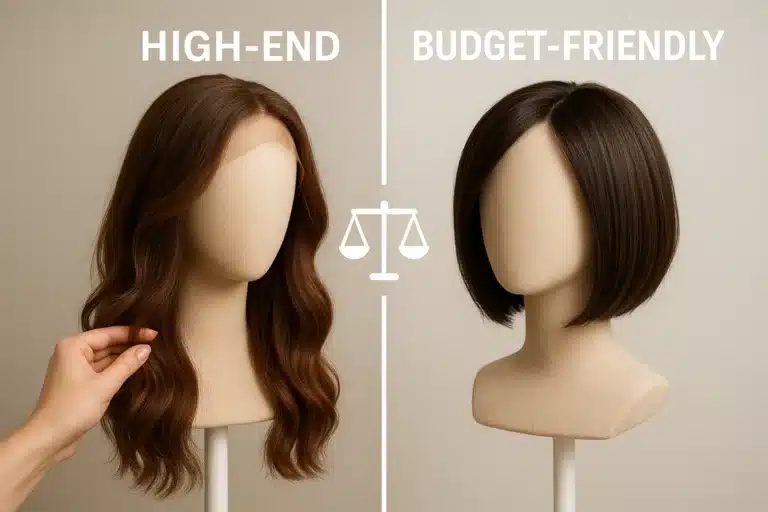
Imagine spending hours online researching, finally falling in love with a beautiful wig that fits perfectly into your budget, and eagerly waiting for it to arrive. You put it on, and it makes you feel like you again.
But fast forward three months. The fibers might be frizzing, you’ve realized you need specialized adhesives for a natural hairline, and your everyday shampoo isn’t doing the trick. Suddenly, you find yourself spending more on upkeep than you anticipated.
If this sounds familiar, you aren’t alone. One of the most common challenges beginners face when stepping into the world of alternative hair is understanding the Total Cost of Ownership (TCO). Buying a wig isn’t just a one-time transaction; it’s an ongoing investment in your confidence and daily routine.
To help you make the most empowered, financially savvy decisions, we’re breaking down the hidden expenses, the essential care products, and the long-term math of wig ownership so you can create a truly comprehensive budget.
The Knowledge Gap: Why Upfront Price Doesn’t Tell the Whole Story
When we start shopping for a wig, our eyes naturally gravitate toward the sticker price. It’s easy to ask, “Why is this wig $50 and that one $1,500?”
The answer lies in the “Synthetic Death Cycle” versus the longevity of human hair. Let’s look at a common trap many budget-conscious beginners fall into: The Cheap Trap.
If you purchase a low-cost, non-heat-friendly $50 synthetic wig for daily use, the friction from your clothes and daily wear will inevitably wear it down. You might find yourself replacing it every two months. By the end of the year, you’ve spent $300 on replacements alone, not to mention the emotional frustration of constantly dealing with degrading hair. In contrast, a higher-quality piece might require a larger upfront investment but will last significantly longer with proper wig maintenance, actually saving you money over time.
Research indicates that the average Year 1 expenditure for a synthetic wig wearer is around $780, while human hair wearers average about $1,630. This accounts for the initial purchase plus the hidden consumables and maintenance routines required to protect the asset.
The 5 Pillars of Wig Budgeting: Your Year 1 Financial Roadmap
To truly understand your budget, it helps to categorize your expenses. Think of this as the “Subscription” cost of wearing a wig.
1. The Initial Asset (The Wig Itself)
This is your base cost. Synthetic wigs are wonderfully budget-friendly upfront and hold their style beautifully after washing. Human hair wigs require a higher initial investment but offer unparalleled realism, styling versatility, and longevity.
2. The “Tool Box” (Hardware)
Just as you wouldn’t use a kitchen knife to cut fabric, you shouldn’t use standard hair tools on your wig. You will need a one-time investment in specialized wig maintenance hardware. This includes canvas block heads or collapsible stands for drying, wide-tooth combs, specialized loop brushes that won’t snag the lace, and heat-styling tools with precise temperature control. Expect this initial “kit” to cost between $50 and $150.
3. The “Chemical Budget” (Consumables)
This is the ongoing “subscription” part of your budget. Wigs require specific, gentle formulations. You will need wig-safe shampoos, leave-in conditioners, and detangling sprays. If you wear a lace front or glueless system, you’ll also need to budget for adhesives, scalp protectors, and gentle adhesive solvents. Proper synthetic wig care relies heavily on these specialized products to prevent the fibers from drying out or tangling prematurely.
4. Professional Lifecycle Services
Even if you are a DIY expert, there are times when professional help is a smart investment. You may want to take your wig to an experienced stylist to have the bangs trimmed, the lace customized to your hairline, or the bulk thinned out. Over a year, budgeting for one or two professional “refresh” sessions can drastically extend your wig’s lifespan.
5. Storage and Preservation
When your wig isn’t on your head, where does it live? Tossing it on a bathroom counter drastically reduces its lifespan. Investing in a silk storage bag, a dedicated travel case, or a proper display block is a crucial part of foundational wig care that protects your hairpiece from dust, pets, and accidental damage.
Calculating Your True ROI: The Cost-Per-Wear Model
The secret to smart wig shopping isn’t finding the cheapest option; it’s optimizing your Cost-Per-Wear (CPW).
Cost-Per-Wear is a simple mathematical formula: (Initial Price + Annual Maintenance) ÷ Days Worn Per Year.
Let’s say you purchase a premium human hair wig for $1,200. You spend $200 on products and accessories for the year. That’s a total of $1,400. If you experience medical hair loss and wear this wig every single day (365 days), your cost-per-wear is just $3.83 per day.
Alternatively, if you buy a $150 fashion wig for occasional weekend wear (about 50 days a year) with $50 in maintenance, your CPW is $4.00 per day.
Seeing the wig maintenance and purchase cost broken down by day often creates a massive “aha moment” for buyers. It transforms a daunting upfront price tag into a justifiable daily investment in your comfort, image, and peace of mind. For a deeper dive into these calculations, exploring a dedicated wig maintenance breakdown can be incredibly revealing.
The Budget Optimizer: Finding Your Wearer Profile
Your budget should reflect your lifestyle. Which of these profiles sounds most like you?
- The Daily Professional: You need reliability. You wear your wig 40+ hours a week. Your budget should prioritize durability—either a high-quality, heat-friendly synthetic or a human hair wig. Your “chemical budget” will be higher because you’ll be washing and styling more frequently.
- The Occasional Fashionista: You love changing your look for weekends or events. You can easily opt for a collection of traditional synthetic wigs. Your initial asset costs are lower, and because you aren’t wearing them daily, your maintenance timeline is stretched out, keeping ongoing costs low.
- The Medical Wearer: You are navigating hair loss due to alopecia, chemotherapy, or other medical conditions. Comfort is your top priority. You’ll want to budget for ultra-soft wig caps, skin-safe adhesives, and lightweight, breathable caps (like 100% hand-tied or monofilament tops). Pro-tip: Check with your health insurance provider, as many offer partial or full reimbursement for a “cranial prosthesis,” which drastically alters your out-of-pocket budget.
Avoiding the “Failed Purchase” Trap
The most expensive wig you will ever buy is the one you never wear.
A “failed purchase” usually happens when a buyer skips the foundational education phase. They might buy a beautiful wig that is the wrong cap size, features a lace front they don’t know how to blend, or requires more daily styling than they have time for.
To avoid this, budget your time before you budget your money. Measure your head meticulously. Be honest with yourself about whether you want a “shake and go” style or if you enjoy spending 30 minutes heat-styling your hair. Investing in the right piece the first time saves you the hidden cost of a closet full of unworn wigs.
Frequently Asked Questions About Wig Budgets
How much should I set aside for a beginner’s wig care kit?
A safe estimate is between $100 and $150. This will cover a wig stand, a specialized brush or wide-tooth comb, wig-safe shampoo and conditioner, and a detangling spray. Think of this as a one-time “insurance policy” on your new hair.
Can I save money by using my regular drugstore hair products?
Unfortunately, no. Regular shampoos contain sulfates, parabens, and heavy moisturizers that are too harsh for synthetic fibers and can loosen the hand-tied knots on human hair wigs. Using standard hair care products is the fastest way to ruin a wig, resulting in costly premature replacements.
Are adhesives and tapes expensive?
They are generally quite affordable, but they act as a recurring cost. A roll of high-quality lace front tape or a bottle of gentle adhesive usually costs between $15 and $30 and can last a daily wearer 2 to 3 months. Don’t forget to budget for the adhesive remover solvent as well!
Your Next Steps Toward a Confident Purchase
Understanding the total cost of wig ownership doesn’t have to be overwhelming. When you shift your mindset from “buying a product” to “investing in a daily experience,” the budgeting process becomes much clearer.
By factoring in your tools, professional services, and daily care routines, you insulate yourself against surprise costs and set yourself up for long-term success. Remember, a well-cared-for wig not only looks better and lasts longer—it acts as a seamless extension of your natural beauty and confidence.
Take the time to map out your Year 1 Financial Roadmap. Decide what your daily routine looks like, list out the essential tools you’ll need, and take comfort in knowing that with every wear, your investment is paying off in how beautifully you face the world.