Picture this: You’ve just spent an hour sculpting the perfect high bun. The edges are laid, the shape is flawless, but within an hour, you feel that familiar, heavy tug at your hairline. Worse, a quick glance in the mirror reveals the unmistakable lines of weft tracks peeking through at the nape of your neck. If you’ve ever struggled with heavy braids, slipping ponytails, or flat layered cuts, the culprit usually isn’t your styling technique—it’s the density of the hair.
In the alternative hair world, there is a pervasive myth that a higher density percentage automatically means higher quality. But treating 180% density as a universal gold standard ignores the physics of how hair weight, texture, and cap construction interact. To truly execute advanced styles without damaging your wig or your delicate edges, you need a solid foundation. Understanding The Anatomy of a Perfect Wig Mastering Hairline Density and Texture is the vital first step toward transforming your unit from a simple hairpiece into a versatile styling canvas. Let’s explore how matching the right density to your desired style changes absolutely everything.
The “More is Better” Myth: Understanding the Physics of Wig Density
When browsing for wigs, it’s easy to assume that higher density equates to better value. However, wig density simply measures the volume of hair tied to a square inch of the cap—not the thickness of the individual strands themselves.
Before diving into complex styles, we have to talk about the Texture Expansion Factor. Many standard guides treat “150% density” the same whether the hair is silky straight or kinky coily. But in reality, texture creates a powerful optical illusion:
Visual Fullness = Density Percentage × Texture Expansion
Afro-textured hair (like Yaki, Kinky Straight, or Coily patterns) has a rougher cuticle and a tight curl pattern that occupies significantly more physical space. A 130% density Kinky Straight wig will look just as full as a 180% density Silky Straight wig, but at a fraction of the physical weight. This is the ultimate secret for anyone looking for volume without the headache.
Length also dictates density. A chic 10-inch bob at 180% density will look like a helmet, while a 24-inch wig at 120% density will look stringy at the ends. Matching your density to your style’s specific needs is where the true artistry begins.
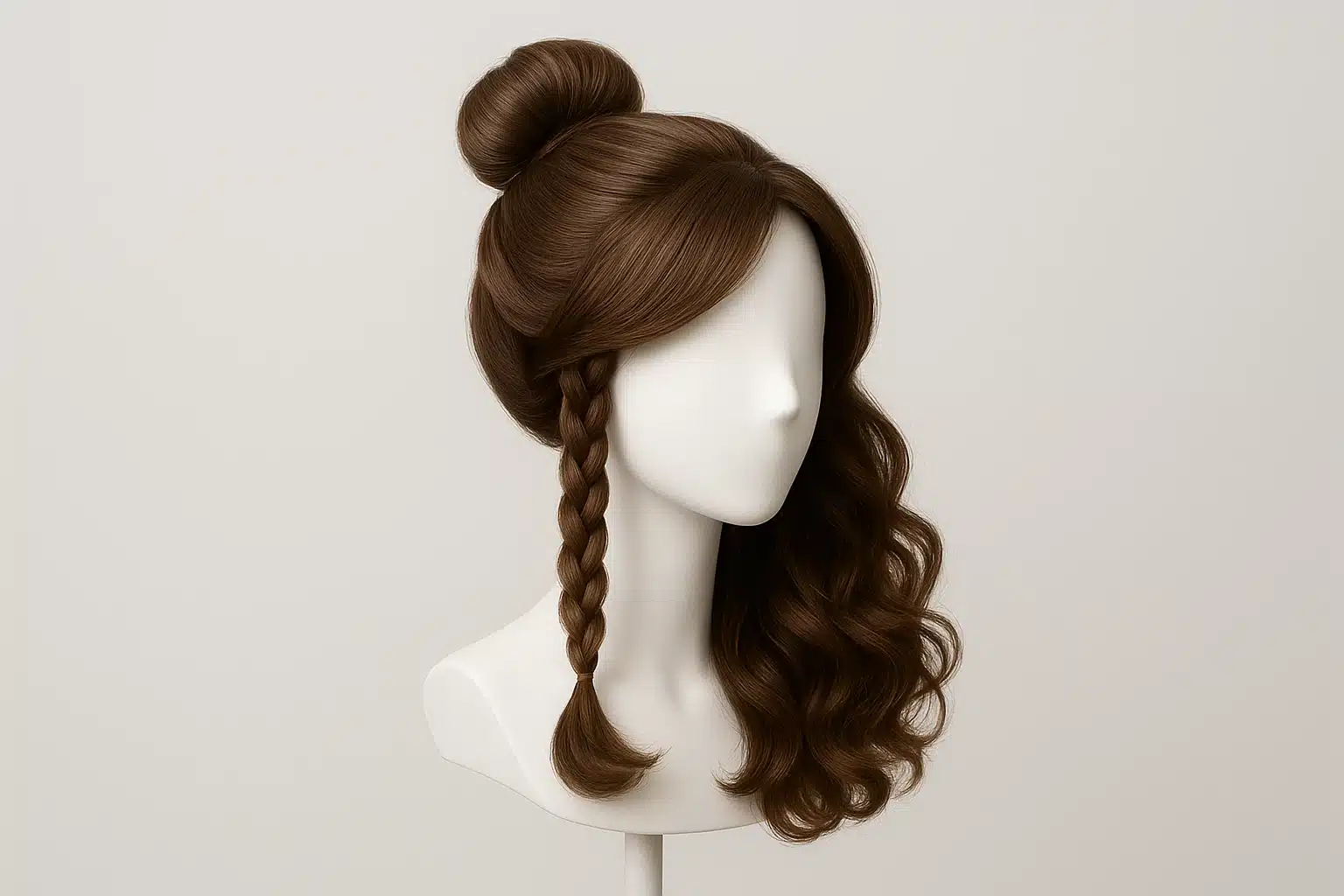
Mastery Session A: The Art of the Flawless Updo (130% – 150% Density)
Achieving a sleek, natural bun, high puff, or elegant chignon without exposing cap edges requires fighting gravity.
The Physics of Updos
When you pull a high-density (180%+) wig into an updo, you are gathering a massive amount of weight into a single focal point. Gravity inevitably pulls this weight backward and downward. This creates severe leverage on the front lace, leading to slipping, friction, and tension headaches.
The “Nape-to-Crown” Density Gradient
Human scalps are not uniformly dense; our hair naturally thins out at the nape of the neck and around the temples. For incredibly realistic natural updo styles for black hair, you need a graduated density profile. Wigs that maintain a dense, bulky 180% right down to the nape look immediately unnatural when pulled up, creating a bulky gathering of hair that refuses to lay flat.
Cap Construction is Key
A standard lace front wig is restricted to low, loose chignons because the back is made of machine-sewn wefts. If you pull it up, the tracks will show. For a high updo, a 360 Lace or Full Lace wig is mandatory. Stylist Tip: To enhance realism, use a unit with a low-density perimeter (100-120% around the edges) and leave a few baby hairs or tendrils down to soften the look and conceal the transition.
Mastery Session B: Crafting Seamless, Lightweight Braids (150% Density)
Whether you love intricate cornrows, box braids, or romantic crown braids, density dictates how your braids behave.
The Braid Weight Formula
Heavy hair + tight braiding = scalp strain. When you braid a high-density synthetic wig, the sheer mass of the fibers creates a rigid rope of hair. Every time you turn your head, that stiff braid acts as a lever, yanking on your wig grip or the natural anchor braids underneath.
Single-Drawn vs. Double-Drawn Hair
Have you ever braided a wig and found the braids looked thick, stiff, and blocky all the way to the ends? That’s because the wig was likely “double-drawn” (meaning all hairs are exactly the same length). For realistic braided updos, single-drawn hair is vastly superior. It features natural tapering toward the ends, allowing braids to gradually thin out, bend easily, and lay flat against the head.
The Ideal Braid Canvas
The sweet spot for updo braids hair styles is 150% density paired with a textured base (like Yaki). The texture provides maximum grip and visual thickness, while the moderate density keeps the physical weight manageable.
Mastery Session C: Sculpting Bouncy Layered Cuts (150% – 180% Density)
Dynamic, volumetric layered wig styles—think 90s supermodel blowouts, trendy shags, or sweeping butterfly cuts—operate on entirely different physical rules than updos and braids.
Why Layers Demand Higher Density
Layering is, by definition, the process of removing bulk. If you start with a low-density wig (120%) and begin slicing layers into it, the bottom perimeter will instantly look thin, stringy, and lifeless.
The Perfect Canvas for Layers
To achieve beautifully sculpted layers, you need a denser base: 150% to 180% density. This provides your stylist with the structural canvas needed to slide-cut and razor-cut face-framing layers while ensuring the ends remain thick and healthy-looking.
The “Mushroom Cap” Warning
Be cautious with ultra-dense 200% wigs. If a 200% density wig isn’t professionally thinned out using proper slide-cutting techniques, layering it will cause the shorter top layers to puff outward, resulting in an unflattering, triangular “mushroom” shape.
Actionable Customization: Troubleshooting and Modifying Your Wig
What happens if you already own a wig that feels too dense for your desired style? You don’t have to throw it out—you just need to customize it.
- Safe Thinning Techniques: If your wig is too thick for braids, use double-sided thinning shears. Instead of cutting near the root (which creates spiky flyaways), focus on the mid-lengths and ends. You can also use the “selective drop” method when braiding: simply leave a few hidden wefts unbraided underneath to drastically reduce the weight of your updo.
- The Pinch Test: Want to know what you’re working with? Gather the hair into a low ponytail and pinch it. If the ponytail feels thicker than a standard golf ball, you’re likely working with 150%+ density, making it ideal for layering but requiring caution for high updos.
- Securing Heavy Styles: If you must wear a high-density wig in an updo, protect your scalp. Use velvet wig grips, silicone headbands, and strategically placed anchor braids to distribute the weight evenly and prevent the dreaded backward slip.
Frequently Asked Questions (FAQ)
What does wig density actually measure?
Wig density refers to the amount of hair knotted or sewn into the wig cap per square inch. It determines how full the wig looks overall, rather than how thick an individual strand of hair is.
What is the most natural density for daily wear?
For a highly realistic, everyday look that mimics natural hair growth, 130% to 150% density is generally the sweet spot. It provides enough coverage to hide the cap while remaining lightweight and comfortable.
Can I do a high bun with a standard lace front wig?
It is very difficult to do a high bun with a standard lace front because the back of the wig consists of horizontal wefts (tracks) that will be exposed when brushed upward. For high updos, 360 Lace or Full Lace wigs are required.
How can I get natural updo styles for black hair without it looking bulky?
Opt for a textured wig (like Yaki or Kinky Straight) at a moderate density (130-150%). The texture gives you the visual volume you want, while the lower density ensures the hair can be gathered into a knot or puff without looking unnaturally massive at the nape.
Why do my braids feel so stiff and heavy?
If your braids feel like rigid ropes, you are likely using a high-density wig (180%+) made of double-drawn hair. The sheer volume of hair creates tension, making the braids inflexible. Transitioning to a 150% single-drawn wig will solve this problem.
***
Your wig should empower you, not limit your styling creativity or cause physical discomfort. By matching the right density and texture to the specific physics of updos, braids, and layered cuts, you open up a world of versatile, incredibly natural-looking hairstyles. Take the time to understand your canvas, and you’ll find that effortless styling naturally follows.