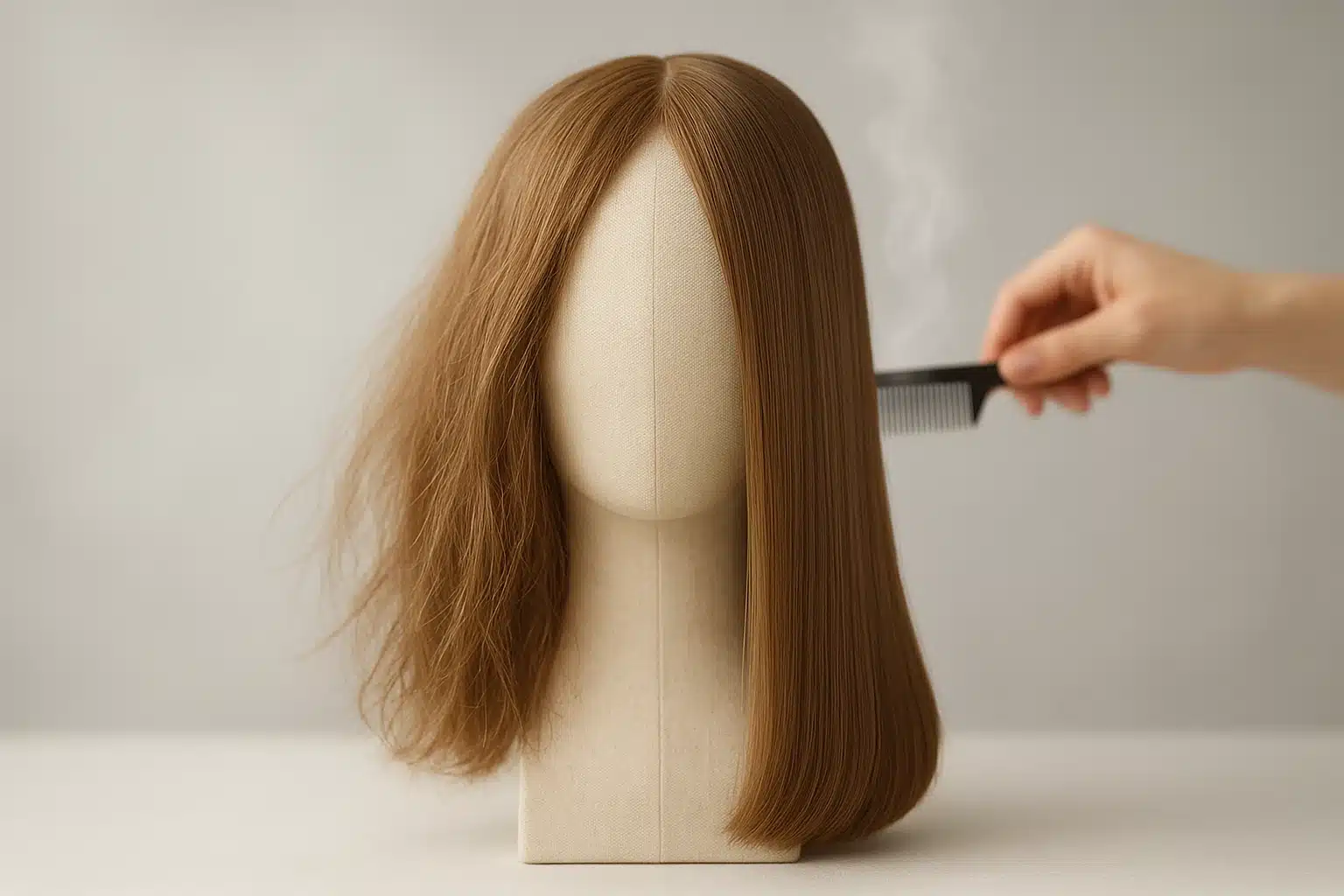
We have all been there: you pull your favorite wig out of storage, or perhaps you have been wearing your daily “go-to” for a few months, and the fibers have started to develop that tell-tale friction frizz at the nape. Or maybe you simply want to change the style of a curly piece to something sleeker. The problem is, your wig isn’t labeled “heat-friendly.” The fear of melting your beloved hairpiece into a fused plastic disaster is valid and common.
However, older or standard synthetic fibers aren’t a lost cause. While modern fiber technology allows for advanced synthetic wig transformation & re-texturing, many of us still have beloved standard synthetic pieces that require a gentler touch. The secret isn’t finding a cooler flat iron—it is changing the type of heat you use entirely. By mastering the art of steam straightening, you can revive tired fibers and alter textures safely, extending the life of your hairpiece without the risks associated with dry thermal tools.
The Science of “Plastic Hair”: Why Steam Works
To understand why you can steam a wig but not iron it, we have to look at the material science. Standard synthetic hair is essentially a fine filament of plastic (often Kanekalon or Toyokalon).
All plastics have a “Glass Transition Temperature” (Tg). This is the specific temperature where a hard, brittle polymer turns soft and pliable. For many synthetic fibers, this temperature is relatively low.
- Dry Heat (Flat Irons/Curling Wands): These tools often start at 300°F (150°C), which is far above the melting point of standard synthetic hair. The heat is direct and aggressive. It doesn’t just soften the fiber; it chemically alters and melts the bonds immediately.
- Moist Heat (Steam): Steam is capped by physics at 212°F (100°C). This temperature is the “Sweet Spot.” It is hot enough to relax the molecular bonds of the fiber, making it pliable enough to be straightened, but generally not hot enough to melt the plastic into a liquid state.
Assessing Your Wig: The Pre-Steam Safety Check
Before you plug in your steamer, you need to ensure your wig is a candidate for this process. Not all friction frizz can be steamed away, and not all textures will relax completely.
- Check the Fiber Condition: If the ends are “crispy” or kinked at acute angles (like a bent zipper), steam alone won’t fix it. You may need to trim the damaged ends first.
- Cleanliness Matters: Never steam a dirty wig. Product buildup (hairspray, dry shampoo) can “bake” into the fiber under heat, causing dullness. Ensure you have washed your wig using the best wig care products designed specifically for synthetics to remove any residue.
- The Strand Test: Pick a tiny section of hair at the very nape of the neck (underneath where no one sees). Apply steam for 3-5 seconds. If the fiber relaxes without frizzing, you are safe to proceed.
The Safe Steam Method: Step-by-Step
This process requires patience. Unlike human hair, where you dry the style in, synthetic fiber styles are set during the cooling phase.
Phase 1: The Setup
You cannot steam a wig while it is on your head. Steam causes serious burns, and you need leverage to create tension.
- Tools Needed: A canvas block head, T-pins, a handheld fabric steamer (travel steamers work great), a wide-tooth comb, and a fine-tooth heat-resistant comb.
- Securing: Pin the wig securely to the block head through the velvet tabs (ear tabs) and the nape. Avoid pinning through delicate lace fronts or monofilament tops to prevent tearing.
Phase 2: The Technique
The goal is to use the comb to pull the hair straight while the steam relaxes the “memory” of the curl.
- Sectioning: Work in small, manageable sections starting from the bottom (nape) and working up. Clip the rest of the hair out of the way.
- Apply Tension: Take your fine-tooth comb and comb through a section. Hold the hair taut with the comb.
- Steam and Chase: Hold the steamer nozzle about 3-5 inches away from the hair. Move the steamer down the hair shaft, immediately followed by the comb. The steam heats the fiber, and the comb forces it straight.
- The “Cool Down” (Crucial Step): Once you have combed through with steam, hold the hair straight with your hand for a few seconds while it cools. Synthetic fiber only sets its shape when it cools. If you drop the hair while it’s hot, it will revert to its old shape or wrinkle.
Alternative Methods & “Emergency” Fixes
If you don’t own a steamer, or if you are dealing with a wig that is exceptionally long and tangled, the Hot Water Method is a viable alternative.
This involves bringing a pot of water to a near-boil (roughly 180°F-190°F), removing it from the heat source, and carefully dipping the wig into the water. Gravity acts as the straightener here.
- Warning: This removes all volume and style. Your wig will be very flat.
- Tip: This is often a last resort for reviving very old, heavily tangled wigs. Unlike learning how to care for human hair wig fibers which react to humidity, synthetic fibers dipped in hot water will remain permanently straight until heat-styled again.
Limitations & Realistic Expectations
It is important to manage expectations. Steaming a non-heat-friendly wig is a restoration technique, not a magic wand.
- Texture: You will achieve a “relaxed straight” or “blowout” look, not the pin-straight, glass-like finish of a flat-ironed human hair wig.
- Volume: Steaming tends to reduce volume. If you love big, voluminous hair, use steam sparingly and only on the mid-lengths and ends.
- Longevity: The style is permanent until heat is applied again. Rain and humidity will not make it frizz or curl up, which is a major advantage over human hair.
Troubleshooting Common Issues
Even with the best intentions, things can go wrong. Here is how to identify issues:
The “Frizz Halo”: If the hair looks frizzier after steaming, you likely held the steamer too close or in one spot for too long.Dampness: If the wig feels wet, you are steaming too much and not letting it dry. Wet synthetic fiber is heavy and can stretch.Matted Ends: If the ends are matting together, the fiber has been damaged by friction. Steam can help smooth them, but trimming is the only permanent fix.
Post-Steam Care and Maintenance
Once you have successfully straightened your wig, let it dry completely on the stand. Never brush a warm or damp synthetic wig, as this stretches the fibers.
To maintain the new texture, apply a silicone-based spray or serum designed for synthetic hair. This reduces friction (the enemy of synthetic fiber) and keeps the strands moving freely. Proper wig maintenance is the single best way to maximize the return on your investment, keeping an affordable synthetic piece looking like a high-end salon blowout for months.
Frequently Asked Questions
Q: Can I use a regular clothes iron with steam?
A: No. Even with the steam function, the metal plate of a clothes iron is far too hot and will melt your wig instantly upon contact. Only use a handheld steamer where the metal plate does not touch the hair, or where the steam is the only heat source.
Q: Will the steam damage the lace front?
A: High heat can warp or damage the delicate lace material. Avoid directing concentrated steam directly onto the lace front or the monofilament cap. Focus the steam on the hair lengths, starting about an inch away from the cap construction.
Q: Can I re-curl the wig after I straighten it?
A: Yes! To re-curl a non-heat-friendly wig, you need to use the steam method in reverse. Roll the hair onto plastic curlers (do not use Velcro rollers as they snag), steam the curled hair thoroughly, and then—this is the most important part—let it cool and dry completely before removing the rollers.
Q: How often can I steam my wig?
A: You can use steam to refresh the ends or remove tangles every few weeks. However, full straightening sessions should be done sparingly to avoid over-processing the fiber, which can eventually make it brittle.
Next Steps
Now that you understand the science of moist heat, you can look at your older synthetic wigs with new potential. Start with an old wig you don’t wear often to practice your tension and timing. With a little patience, you can double the lifespan of your synthetic pieces and enjoy a brand-new look without spending a dime.