For many, the journey into wearing wigs begins with excitement about restoring a look or trying a new style, only to be met with an unexpected hurdle: physical discomfort. If you have noticed redness, itching, or tenderness after wearing your hairpiece, you are not alone. While finding the perfect style is often the priority, optimizing wig comfort: liners, caps & scalp health is the true foundation of a positive experience. Without a comfortable base, even the most beautiful wig can end up sitting in a box rather than being worn with confidence.
The skin on your scalp is some of the most sensitive on your body. When you add factors like chemotherapy treatments, alopecia areata, or dermatological conditions like eczema, that sensitivity is amplified. The barrier between your skin and your wig—the liner or cap—is not just an accessory; it is a vital component of your daily comfort. By understanding the materials that touch your skin, you can transform your wig-wearing experience from a tolerance test into an act of self-care.
The Unspoken Challenge: Why “Itchy” Isn’t Just Itchy
It is easy to dismiss scalp discomfort as a normal part of wearing a wig, but persistent itching or tenderness is often a sign that your scalp needs more protection. For individuals undergoing medical treatments, the scalp can become hyper-sensitive (a condition known as hyperesthesia), where even the slight friction of hair knots or cap construction feels abrasive.
Similarly, for those with total hair loss (alopecia universalis or totalis), the natural buffer of biological hair is missing. This means the wig cap sits directly against the skin, absorbing oils, sweat, and heat. If you have conditions like psoriasis, trapped heat can trigger flare-ups, turning a simple day out into a painful ordeal. Recognizing that your scalp requires specific care is the first step toward finding a solution.
Debunking the “Hypoallergenic” Myth
One of the most common “Aha moments” for our readers comes from understanding industry labeling. You will often see wig liners marketed as “hypoallergenic.” It sounds reassuring, but it is crucial to understand that “hypoallergenic” is not a strictly regulated medical term. It generally implies that the product is less likely to cause an allergic reaction, but it is not a guarantee.
Instead of relying solely on a label, we encourage you to look at the materials and construction. A nylon cap might be labeled hypoallergenic, but if your skin reacts to synthetic fibers or trapped heat, it will still cause irritation. The secret to true comfort lies in natural, breathable fibers and seamless construction that works with your skin’s biology, not against it.
The Protective Layer: Understanding Your Options
Before diving into materials, it is helpful to clarify the terminology, as these words are often used interchangeably despite serving different purposes.
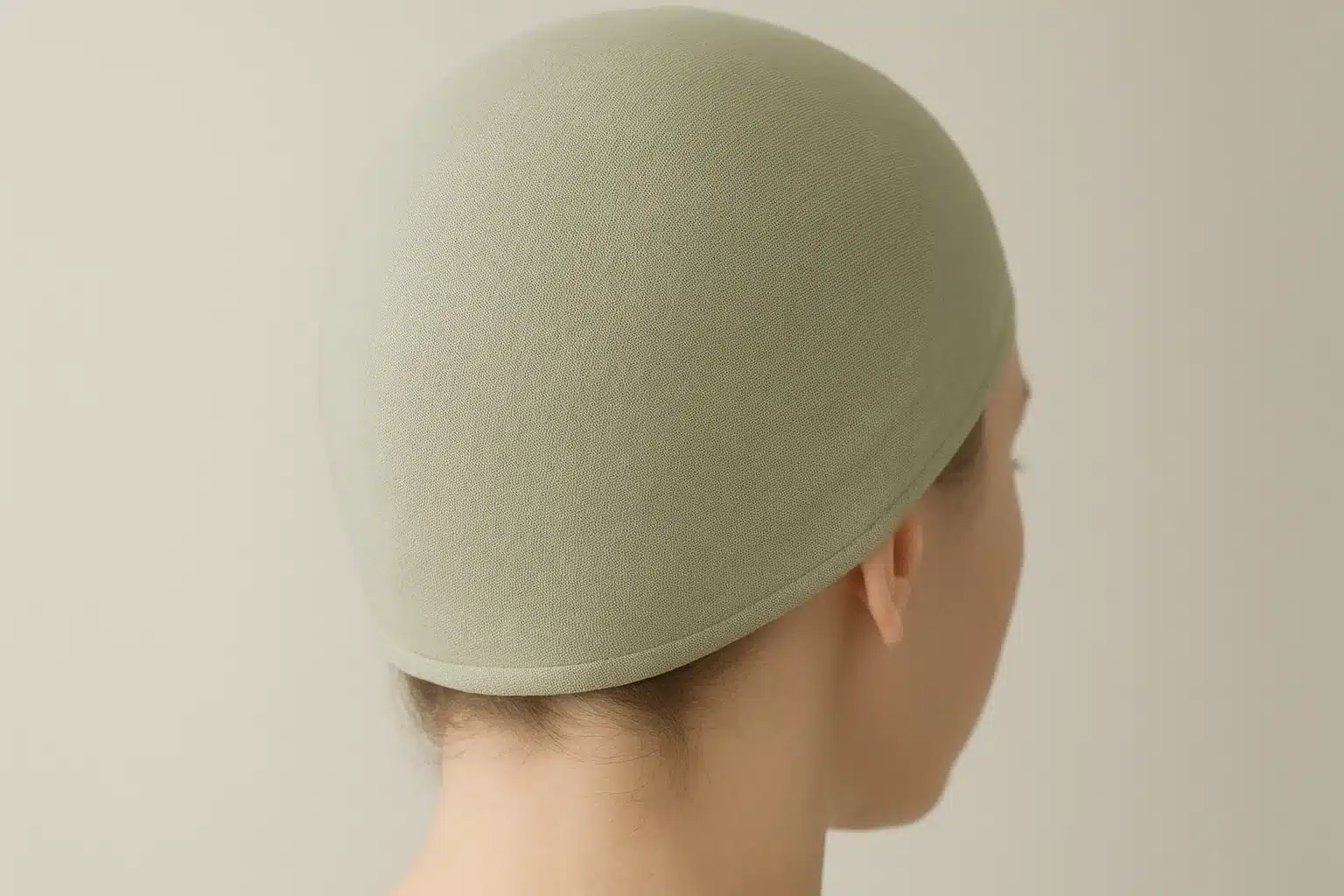
- Wig Liner: A separate, stocking-like layer worn underneath the wig. Its primary job is to act as a barrier between your scalp and the wig, absorbing sweat and reducing friction.
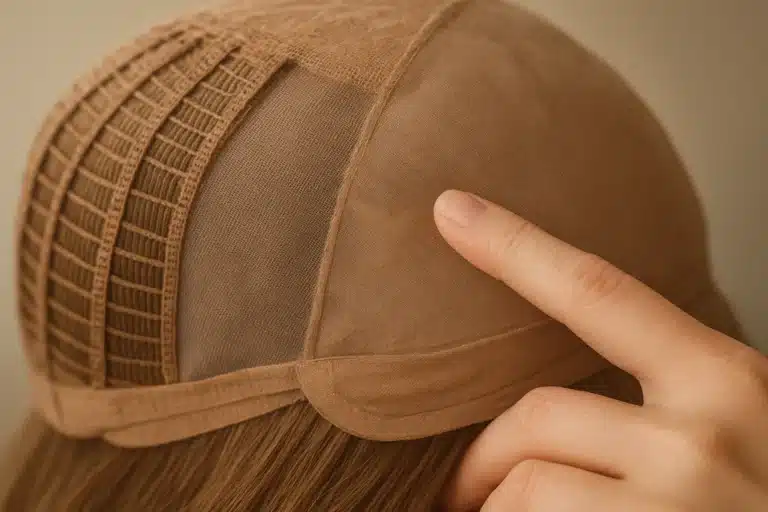
- Wig Cap: This usually refers to the actual construction of the wig itself (the base the hair is attached to), though some people use “cap” to mean “liner.”
- Wig Grip: A band, often made of velvet or silicone, designed specifically to prevent the wig from slipping. While excellent for security, some grips can add bulk or heat.
The Material Matrix: Choosing the Right Fabric
Not all liners are created equal. When selecting a barrier for a sensitive scalp, the fiber content is the single most important factor. Here is a breakdown of how common materials perform for sensitive skin:
Bamboo Viscose
- The Verdict: The Gold Standard for sensitive scalps.
- Why: Bamboo fibers are naturally round and smooth, meaning no microscopic spurs to irritate the skin. They are highly breathable, moisture-wicking (pulling sweat away from the scalp), and possess natural antibacterial properties that help prevent odors.
- Best For: Chemotherapy patients and those with hyper-sensitive skin.
Cotton
- The Verdict: Good, but has limitations.
- Why: Cotton is soft, natural, and breathable. However, it is highly absorbent. Instead of wicking moisture away, it tends to hold onto sweat. If you perspire heavily or have hot flashes, a damp cotton liner can eventually cause chafing or a “clammy” feeling.
- Best For: Short-term wear in cooler climates.
Silk
- The Verdict: Excellent for friction reduction.
- Why: Silk has the smoothest surface of any natural fiber. It allows the wig to glide slightly without catching on the skin, which preserves the skin barrier. It is also excellent at regulating temperature.
- Best For: Alopecia patients looking to prevent friction burns or dry skin.
Nylon / Synthetic Mesh
- The Verdict: Proceed with caution.
- Why: While cheap and readily available, synthetic mesh traps heat and can feel rough against bare skin.
- Best For: Individuals with full biological hair who just need to contain their hair under a wig.
Condition-Specific Recommendations
Your scalp’s needs are unique to your medical situation. Here is how to pair your condition with the right solution.
For Post-Chemotherapy Tenderness
When hair follicles are shedding or regrowing, the scalp can feel bruised or raw. You need a “cushioning” effect.
- Recommendation: Look for seamless bamboo liners. The lack of seams prevents pressure points, while the bamboo regulates the temperature fluctuations often associated with treatment.
- Pro Tip: Avoid wig grips during this phase if possible; a properly fitted liner should provide enough friction for security without the pressure of a band.
For Alopecia (Totalis or Universalis)
Without hair, friction is the enemy. You might also find that wigs slip more easily.
- Recommendation: A hand tied human hair wig is often the ultimate investment for comfort because the cap construction is soft and moves like skin. However, underneath, pair it with a silk liner or a specialized bamboo liner with a silicone gripper fused to the outside. This gives you the skin protection of natural fiber with the security you need.
For Eczema and Psoriasis
These conditions thrive on heat and moisture. A liner that traps sweat is a recipe for a flare-up.
- Recommendation: Prioritize moisture-wicking capabilities above all else. Bamboo or high-tech cooling blends are superior here. You want to keep the scalp dry and cool to prevent the “itch-scratch” cycle. Ensure you change your liner immediately if it becomes damp.
Actionable Care: Keeping Your Scalp Healthy
Even the best hypoallergenic liner can become an irritant if not cared for properly. Oils, skin cells, and product residue build up on the fabric after a single wear.
- The Rule of Three: We recommend owning at least three liners: one to wear, one in the wash, and one as a spare.
- Washing Protocol: Wash your liners after every wear using a fragrance-free, hypoallergenic detergent. Residue from harsh detergents is a common, hidden cause of scalp rashes.
- Monitor Your Scalp: Make it a habit to inspect your scalp when you take your wig off. Red marks indicate pressure points (your wig or liner may be too tight), while generalized redness may indicate a reaction to the material or heat.
Frequently Asked Questions
Can a liner help if my wig itself is itchy?
Absolutely. A high-quality liner acts as a shield. If you have a standard wefted wig that feels scratchy, a thick bamboo liner can completely mask the texture of the wig cap, allowing you to wear a wider variety of styles comfortably.
Will wearing a liner make me hotter?
It is a common misconception that adding a layer adds heat. In reality, a moisture-wicking liner (like bamboo) actually cools you down. It pulls hot sweat off your skin and allows it to evaporate, which acts as a cooling mechanism—much like technical sportswear.
How do I stop my liner from slipping back?
If you have total hair loss, liners can sometimes slide. Look for liners that feature a “Swiss lace” front (for grip) or those with integrated silicone patches. Alternatively, wearing a velvet wig grip over your liner provides maximum security.
Taking the Next Step
Choosing the right liner is a small adjustment that yields massive returns in comfort. By prioritizing your scalp health, you ensure that wearing a wig remains a positive, empowering part of your life.
Remember, proper wig maintenance extends beyond the hair fibers; it starts with keeping the layer against your skin pristine. As you continue your journey, listen to your body—if it hurts, there is a solution. You do not have to compromise on comfort to look your best.