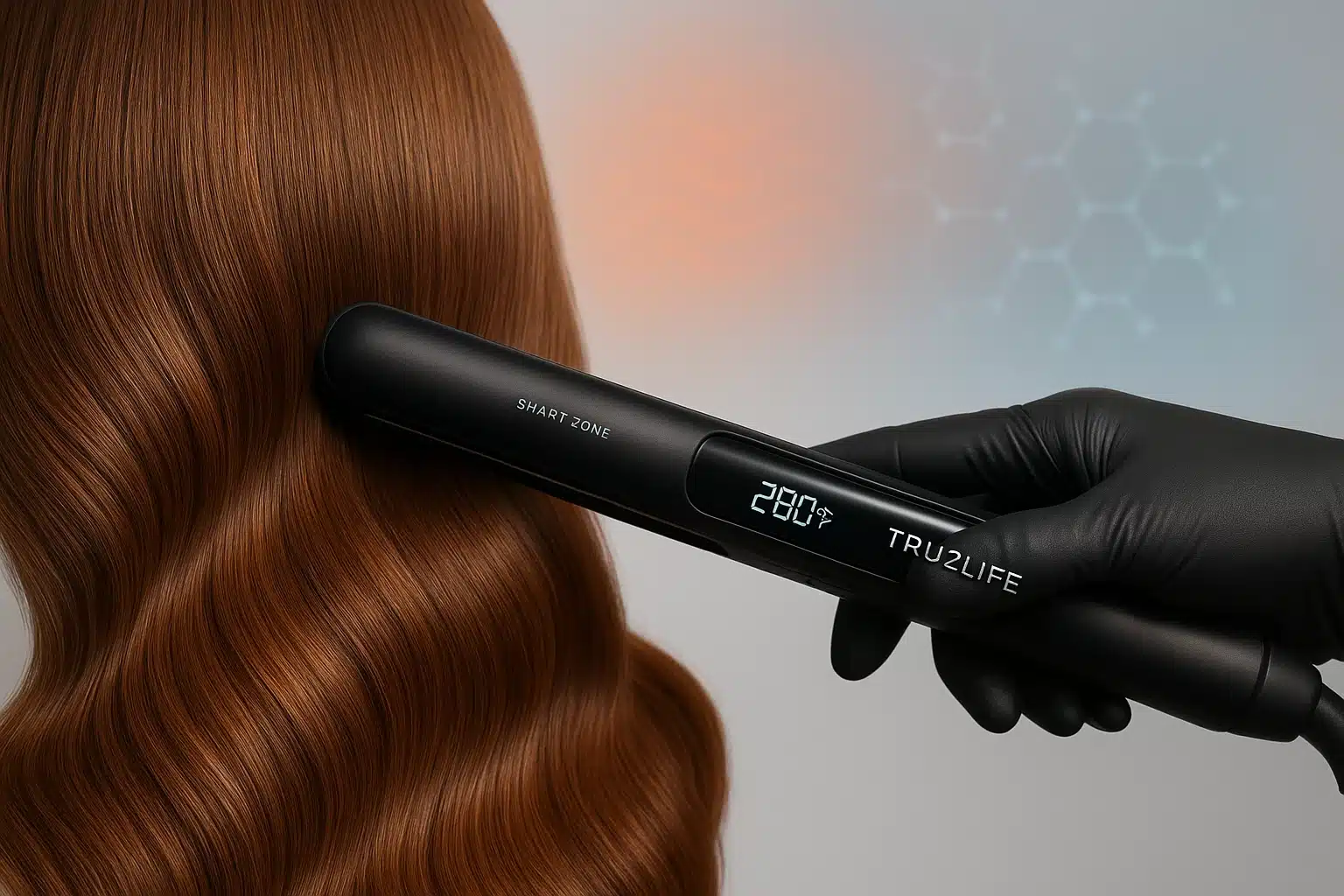
Imagine styling your hair once and having those perfect beach waves survive a rainstorm, a humid afternoon, and even a wash cycle. For anyone used to biological hair, this sounds like magic. But in the world of modern alternative hair, it isn’t magic—it is material science.
Raquel Welch’s Tru2Life heat-friendly synthetic fiber represents a significant leap forward in wearable technology. However, for many first-time wearers, the transition from traditional synthetic (which cannot handle heat) to heat-friendly fibers can be daunting. Before diving into the mechanics of heat tools, it helps to understand the broader context of these innovations. For a comprehensive look at the collections, check out The Definitive Guide to Raquel Welch Wigs: Styles, Caps, and Innovations, which covers the foundation of what makes this brand unique. Once you understand the “what,” you are ready to master the “how.”
This guide moves beyond simple instructions to explain the science of why Tru2Life fiber behaves the way it does. By understanding the principles of thermoplastic memory, you can style your wig with confidence, extend its lifespan, and avoid the common mistakes that lead to damage.
The “Aha” Moment: Understanding Thermoplastic Memory
To master styling, you must first understand the material. Tru2Life fiber is a high-tech thermoplastic. Unlike standard synthetic hair, which has a low melting point and is fixed permanently at the factory, Tru2Life fibers are designed to be malleable when heated and rigid when cooled.
This property is known as Thermoplastic Memory.
Here is the science simply put:
- Heat Unlocks the Shape: When you apply heat (within the safe temperature range), the chemical bonds in the fiber relax. The fiber becomes pliable, like warm wax or soft clay.
- Cooling Locks the Style: This is the critical step most people miss. The fiber does not set while it is hot. It only locks into its new shape once it cools down completely.
If you curl a Tru2Life wig with a curling iron and release the curl while it is still hot, gravity will pull the fiber straight before the bonds have a chance to re-harden. The “memory” is only written when the fiber returns to room temperature.
The Stylist’s Toolkit and The Golden Rules
You don’t need a salon license to style these wigs, but you do need the right tools. Using tools designed for biological hair can be disastrous because they often run too hot.
The Tools You Need
- Digital Temperature-Controlled Styling Iron: Precision is everything. You need to see the exact degree.
- Wide-Tooth Comb: Essential for detangling without stretching the heated fiber.
- Metal Duckbill Clips: Used to pin curls while they cool.
- Water Spray Bottle: A light mist helps protect the fiber and conduct heat evenly.
The Golden Rule of Temperature
There is a massive difference between the maximum temperature a fiber can withstand and the optimal temperature for styling.
- The Danger Zone (350°F / 180°C): This is the absolute maximum limit. While the manufacturer states the fiber can handle this, operating at the limit leaves no margin for error. Sustained heat at this level can cause the fiber to singe or lose its matte finish.
- The Smart Zone (275°F – 300°F / 135°C – 150°C): This is the sweet spot. It is hot enough to relax the bonds for styling but cool enough to maintain the integrity of the fiber over years of wear.
Pro-Tip: Never use a standard curling iron that lacks a temperature dial. Most standard irons default to 400°F, which will instantly melt synthetic fiber.
Mastery: Step-by-Step Styling Techniques
Now that we understand the physics of the fiber, we can apply specific techniques to achieve salon-quality results.
How to Curl: The “Hold and Cool” Method
The biggest frustration for new wearers is curls that fall out immediately. This happens because the “cooling” step was skipped.
- Heat: Wrap a small section of hair around your curling iron (set to 280°F). Hold for 7–10 seconds.
- Catch: Slide the iron out carefully, catching the hot curl in your gloved hand. Do not let it drop!
- Pin: While the fiber is still hot and coiled, pin it against the cap using a metal clip.
- Cool: Leave the clips in until the fiber is completely cool to the touch. This is when the “memory” is being set.
- Release: Once cool, remove the clips. The curl will now bounce and hold—even after you wash the wig.
How to Straighten: The Chase Method
Straightening a heat-friendly wig is also the best way to maintain it.
- Section: Separate the hair into manageable 1-inch sections.
- Comb: Place a fine-tooth heat-resistant comb at the root.
- Chase: Follow the comb immediately with your flat iron. The comb aligns the fibers, and the iron smooths them.
- Cool: Allow the hair to hang straight while cooling. Do not tuck it behind your ears until it is cold, or you will create a permanent bend.
Restoration: Turning Frizz into Smoothness
One of the unique characteristics of heat-friendly fiber is that it can develop “friction frizz” at the nape of the neck due to rubbing against clothing. Many assume the wig is ruined when this happens.
Actually, heat is the cure.
Because Tru2Life is thermoplastic, you can use your flat iron to smooth out friction frizz. By applying the Chase Method described above to the frizzy ends, you effectively “iron out” the damage, pressing the microscopic texture back into a smooth surface. This maintenance routine can significantly extend the life of your wig.
Frequently Asked Questions
Q: Can I use a blow dryer on my Tru2Life wig?
A: Yes, but with caution. Air drying is generally recommended to preserve the style. If you must blow dry, use a low-heat setting and avoid stretching the fiber while it is hot, as this can cause it to lose its elasticity.
Q: How often should I heat style my wig?
A: You don’t need to style it after every wash. The “memory” of the fiber means the style will return after washing and air drying. You only need to use heat when you want to change the style or smooth out frizz.
Q: Will the fiber lose its style if I get caught in the rain?
A: No. Unlike human hair, which reacts to humidity by frizzing or dropping its curl, synthetic fiber is impervious to water. Your curls will stay locked in until you apply heat again to straighten them.
Q: Why does my wig feel stiff after styling?
A: This usually means too much heat was applied, or a styling product (like hairspray not designed for wigs) built up on the fiber. Wash the wig and try styling again at a lower temperature (275°F).
Conclusion
Styling a Raquel Welch Tru2Life wig doesn’t have to be a source of anxiety. Once you respect the science—specifically the need to let the fiber cool to set—you gain total control over your look. This fiber offers the best of both worlds: the permanence of synthetic style retention with the versatility of human hair.
By keeping your tools at the right temperature and understanding the “why” behind the techniques, you aren’t just wearing a wig; you’re mastering an art form. Start with a small section at the nape of the neck to practice your timing and temperature, and soon you’ll be styling with the confidence of a professional.