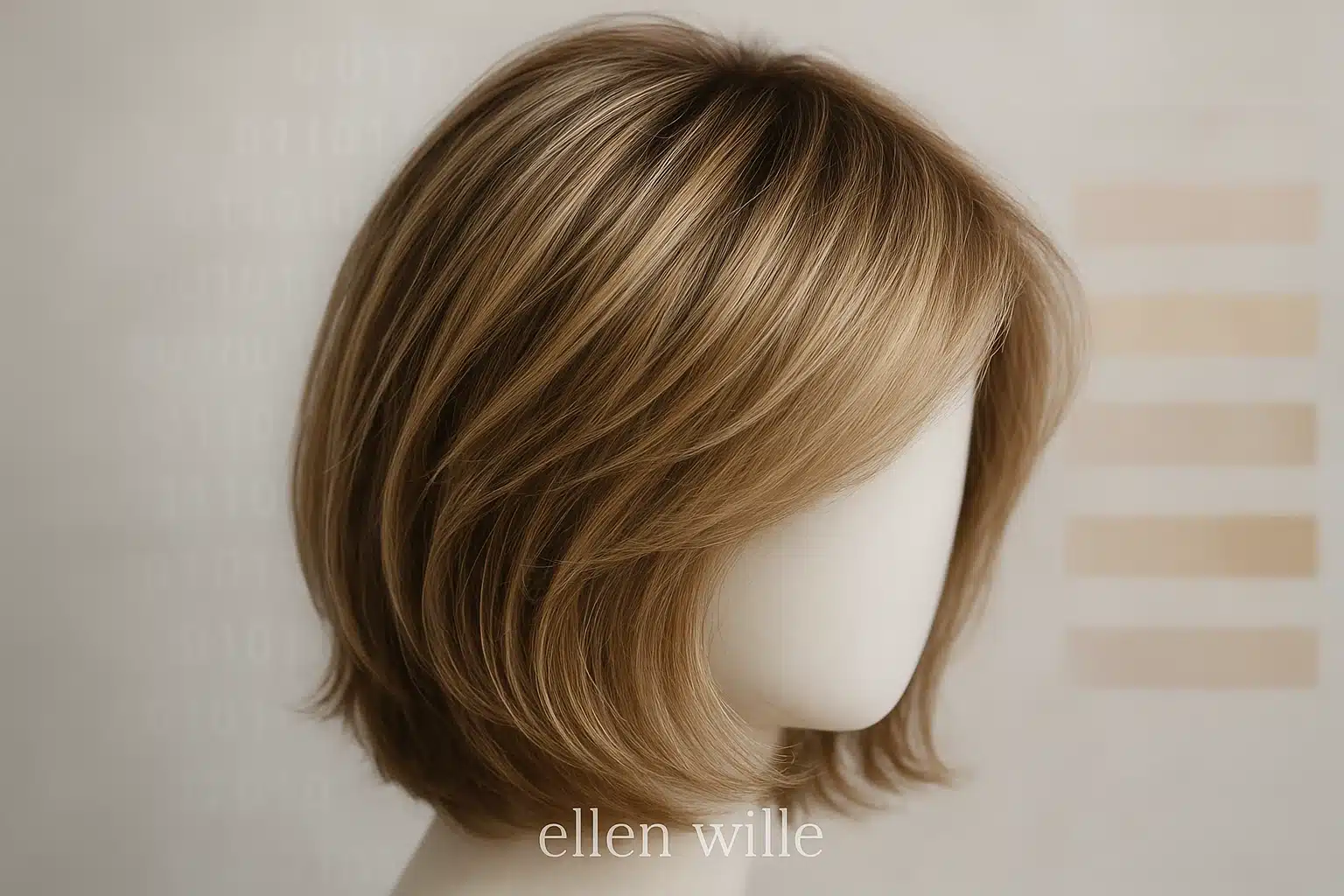
We have all been there. You are staring at a screen, mesmerized by a stunning shade of blonde or a rich, dimensional brunette on a model. It looks perfect. You click “add to cart,” wait eagerly for the package, and when it arrives, you realize the color looks different in your bathroom mirror than it did under the professional studio lights.
Color is complex, and nowhere is that truer than in the world of high-quality alternative hair. If you have already started exploring premium options, you may have consulted resources like Your Complete Guide to Ellen Wille Wigs: Finding Your Perfect Style, only to find yourself paused by the sheer number of color choices available.
Ellen Wille is renowned not just for style, but for a mastery of color that mimics biological hair growth. However, navigating their naming conventions—from “Bernstein Rooted” to “Chocolate Mix”—can feel like learning a new language. This guide serves as your translator, decoding the numbers, names, and nuances so you can choose a shade that doesn’t just look good on a screen, but looks natural on you.
The Secret Language of Numbers vs. Names
One of the biggest “aha moments” for wig buyers comes when they stop reading the names and start reading the numbers.
In the marketing world, a color might be called “Dark Sand” on one website and “Sand Rooted” on another, leading to confusion. However, the technical color code remains the constant “DNA” of the wig.
Ellen Wille uses a specific coding system that usually involves two or three numbers (e.g., 14/16/12). Understanding this numeric literacy is your superpower against purchasing mistakes.
How to Read the Code
Think of the color code as a recipe. The numbers correspond to the standard color level system used by professional hair colorists:
- 1 – 6: The Darkest Browns and Blacks (1 is Black, 6 is Dark Blonde/Light Brown)
- 8 – 14: Medium to Light Browns and Dark Blondes
- 16 – 26: Medium to Light Blondes
- 30 – 33: Auburns and Reds
- 34 – 60: Grey, Silver, and White blends
When you see a code like 14.26.12, it tells you the exact composition of the wig:
- Dominant Base (14): A dark blonde/light brown foundation.
- Highlight/Blend (26): A golden blonde highlight running through it.
- Root or Lowlight (12): The darker shade used to create depth or a rooted effect.
Pro Tip: If you fall in love with a color but the name seems different across collections, check the numbers. If the code matches, the color blend is identical.
Decoding the Alphabet: Understanding Color Blends
Once you know the numbers, you have to look at the “finish.” Ellen Wille wigs are famous for their hand-painted look, which is achieved through specific blending techniques. These are often denoted by words following the color name.
Here is the glossary you need to differentiate the “bougie wigs” look from standard hairpieces:
Rooted vs. Mix vs. Tipped
- Mix: This indicates a fashionable blend of two or more colors. The colors are mixed throughout the hair strands to create a multi-tonal look that catches the light differently than a flat, solid color.
- Rooted: This is the gold standard for realism. The hair at the “root” (where it leaves the cap) is darker than the lengths, mimicking natural hair growth.
- Note on Depth: “Rooted” usually implies a darker root that extends about 1-2 inches. If you see terms like “Shaded,” the transition might be more subtle or “smudged.”
- Lighted: This indicates that the hair framing the face is lighter than the rest of the wig. It’s a technique stylists use to brighten the complexion and draw attention to the eyes.
- Tipped: A variation where the ends of the hair are lighter, mimicking the natural way sun lightens hair over time.
The Skin Tone Matchmaker
The most common question we hear isn’t “is this a pretty color?” but rather, “will this color look pretty on me?”
The key to answering this lies in your undertones. You can wear almost any hair color (blonde, brunette, red) as long as the tone of that color matches your skin’s undertone.
The Mirror Test
To determine your undertone, stand in natural light and look at the veins in your wrist or consider the jewelry that looks best on you.
1. Cool Undertones
- Signs: Veins look blue or purple; silver jewelry makes your skin glow.
- The Ellen Wille Match: You want shades with “Ash,” “Champagne,” or “Plum” tones.
- Avoid: Excessive gold or copper, which can make you look washed out.
- Top Pick: Champagne Rooted (Code approx. 22/25/16). This provides a soft, creamy blonde without the yellow brassiness.
2. Warm Undertones
- Signs: Veins look greenish; gold jewelry looks harmonious with your skin.
- The Ellen Wille Match: Look for words like “Bernstein” (Amber), “Chocolate,” “Sand,” or “Auburn.”
- Avoid: Stark platinum or heavy ash colors, which can make you look tired.
- Top Pick: Bernstein Rooted. This is a best-seller for a reason—it blends warm browns and golden blondes for a sun-kissed look.
3. Neutral Undertones
- Signs: It’s hard to tell if veins are blue or green; you look good in both silver and gold.
- The Ellen Wille Match: You are the universal recipient! You can pull off the widest range of colors, from Sandy Blonde Rooted to Espresso Mix.
The Lighting Reality Check
One of the biggest frustrations for new learners is the “Lighting Gap.” You must remember that product photos are taken in perfectly calibrated studio environments.
- Sunlight: Will pull out the “warm” tones. A color like Sand Rooted will gleam with gold and honey hues outdoors.
- Office/Fluorescent Light: Tend to flatten color and pull out “cool” or green tones. That same Sand Rooted might look more like an ash-beige indoors.
- Indoor Warm Bulbs: Will make everything look redder or mellower.
The Fix: When researching a color, try to find videos or photos of the wig in natural movement. This helps you see how the “Mix” and “Rooted” features interact with real-world environments.
Preserving the Masterpiece
Because Ellen Wille colors are often hand-tied or intricately factory-painted to achieve that multidimensional look, they require respect.
A common misconception is that you can customize these wigs with box dye or root spray. Please do not do this. Synthetic and high-end heat-friendly fibers do not react to chemical dyes the way human hair does. Even with human hair wigs, the factory processing makes them porous and unpredictable to dye.
The beauty of these wigs lies in their consistency. When you buy a specific code, you are buying a guarantee of that exact blend. Trust the “factory paint”—it is designed to hold its vibrancy far longer than a salon dye job.
Frequently Asked Questions
What is the difference between “Dark Sand” and “Sand Rooted”?
Often, nothing but the retailer’s choice of name! Always check the numeric code. If both are listed as 14/16/12 (or similar), they are the same color. However, sometimes “Dark Sand” implies a slightly darker overall hue without the distinct root. If the numbers differ, the color differs.
Can I dye my Ellen Wille wig to match my roots?
No. Synthetic fibers cannot be dyed with standard hair color. While human hair wigs can technically be deposited with darker color by a professional specialist, it is risky and voids warranties. It is much safer to buy the correct “Rooted” shade from the start.
Why does “Rooted” look different on two different wig styles?
The “Rooted” effect is hand-tied or machine-wefted differently depending on the cap construction. On a monofilament part, the rooting looks like it’s growing from your scalp. On a basic cap, the rooting provides general depth. The length of the root can also vary by style—shorter styles tend to have shorter roots to avoid looking like “regrowth.”
Your Next Steps
Understanding color codes is just the first step in curating your look. Now that you know how to decode the numbers and match them to your skin tone, you can browse with confidence rather than confusion.
Remember, the goal isn’t just to cover hair loss; it’s to find a style that makes you feel like the most vibrant version of yourself. Take your time, check your codes, and trust your undertones.