Imagine this scenario: It’s 5:00 PM, you have dinner plans at 7:00 PM, and your favorite wig is sitting on its stand looking a little lifeless. It’s not “dirty” enough for a full soak-and-wash routine—which would take hours to air dry anyway—but it lacks that fresh bounce and smells a bit like the restaurant you visited last week.
For years, wig wearers felt they had only two options: commit to the full wash cycle or wear a less-than-fresh piece. But the evolution of wig maintenance has introduced a third option that is changing the game. By mastering waterless cleaning methods, you aren’t just saving time; you are actively protecting your investment. In fact, integrating these techniques into your routine is a cornerstone of comprehensive wig care strategies, allowing you to maintain that salon-fresh look without the constant friction of traditional washing.
The “Waterless” Revolution: Why Less Water Means More Life
There is a common misconception that the more you wash a wig, the better maintained it is. In reality, the opposite is often true, especially for synthetic fibers. Every time you submerge, lather, rinse, and comb wet fibers, you introduce mechanical friction. Over time, this friction disrupts the structural integrity of the fiber, leading to frizz and tangling.
Here is the industry secret: Skipping two out of three traditional washes can potentially double a wig’s lifespan.
Waterless products allow you to bridge the gap between deep cleans. They serve two distinct purposes that are often confused:
- Aesthetic Correction: Fixing shine, volume, and texture.
- Hygienic Maintenance: Removing oils, sweat, and odors from the cap.
Understanding the difference between these two goals is the first step in mastering the art of the quick refresh.
Dry Shampoo vs. Waterless Cleanser: Knowing the Difference
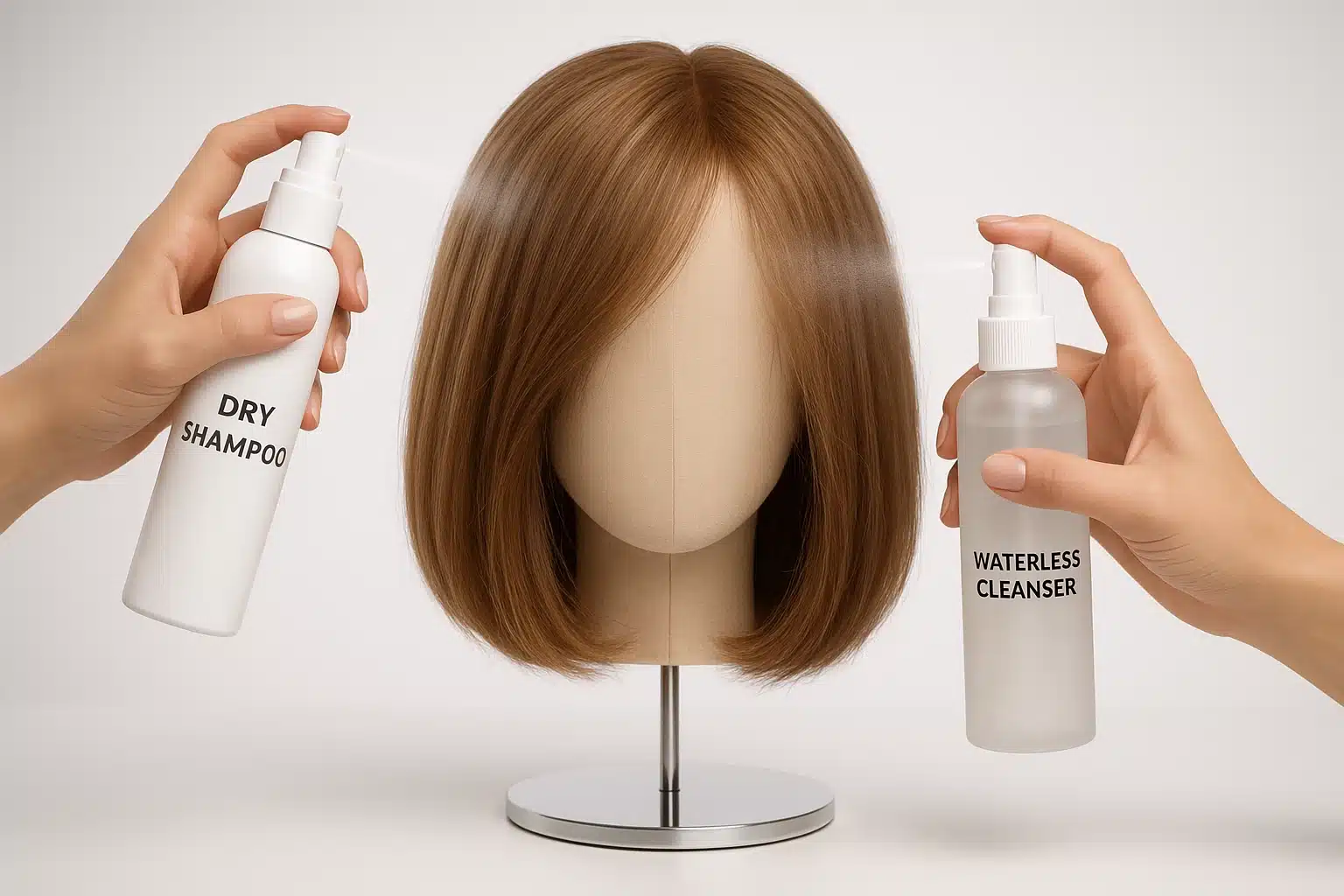
One of the most frequent questions we encounter is, “Are waterless cleanser and dry shampoo the same thing?” The short answer is no. Think of them as the difference between a face wash and a makeup setting powder.
Dry Shampoo: The Fiber Perfector
Dry shampoo is primarily for the hair fiber, not the cap.
- The Function: It utilizes starch-based ingredients to absorb excess oils on human hair wigs or to mattify the artificial “plastic” sheen on synthetic wigs.
- The “Aha” Moment: New wig wearers often struggle with synthetic wigs looking too shiny and unnatural. A light mist of dry shampoo dulls that sheen, mimicking the texture of biological hair.
Waterless Cleanser: The Cap Refresher
Waterless cleanser (sometimes called “wig refresher spray”) is primarily for the cap construction.
- The Function: These are often enzyme-based or antimicrobial sprays designed to break down bacteria caused by sweat and scalp oils that accumulate on the velvet ear tabs and lace front.
- The Reality: Dry shampoo might mask a smell with fragrance, but it traps bacteria against the cap. A waterless cleanser actually neutralizes it.
The Synthetic Shine Hack (and How to Do It Right)
If you are wearing a synthetic piece, dry shampoo is your best friend for achieving a realistic look. However, there is a science to applying it without ruining the fiber.
The “8-Inch Rule”
A breakthrough moment for many of our customers is learning that distance matters. If you spray dry shampoo closer than 6 inches to the fiber, the propellant and powder hit the hair in a concentrated burst. This creates a “caking” effect that looks like dandruff and is nearly impossible to brush out of synthetic texture without damaging it.
The Protocol:
- Hold the can at least 8 to 10 inches away from the wig.
- Spray in short, sweeping bursts rather than a continuous stream.
- Let the powder sit for 30 seconds to absorb shine.
- Gently shake the wig or use a wide-tooth comb to distribute.
Talc vs. Starch: A Crucial Distinction
When choosing a dry shampoo, check the ingredients.
- Rice/Tapioca Starch: Preferred. These particles are spherical and “bounce” off the fibers after doing their job, making them easier to brush out.
- Talc: Avoid if possible. Talc is heavier and tends to clog the delicate knots of monofilament tops, which can lead to cap stretching and visible residue.
The Safe Substitute Tier List: Kitchen Sink Realities
We know that sometimes you are in a pinch. You might be traveling and realized you forgot your specialized wig care products. While professional formulas are always safer because they account for the porosity of wig fibers, here is the honest truth about household substitutes.
Tier 1: The “Clarifying” Solution (Dawn Dish Soap)
- The Myth: “It’s gentle enough for ducks, so it’s safe for wigs.”
- The Reality: Dish soap is a degreaser. It is highly effective at stripping oil, but it is too effective for daily use. It will strip the protective coating off synthetic fibers, leaving them prone to friction frizz.
- Safe Usage: Only use this as an “emergency deep clean” if your wig has heavy product buildup. Dilute heavily (1 teaspoon per basin of water) and follow immediately with a conditioning spray.
Tier 2: The “Texture” Solution (Baby Powder)
- The Myth: “It works just like dry shampoo.”
- The Reality: Baby powder is heavier and white. On darker wigs, it creates a dull, grey cast that makes the hair look dusty rather than matte.
- Safe Usage: If you must use it to reduce shine, apply it to your hands first, rub them together, and then lightly finger-comb through the hair. Never shake it directly onto the part line, or you will clog the monofilament mesh.
Tier 3: The “Odor” Solution (Fabric Softener/Baking Soda)
- The Myth: “Soaking a wig in fabric softener makes it soft again.”
- The Reality: Fabric softener leaves a waxy coating. While it feels soft initially, that wax attracts dirt and dust like a magnet, causing the wig to become dirty much faster.
- Safe Usage: Avoid fabric softeners. For odors, placing the wig in a box with an open box of baking soda (without touching the wig) can help absorb smells over 24 hours without coating the fibers.
The Danger Zone: When to Stop Refreshing and Start Washing
Waterless care is about extension, not permanent replacement. There comes a point where product buildup—layers of dry shampoo, conditioning spray, and environmental dust—creates a barrier on the fiber.
You know your wig has “hit the wall” and needs a traditional wet wash when:
- The Stiffness Test: The hair moves in clumps rather than individual strands.
- The Dullness: The fiber looks flat and absorbs light rather than reflecting it naturally.
- The Cap Feel: The interior of the cap feels tacky or sticky to the touch.
At this stage, adding more dry shampoo will only increase friction. It is time to reset the fiber with a gentle, immersion-based wash.
Frequently Asked Questions
Q: Can I use regular drugstore dry shampoo on my synthetic wig?
A: generally, yes, but look for clear or “invisible” formulas. Colored dry shampoos (for covering roots) can permanently stain synthetic fibers. Avoid products with high alcohol content, as they can dry out the fibers over time, leading to brittleness.
Q: How often should I use waterless cleanser?
A: If you wear your wig daily, a quick spritz of waterless cleanser on the inside of the cap is recommended every time you take it off. This prevents bacteria from multiplying overnight.
Q: Will dry shampoo make my wig frizzy?
A: Not if used correctly. However, if you brush the wig aggressively while the dry shampoo is still wet or tacky, you can stretch the fibers. Always let the product dry completely before styling.
Q: Can I use heat tools after using dry shampoo?
A: Be cautious. Some dry shampoos contain flammable propellants or ingredients that can bake onto the fiber when exposed to heat tools. It is best to use heat tools on clean hair, or check the label of your dry shampoo for heat safety.
Next Steps in Your Journey
Mastering waterless care is a significant milestone in your journey as a wig wearer. It signifies a shift from simply wearing a wig to actively caring for one. By keeping a travel-size dry shampoo and a cap deodorizer in your kit, you ensure that you are never caught off guard, whether you’re at a lengthy event or on a weekend getaway.
Remember, the goal isn’t just to make the wig last longer; it’s to make sure you feel confident and beautiful every single time you put it on. Start experimenting with these refreshing techniques, and you will likely find that your wig looks better—and feels fresher—than ever before.