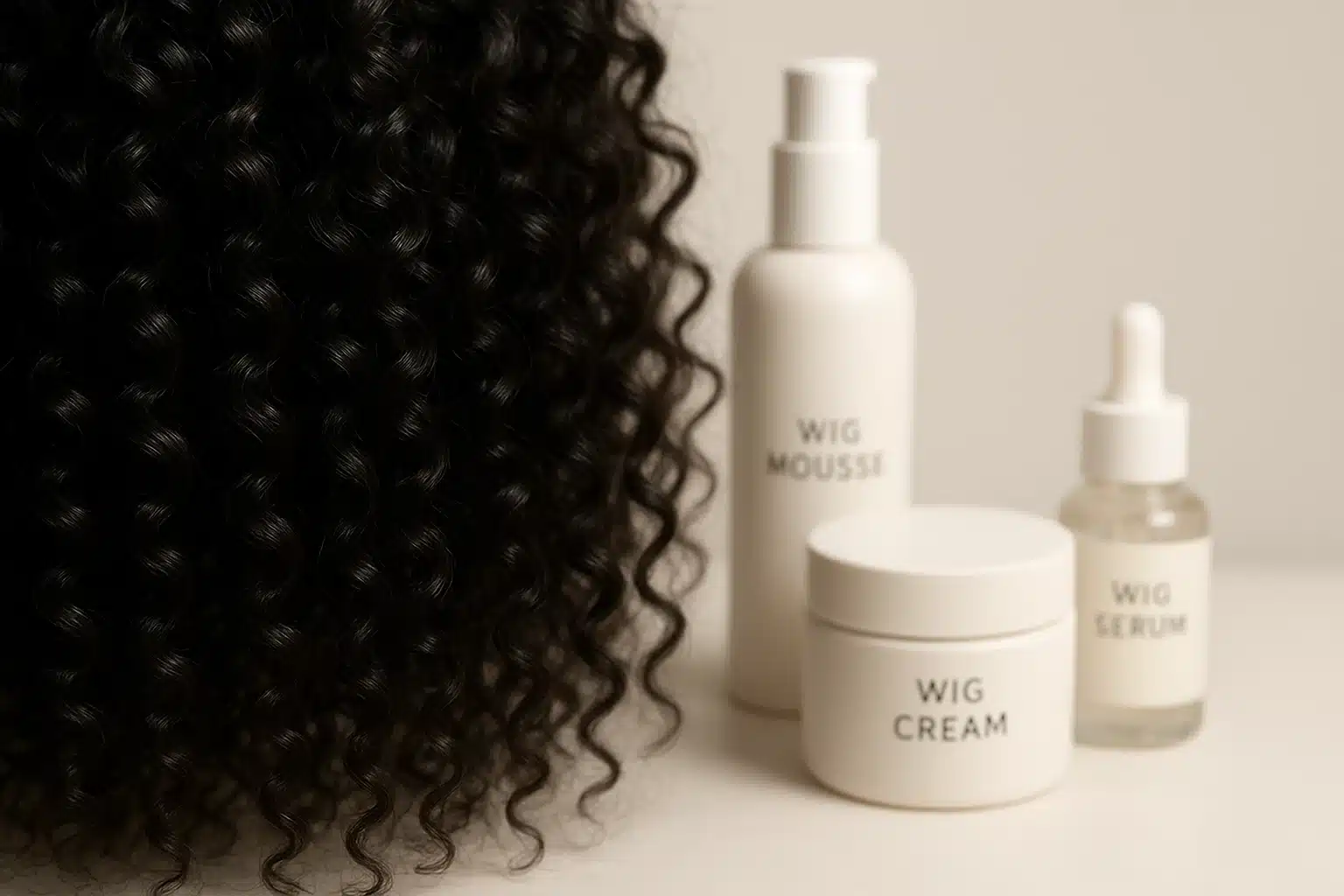
You know the feeling: you put on a stunning curly unit, walk out the door feeling like a superstar, and three hours later, you check a mirror to find a halo of fuzz where those defined ringlets used to be. It is a frustration that sends many first-time wearers back to straight styles, but it doesn’t have to be that way. The truth is, managing textured wigs requires a completely different mindset than managing straight hair—or even your own biological curls.
The secret to longevity isn’t just about buying expensive sprays; it’s about understanding the unique physics of wig fibers. To maintain a flawless look, understanding the fundamentals in our Definitive Guide to Wig Care Products is essential for every wearer, but textured hair requires a specific set of rules. Whether you are rocking a synthetic beach wave or a tight coil human hair unit, the right product cocktail can mean the difference between a tangled mess and a salon-fresh look that lasts all day.
Fiber Science 101: The Mystery of the Frizz
To choose the right products, you first need to understand why your wig is frizzing. The cause differs significantly depending on what your wig is made of.
Synthetic Hair: The Plastic Memory Game
Synthetic hair is essentially fine denier plastic. Unlike natural hair, it does not have “thirst.” It cannot absorb moisture because it has no porosity. When a synthetic wig looks frizzy or dry, it isn’t actually dry—it is experiencing static friction.
- The Goal: You aren’t moisturizing; you are lubricating. You need products that create a slip barrier to prevent fibers from snagging on each other.
- The Trap: Using heavy oils meant for human hair will simply sit on top of the plastic fiber, attracting dust and creating a dull, heavy look.
Human Hair: The Porosity Factor
Human hair wigs are made of biological protein, but because the hair has been processed and detached from the scalp, it no longer receives natural oils (sebum).
- The Goal: You are hydrating and sealing. You need to manually inject moisture into the cuticle and then lock it in.
- The Trap: Without a sealant, the moisture evaporates, leading to the dreaded “puff” as the hair swells in humidity.
The Product Toolkit: What You Actually Need
Walk into a drugstore, and you’ll see shelves packed with “curl defining” products. However, for wig wearers, we can narrow this down to three essential tools.
1. Mousses: The Structure Builders
Mousse is the MVP for synthetic wigs. Because synthetic curls have “memory” (baked into the fiber at the factory), lightweight mousse helps revive that memory without weighing the fiber down.
- Best For: Reviving the bounce in loose waves and tightening spirals.
- Technique: Look for alcohol-free formulas to avoid drying out the fiber over time.
2. Creams: The Hydration Heroes
Curl creams are denser and richer. These are vital for human hair wigs that feel straw-like or brittle.
- Best For: deeply moisturizing textured human hair and weighing down flyaways on coarser textures.
- Caution: Use sparingly on synthetic fibers. If you must use a cream on synthetic hair, ensure it is water-soluble so it washes out easily during your next synthetic wig care routine.
3. Serums and Sprays: The Armor
Silicone-based serums are controversial in the natural hair world, but in the wig world, they are essential. They act as “armor” against friction.
- Best For: The ends of long wigs and the nape area.
- The Selection: For synthetic hair, a spray-on detangler or light serum is ideal. For human hair, Argan or Jojoba oil blends work wonders to seal the cuticle.
The “Nape-Nest” Prevention Guide
If you wear shoulder-length or long curly lace front wigs, you are likely familiar with the “nape nest”—that mat of tangles that forms at the back of your neck. This isn’t poor quality; it’s physics. The friction from your collar and body heat causes the fibers to rub together and snap.
To prevent this, you need to treat the nape of your wig differently than the top:
- Section the hair: Lift the top layers of the wig.
- Apply the Armor: Apply a liberal amount of detangling serum or silicone-based spray specifically to the bottom layer of hair that touches your neck.
- The Result: This creates a slick barrier that allows the hair to glide over your clothing rather than catching and tangling.
The Modified LCO Method for Wigs
For those familiar with natural hair care, the LCO (Liquid, Cream, Oil) method is a standard. However, for wigs, we modify this to ensure we don’t loosen the hand-tied knots.
Step 1: Liquid (The Refresh)
Start with a water-based spray. For synthetic hair, this is just a fine mist of water to reset the static. For human hair, use a leave-in conditioner.
- Pro Tip: Never soak the roots. Wetting the cap excessively can cause the knots to swell and loosen, leading to shedding.
Step 2: Cream (The Definition)
Take a dime-sized amount of curl cream. Rub it between your palms to warm it up (emulsify).
- Application: Apply using the “Praying Hands” method—clasp your hands together over a section of hair and slide down from mid-length to ends. Avoid the roots entirely.
Step 3: Oil/Serum (The Seal)
Finish with a serum to lock in the style. This is crucial for curly lace front wigs to prevent them from reacting to humidity.
- The Crunch Test: If your wig dries “crunchy,” you’ve used too much product or the wrong type. Gently scrunch the hair upward with your hands once it’s fully dry to break the cast and reveal soft curls.
Troubleshooting Texture Challenges
Even with the best products, issues arise. Here is how to handle the most common texture emergencies.
“My Human Hair Wig is Dry and Frizzy”
If your unit has lost its luster, it likely has product buildup blocking moisture from entering.
- The Fix: You need to clarify and deep condition. Learning how to fix a frizzy human hair wig often involves a “reset wash” to strip old silicones followed by a deep hydration mask.
“My Synthetic Curls Are Straightening Out”
Heat friction can cause synthetic curls to relax or become frizzy ends.
- The Fix: You cannot “scrunch” the curl back in with product alone. You may need to use steam (for heat-friendly fibers) to reset the memory. Pin the curl in place, steam it, and let it cool completely.
Frequently Asked Questions
Q: Can I use regular drugstore products on my wig?
A: It is risky. Many drugstore products contain sulfates (which strip color and dry out fibers) or heavy waxes (which are impossible to wash out of synthetic hair). It is safer to stick to products formulated for wigs or high-end salon brands free of sulfates and parabens.
Q: How do I define curls without them looking “wet”?
A: The “wet look” usually comes from using too much gel or mousse. Switch to a curling cream for a softer finish, or ensure you “scrunch out the crunch” after your mousse has dried.
Q: Why does my wig tangle more in the winter?
A: Winter brings heavier clothing (scarves, wool coats) and drier air (static). Increase your use of detangling spray at the nape of the neck during colder months.
Q: Can I use the best conditioner for synthetic wigs on my human hair wig?
A: While you technically can, it may not be effective. Best conditioner for synthetic wigs is often designed to reduce static and coat the fiber, whereas human hair conditioner is designed to penetrate the cuticle. It is best to match the product to the fiber.
Embracing the Curl
Caring for textured wigs is an art form, but once you master the balance of moisture and lubrication, the results are incredibly rewarding. By understanding the science behind your specific wig type and building a toolkit of trusted products, you can extend the life of your favorite styles and step out with confidence every single day.
Ready to explore more styles? Browse our curated collection of beautiful, high-quality wigs designed to make you look and feel your best.