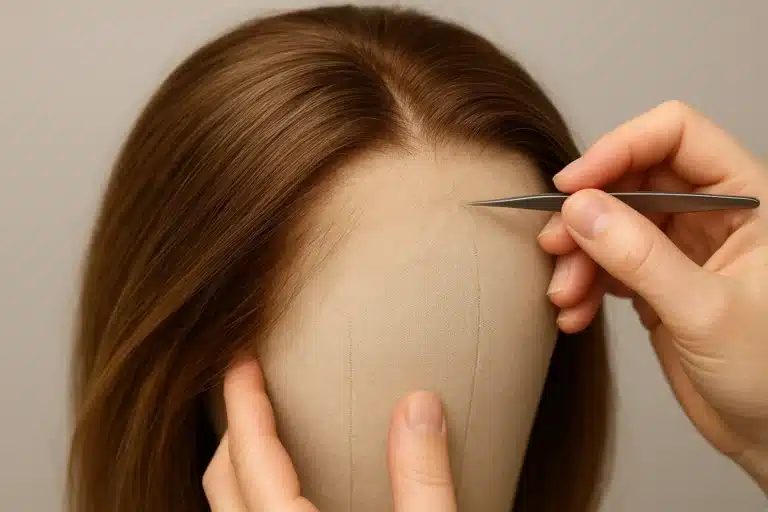
We have all experienced that specific moment of sinking realization. You are getting ready for the day, you pick up your favorite piece, and suddenly you notice it: the nape is looking a bit rougher than usual, or perhaps the lace doesn’t lay quite as flat as it used to. The immediate question is usually emotional—”Is my favorite look ruined?”—but the second question should be economic.
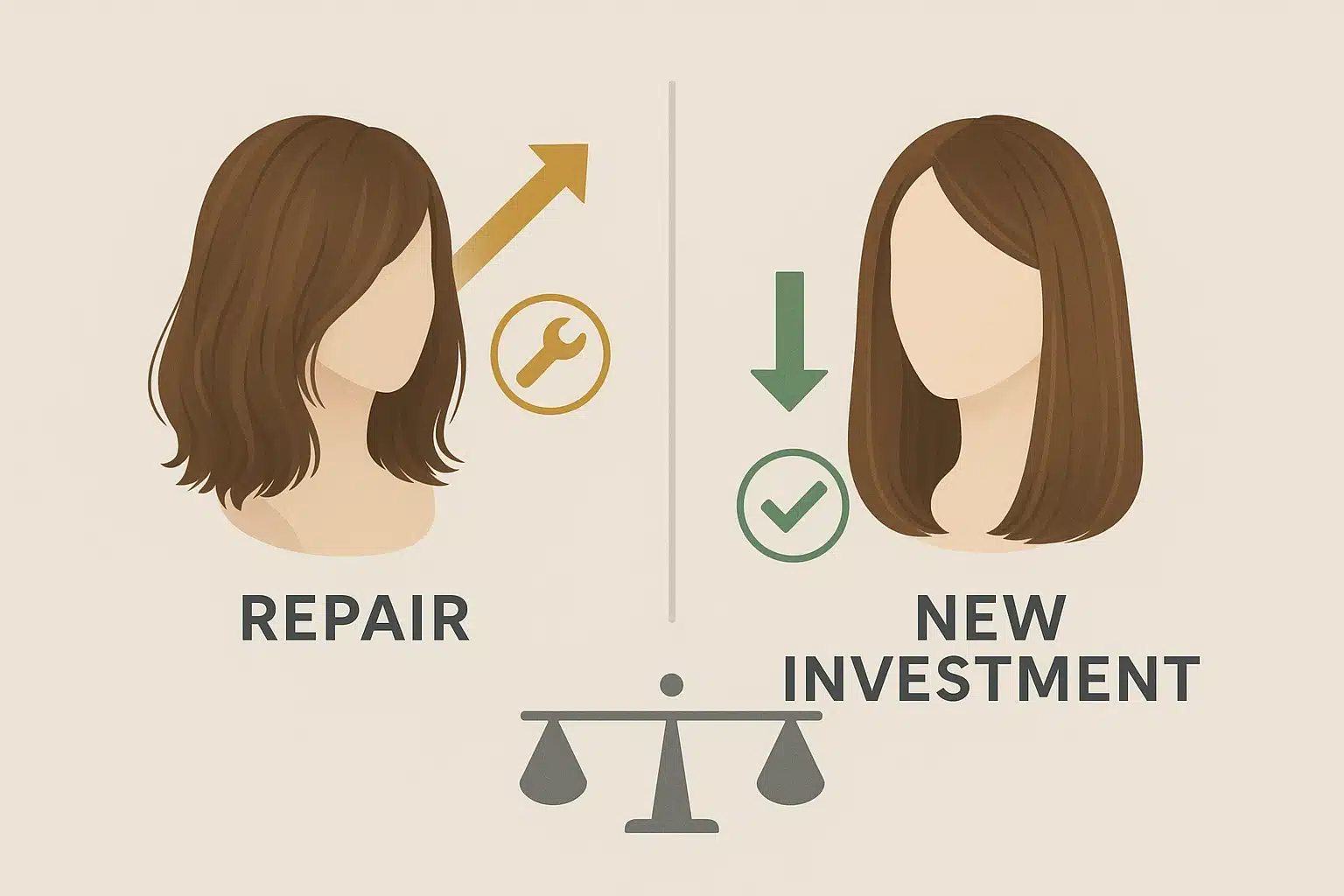
Owning a wig is not just about aesthetics; it is an investment in your confidence and your image. Just like a car or a high-end wardrobe staple, wigs have a lifecycle. The difference between a savvy wig owner and a frustrated one often comes down to knowing how to maximize wig ROI (Return on Investment). Instead of guessing whether to attempt a rescue mission or purchase a replacement, you can apply a practical cost-benefit framework to make the decision for you.
The Investor’s Mindset: Cost-Per-Wear
Before we dive into the technicalities of repair, we need to shift how we view wig ownership. It is easy to look at the upfront price tag, but the true value of a hairpiece is measured in “Cost-Per-Wear” (CPW).
The formula is simple:(Purchase Price + Maintenance Costs) ÷ Number of Days Worn = Cost-Per-Wear
If you buy a high-quality human hair wig for $1,000 and wear it 200 times, your cost is $5 per day. If you spend $300 repairing it, you need to ensure that repair extends the life of the wig enough to keep that daily cost efficient. This is where routine wig maintenance shifts from being a chore to being an asset protection strategy.
The Damage Assessment Audit: The “Big Three”
Not all wear and tear is created equal. Before opening your wallet for repairs or a new purchase, you must identify which of the “Big Three” structural issues you are facing.
1. Fiber Integrity (Frizz and Friction)
This is the most common issue, particularly with synthetic pieces. It usually starts at the nape of the neck due to friction against collars (often called “collar rub”).
- The Sign: The hair feels like straw, clumps together, or stands straight out at the ends.
- The Verdict: often fixable. Synthetic fibers can be revived with heat (steaming) to reset the fiber memory. However, if the fiber has actually snapped or “singed” from heat damage, the texture change is permanent.
2. Cap Mechanics (Elasticity and Fit)
The cap is the chassis of your wig. Over time, materials stretch.
- The Sign: You find yourself tightening the adjustable straps further than usual, or the wig feels insecure during daily movement.
- The Verdict: Risky. While some simple sewing can tighten a circumference, once the spandex or elastic materials in the wig cap construction degrade (lose their “snap”), the structural integrity is compromised.
3. Density Loss (The Shedding Factor)
All wigs shed over time, but there is a difference between normal shedding and balding.
- The Sign: You can see the wefts or the cap material through the hair, particularly at the part line.
- The Verdict: Variable. Human hair wigs can often be re-ventilated (new hair tied in), but for synthetic wigs, significant hair loss usually signals the end of the road.
The “Repair or Retire” Decision Matrix
To help you navigate this decision, we use a traffic light system based on the severity of damage and the type of hair.
Green Light: The DIY Fix (High ROI)
Proceed with repair if the issues are cosmetic and surface-level. These fixes cost very little money, mostly requiring your time and the right wig customization tools.
- Scenario: A heat-friendly synthetic wig has frizzy ends.
- Solution: A steam treatment or the “boiling water method” (for specific high-quality synthetics) can reset the plastic memory of the fiber, making it smooth again.
- Cost: <$20 for supplies.
Yellow Light: The Professional Repair (Moderate ROI)
Proceed with caution. This is where the math matters. These issues require a specialist.
- Scenario: A human hair wig has oxidized (turned brassy) or has a small tear in the lace.
- Solution: Professional color correction or specialized wig ventilation repair.
- Cost: $50 – $200 depending on the service.
Red Light: The Total Loss (Negative ROI)
Stop. Putting money into these wigs is throwing good money after bad.
- Scenario: The cap has permanently stretched, the monofilament top is torn, or the wig retains odors even after deep cleaning.
- Solution: Retire the piece.
- Cost: The price of a replacement.
The 50% Rule: A Financial Framework
If you are stuck in the “Yellow Light” zone, use the 50% Rule.
The Rule: If the cost of professional repair exceeds 50% of the cost of a brand-new replacement, invest in the new wig.
Why? Because a repaired wig is still a used wig. Even if you fix the lace or color, the remaining lifespan of the fibers and cap is shorter than that of a new unit.
Example A: The Synthetic Standard
- New Wig Cost: $250
- Repair Quote: $140 (for detailing and steaming)
- Decision: Replace. The repair is 56% of the replacement cost. You are better off putting that $140 toward a fresh $250 investment that starts with a 100% lifespan.
Example B: The Human Hair Investment
- New Wig Cost: $1,500
- Repair Quote: $300 (for re-knotting and deep conditioning)
- Decision: Repair. The repair is only 20% of the replacement cost. If this service extends the wig’s life by another 6-9 months, your ROI is excellent.
Myths vs. Reality in Wig Revival
When researching repair, you will encounter internet “hacks.” It is vital to separate safe methods from damaging myths.
- The Dish Soap Myth: You may read that Dawn dish soap is a miracle worker.
- Reality: It is excellent for stripping silicone buildup off synthetic fibers, but it is too harsh for human hair wigs, potentially stripping the cuticle and causing irreversible dryness.
- The Fabric Softener Soak: Often suggested to reduce shine.
- Reality: While it can reduce shine, fabric softener leaves a waxy residue that attracts dust and dirt, leading to faster fiber degradation over time.
Frequently Asked Questions
Can I re-dye a faded wig to save it?
If it is human hair, yes. Human hair can generally be dyed darker (depositing color), though lifting color (bleaching) is risky on processed hair. Standard synthetic wigs cannot be dyed with traditional hair dye as the fibers are plastic and will not absorb the pigment.
How long should a wig actually last?
This depends heavily on fiber and wear frequency. With daily wear, a standard synthetic wig typically lasts 3–6 months. Heat-friendly synthetics may last 2–4 months before needing heat treatment. High-quality human hair wigs can last 12 months or longer with proper care.
Is re-knotting lace worth it?
Re-knotting (adding hair back into the lace) is a meticulous process. It is generally worth it for expensive human hair pieces where the hair is still healthy but the density has thinned. For synthetic wigs, the labor cost of re-knotting usually exceeds the value of the wig.
My wig cap is too loose. Can I shrink it?
You cannot shrink a stretched cap back to its original elasticity. However, you can sew in an elastic band or take in the wefts slightly for a better fit. If the structural material itself is deteriorating, these are temporary fixes.
Conclusion: Knowing When to Let Go
The goal of wig ownership is to feel beautiful and confident. When a wig requires more stress to style than the joy it provides when worn, the ROI has turned negative. By using the 50% Rule and understanding the difference between cosmetic frizz and structural failure, you can ensure your budget is always directed toward the option that gives you the best hair day possible.
Whether you decide to repair your trusted favorite or explore a new style, the choice is now a calculated business decision, not a guess.