The moment is almost always the same. You’re in the shower, looking down at the drain, and you feel that sudden pit in your stomach. It’s the “panic phase”—the instant you realize the shedding isn’t stopping. Naturally, the first instinct is to turn to the internet to find a way to stop the loss and grow it back. You see advertisements for pills, foams, and serums that promise to reverse the clock for a low monthly subscription. It seems affordable, accessible, and hopeful.
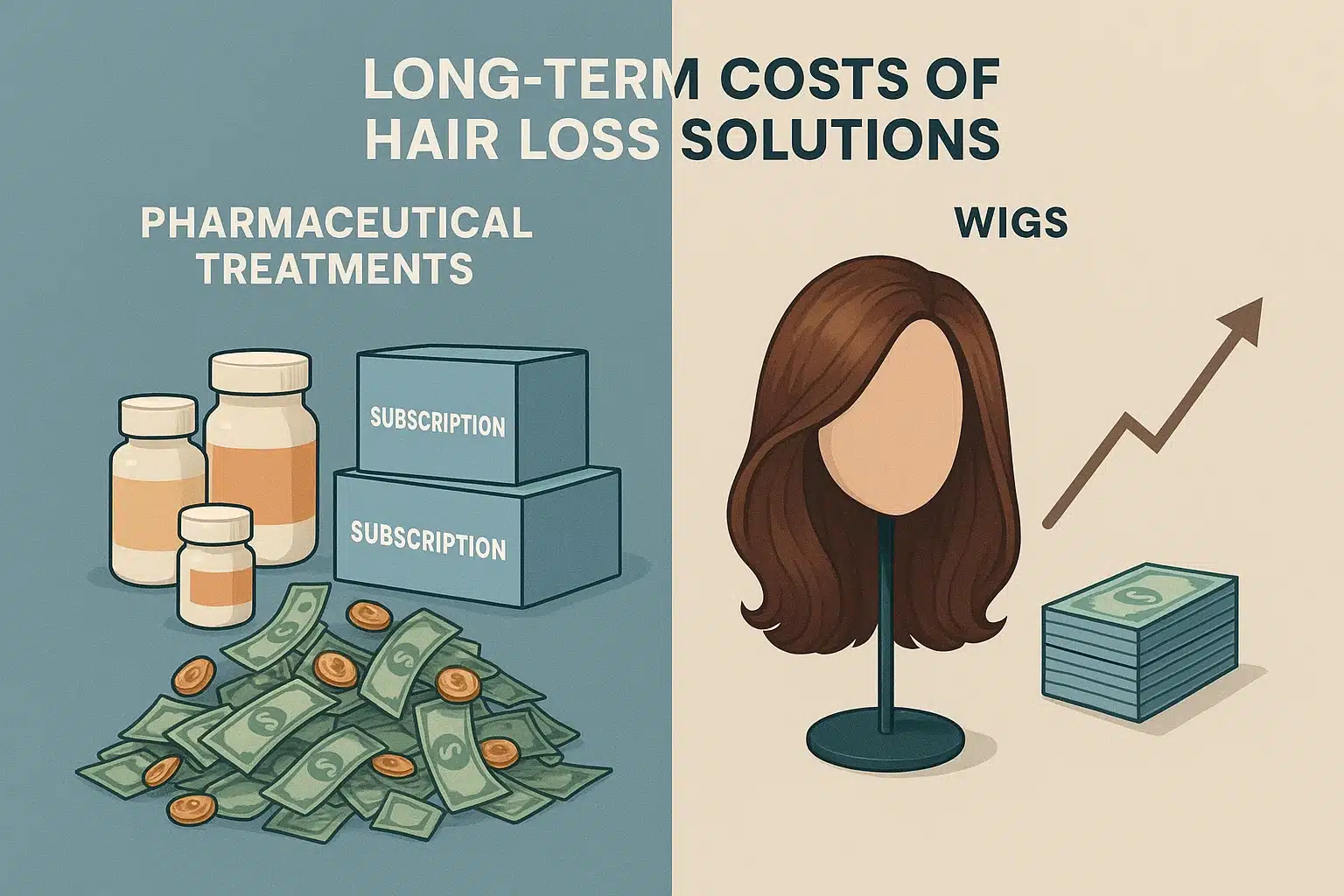
But rarely do we pause in that emotional moment to calculate the long-term math. The hair restoration journey is split between clinical solutions (medications) and cosmetic solutions (wigs and toppers). While a bottle of shampoo or a monthly pill subscription seems cheaper than a high-quality human hair wig upfront, the cumulative costs tell a different story. To truly understand the long-term financial commitment, readers must look beyond the initial price tag to see The Real Cost of Hair Restoration: A Financial Guide to Wigs vs. Transplants and Treatments as it relates to recurring maintenance and replacement.
The Hidden Economics of the “Subscription Model”
When you opt for pharmaceutical treatments like Minoxidil (Rogaine) or Finasteride, you aren’t making a purchase; you are signing up for a biological subscription service. The catch with clinical treatments is that they only work as long as you use them. There is no exit strategy—stopping the medication usually results in the loss of any hair gained within a few months.
The “Shedding Tax”
One of the least discussed aspects of starting a pharmaceutical regimen is the initial “shedding phase.” Research indicates that for the first 3 to 6 months of treatment, many users experience accelerated hair loss as follicles eject resting hairs to make room for new growth.
Financially, this is what we call the “Shedding Tax.” You are essentially paying $150 to $300 over the first half-year for products that, temporarily, make your hair look thinner. This period requires immense emotional resilience and financial patience without seeing a visual return on investment (ROI).
The “Stacking” Effect
Rarely is one treatment enough. As efficacy plateaus (often referred to as “medication fatigue”), many users find themselves “stacking” treatments to maintain results.
- The Base: Minoxidil/Finasteride subscription (~$30–$50/month)
- The Adjuncts: Ketoconazole shampoos (e.g., Nizoral) to reduce scalp inflammation (~$15/month)
- The Boosters: Biotin or collagen supplements (~$20/month)
Suddenly, that “affordable” solution has crept up to nearly $1,000 annually, a cost that continues indefinitely.
Wigs as a Managed Asset: The “Upfront” Myth
In contrast to the subscription model, viewing a wig or hairpiece as a “managed asset” changes the financial conversation. Yes, the upfront cost of a premium wig is higher than a bottle of serum. However, a wig provides immediate, guaranteed results—perfect hair the moment you put it on.
Human Hair vs. Synthetic: The Lifespan Factor
When analyzing cost, it is vital to distinguish between fiber types.
- Synthetic Wigs: Lower entry cost ($150–$400). These are excellent for those who want style memory (the style holds after washing). They generally last 4–6 months with daily wear.
- Human Hair Wigs: Higher entry cost ($900–$3,000+). These offer the most natural movement and longevity. With proper care, a high-quality human hair piece can last 1 to 2+ years.
The secret to maximizing this asset lies in maintenance. Much like servicing a car extends its life, understanding how to care for human hair wig investments properly—using correct hydration techniques and avoiding heat damage—can significantly lower your “cost-per-wear” over time.
The 10-Year Break-Even Analysis
The most illuminating part of this financial comparison is the “Break-Even Point.” This is the moment in time where the cumulative cost of monthly medications surpasses the cost of owning and maintaining wigs.
For many, this intersection happens between Year 4 and Year 6.
| Cost Factor | Pharmaceutical “Stack” | Premium Human Hair Wig |
|---|---|---|
| Year 1 | ~$1,000 (Meds + Supplements) | ~$2,000 (Initial Asset) |
| Year 3 | ~$3,000 (Cumulative) | ~$2,200 (Maintenance + Products) |
| Year 5 | ~$5,000 + Potential Dosage Increase | ~$4,000 (Replacement Asset) |
| 10-Year Total | $10,000+ | ~$8,500 |
Note: Wig costs vary based on frequency of wear and care quality.
When you start budgeting wig wardrobe costs, you realize that while the wig requires a larger outlay every few years, the pharmaceutical route is a slow, steady leak on your finances that never ends.
Beyond the Wallet: The Cost-Per-Confidence
Financials are only half the equation. We must also calculate the “Emotional ROI.”
With clinical treatments, you are paying for the hope of hair. You pay for months of waiting, checking the mirror daily, and managing the anxiety of “is it working?”
With a wig, you purchase immediate relief. The anxiety vanishes the moment the cap is settled. In recent years, celebrities like Jen Affleck and bands like Khruangbin have helped normalize the use of wigs, proving that authenticity comes from how you feel, not just biology. A wig allows you to bypass the “ugly phase” of regrowth and step immediately into a version of yourself that feels polished and confident.
Frequently Asked Questions
Q: Can I use medications and wear a wig at the same time?
A: Absolutely. Many people use wigs as a “transitional object.” They wear the wig to feel confident immediately while undergoing treatment to see if their biological hair recovers. It doesn’t have to be an “either/or” choice initially.
Q: Does insurance cover wigs?
A: It often does, but terminology matters. Insurance providers rarely cover “wigs,” but many cover a “Cranial Prosthesis” for medical hair loss. It is worth checking your policy, as this can drastically reduce your out-of-pocket costs compared to elective cosmetic medications.
Q: Is maintenance for wigs expensive?
A: It is comparable to salon costs for biological hair. You will need specialized shampoos, conditioners, and occasional wig maintenance products like knot sealers or silicone sprays. However, you save money by not needing haircuts, colors, or root touch-ups at a salon.
Choosing Your Path
Deciding between clinical treatments and wigs is a personal journey that depends on your budget, your patience, and your lifestyle. If you are looking for a guaranteed result without the waiting game, or if you have experienced “medication fatigue,” exploring the world of high-quality wigs might be the smartest financial move you can make.
The goal isn’t just to have hair; it’s to stop worrying about hair so you can get back to living your life.