When we discuss the journey of hair restoration, the conversation almost exclusively revolves around upfront costs. It is natural to view the purchase of a high-quality hairpiece as a significant expense—a final exit of funds similar to paying for a medical procedure or a vacation. However, there is a fascinating, often overlooked financial dimension to the world of premium alternative hair: the secondary market.
Unlike other solutions where the money spent is permanently gone, high-quality human hair wigs possess a unique characteristic—liquidity. Much like luxury handbags or fine watches, premium wigs can retain a surprising amount of value, transforming them from a simple purchase into a recoverable asset. To truly understand where your money goes and what you might eventually recover, it is essential to look at The Real Cost of Hair Restoration: A Financial Guide to Wigs vs. Transplants and Treatments to see how different investments stack up over time.
The Paradigm Shift: From Sunk Cost to Liquid Asset
To understand the resale potential of wigs, we must first look at the broader landscape of hair loss solutions. Most options represent a “sunk cost.” For example, topical treatments require monthly expenditures that can never be recouped. Similarly, when analyzing the hair wig surgery cost compared to the permanence of the procedure, a transplant is a significant financial commitment with zero liquidity; you cannot “resell” a hair transplant if you decide to change your look or if the results aren’t what you hoped for.
High-quality human hair wigs, particularly those made from virgin or Remy hair, break this mold. They are durable goods that, when well-maintained, enter a thriving secondary market. In global markets, such as Nigeria, 100% virgin hair is even treated as a currency-hedge investment due to its stability and demand. For the US consumer, this means that purchasing a premium piece isn’t just about vanity—it’s about portfolio management. A $3,000 investment in a top-tier wig might yield a $1,500 return upon resale, a scenario impossible with surgical or chemical alternatives.
Understanding the “Wig Blue Book”: What Drives Value?
Just as a car has a Kelley Blue Book value based on make, model, and mileage, wigs have a valuation matrix. Not all wigs are created equal in the eyes of the secondary market. Understanding these factors can help you make a smarter initial purchase.
The “Hermès” Effect: Brand Prestige
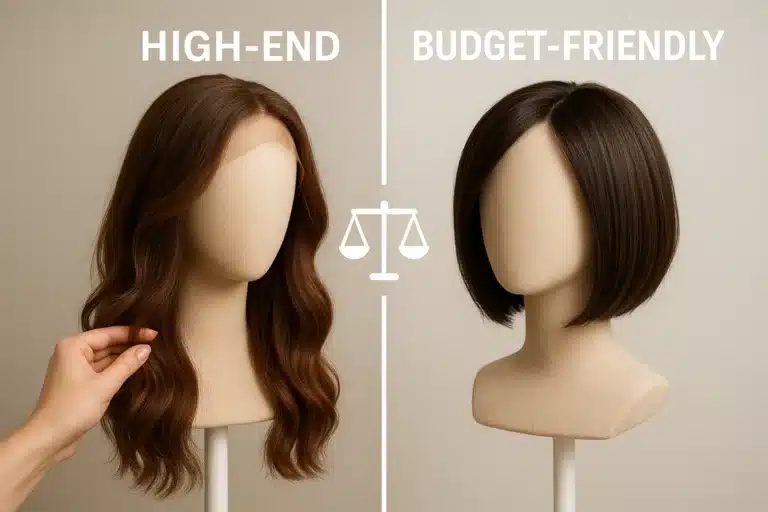
In the fashion world, certain brands hold value better than others. The same applies to wigs. “Blue chip” brands in the wig industry—such as Jon Renau, Follea, or highly sought-after custom independent makers—command higher resale prices. Buyers in the secondary market trust these names for their consistency in cap construction and hair quality. A generic unbranded wig may depreciate by 80% immediately, whereas a branded piece from a reputable manufacturer often retains 50-60% of its value if the condition is good.
The Integrity of the Hair
The “gold standard” for value retention is 100% virgin human hair. Because the cuticles are intact and chemically unprocessed, this hair has a longer lifespan and reacts better to restyling.
- Virgin Hair: Highest resale value.
- Remy Human Hair: Strong resale value, provided the silicone coating (if any) hasn’t degraded.
- Synthetic/Blend: Generally low to negligible resale value.
Cap Condition and Alterations
The state of the cap is often more critical than the hair itself. The most common question in resale groups is, “Is the lace cut?”
- Uncut Lace: This commands the highest premium, effectively selling as “new without tags.”
- Cut Lace: Immediately drops the value, as the fit is now customized to a specific hairline.
- Cap Size: Alterations to the cap size can limit the pool of potential buyers, affecting liquidity.
Depreciation Milestones: The Numbers Game
If you are treating your wig purchase as an asset, you need to understand the depreciation curve. While every sale is unique, market trends across platforms like Silk or Lace and specialized Reddit communities suggest the following depreciation milestones:
- The “Lace Cut” Drop (15-20%): The moment the lace is trimmed to frame your face, the wig moves from “new” to “used” status, even if it has never been worn out of the house.
- The “Gently Worn” Tier (30-50%): A wig that has been worn, washed, and styled but remains free of defects typically sells for 50% to 70% of the retail price. This is the sweet spot for many buyers looking for high-end hair at a discount.
- The “Restoration” Tier (60-80%): Wigs that have significant wear, thinning at the crown, or stretched caps drop significantly in value. However, unlike consumables, they rarely hit $0. There is a niche market of buyers who purchase these pieces to restore them or harvest the hair for other projects.
Overcoming the Barrier: The Science of Sanitization
The biggest psychological hurdle to the secondary wig market is the “ick factor.” Concerns about hygiene are valid, but they are easily addressed through science. This is where the distinction between “used clothes” and “medical assets” becomes important.
For a wig to hold its value, it must be maintained with what we can call “asset preservation protocols.” This goes beyond basic washing. Sellers who can demonstrate a rigorous sanitization process—often referred to in the community as making a piece “certified pre-owned”—can command higher prices.
Proper wig maintenance for resale involves:
- Detangling without breakage: Preserving density.
- Deep Conditioning: Restoring moisture to the hair shaft.
- Sanitization: Using appropriate antimicrobial solutions to ensure the cap is medically clean for the next owner.
By presenting a well-maintained, sanitized wig, you aren’t just selling used hair; you are selling a safe, accessible entry point into luxury hair for another person.
The Secondary Market Ecosystem
Where does this trading happen? The ecosystem has evolved rapidly from vague eBay listings to sophisticated marketplaces.
- Specialized Marketplaces: Platforms like Silk or Lace act as the middlemen, offering authentication services that protect both buyer and seller.
- Community Groups: Facebook groups and Reddit threads (r/Wigs) are active hubs. Here, reputation is currency.
- Consignment: Some high-end salons and online boutiques offer consignment services, taking a commission in exchange for handling the photography and sales process.
FAQ: Navigating the Resale Market
Q: Can I really sell a wig I’ve worn for a year?
A: Yes, provided it is high-quality human hair. While you won’t get “new” prices, if the hair fiber is healthy and the cap is intact, there is a buyer for it.
Q: Does cutting the hair ruin the value?
A: Not necessarily, but it changes the buyer pool. A 20-inch wig cut to a 10-inch bob loses the “length premium,” but if the cut is a professional, trendy style, it may sell faster than a raw, unstyled piece.
Q: How do I prove the wig is authentic?
A: Always keep your original packaging, receipts, and tags. In the resale market, provenance (proof of origin) is key to proving the wig is a genuine Jon Renau or Follea piece rather than a dupe.
Q: Is it better to sell as-is or restore it first?
A: Investing in a professional “wash and set” before listing can increase your final sale price by more than the cost of the service. Presentation matters.
The Bottom Line on Hair Investments
Viewing high-quality wigs through an investment lens changes the buying experience. It shifts the focus from “finding the cheapest option” to “finding the best value retention.” When you purchase a premium human hair wig, you are buying a durable asset that offers confidence today and potential financial liquidity tomorrow.
Whether you are just beginning your research or looking to upgrade your current style, understanding the lifecycle of luxury hair helps you make decisions that are good for your look and your wallet.
Ready to explore high-quality options that hold their value? Continue your journey by learning about the financial landscape of hair replacement.