Imagine pulling a beautifully styled human hair wig out of its box. The cut frames your face perfectly, the density is incredibly natural, but the color just isn’t speaking to you anymore. You might think, “I’ll just grab some dye or apply a little bleach to lighten it up.” It seems simple enough—after all, human hair is human hair, right?
Not quite. Re-coloring a wig that has already been dyed at a factory is an entirely different ballgame than coloring the hair growing out of your scalp. Before you mix up any chemicals, understanding the intricacies of mastering wig coloration and highlighting is absolutely essential. Human hair wigs have a unique chemical history, and treating them like biological scalp hair is the most common reason behind permanent structural damage and disastrous color results.
Let’s demystify the complex, fascinating world of re-coloring previously dyed human hair wigs so you can safely transform your look while protecting your investment.
The Chemical “Catch-22” of Factory-Processed Hair
When dealing with a pre-colored wig, you are rarely working with “virgin” hair. To achieve those beautiful, uniform colors you see straight out of the box, the hair undergoes an intense factory journey. This creates two invisible barriers that make DIY dyeing a high-stakes operation.
The Invisible Silicone Barrier
Because wigs are detached from the scalp, they don’t receive the natural sebum (oils) our bodies produce to keep hair hydrated. To compensate, manufacturers often coat processed hair in an industrial-grade silicone. This gives the wig its beautiful, healthy sheen right out of the box.
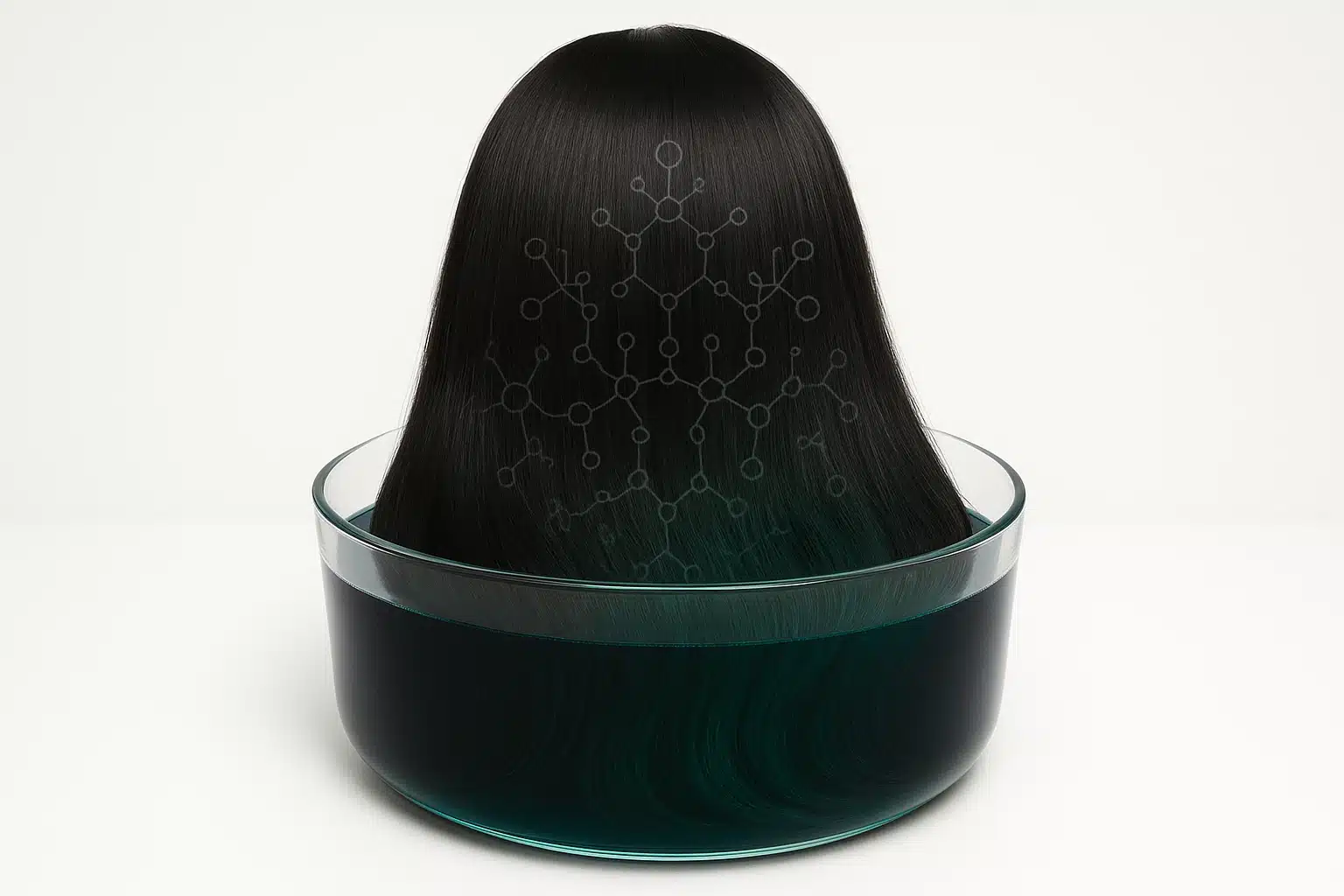
However, this silicone acts as a microscopic raincoat. Standard shampoos won’t strip it off. If you apply dye over this silicone seal, the color will process patchily, sliding right off in some areas and over-depositing in others. Proper wig maintenance requires acknowledging this coating, and preparing a wig for color requires a specific surfactant protocol—often a high-pH clarifying wash—just to break down that barrier before any dye can penetrate the hair cuticle.
Textile Dyes vs. Salon Color
Here is an industry secret most people don’t know: many “factory black” or dark brown wigs are colored using dyes that are chemically closer to textile fabric dyes than the keratin-friendly color your salon stylist uses.
When you try to use a standard 20-volume developer to lift this color, the developer often fails to break through the textile dye. Instead, it aggressively eats away at the hair’s natural melanin underneath, leaving you trapped in the dreaded “permanent orange” zone.
The “Pre-Flight” Inspection: Can Your Wig Survive a Color Change?
Before any chemical touches your wig, you must become a hair detective. Because human hair wigs cannot repair themselves, the assessment stage is more critical than the actual dyeing process.
The Porosity and Cuticle Test
Your first step is the “float test.” Take a few shed hairs from your wig and drop them into a glass of water. If they sink immediately, the hair is highly porous—meaning the cuticles are blown open from previous processing. Highly porous hair will absorb color instantly but release it just as fast, often resulting in muddy, unpredictable tones.
Next, perform a wet stretch test on a hidden strand. If the wet strand stretches and snaps easily, or feels “gummy” and mushy to the touch, stop immediately. Gummy hair cannot survive another round of chemical processing without melting or severe shedding.
The Human-Synthetic Blend Trap
Many educational tutorials completely miss the “micro-blend” warning. Sometimes, wigs marketed for their affordability are actually a 70/30 blend: 70% human hair and 30% synthetic fiber. Standard hair dye will only alter the human hair. If you attempt to dye a micro-blend, you will be left with a disastrous “salt and pepper” effect where the synthetic wigs‘ fibers completely reject the color. Always perform a strand burn test on a tiny, hidden clipping to ensure the hair turns to ash (human) rather than melting into a hard plastic bead (synthetic).
Techniques for Safe Re-Coloration
If your wig passes the pre-flight inspection, you can move forward cautiously.
The Color-Shift Matrix
When dealing with pre-colored wigs, you cannot jump freely across the color wheel. You must follow the “Color Shift Matrix.” For example, a factory 1B (Off-Black) wig can safely be shifted to a rich Mahogany or a Dark Cherry, but you should never attempt to lift a factory black wig to an Ash Blonde. The structural integrity of the hair will fail before you ever reach that pale yellow stage.
The “Goldilocks” Developer Rule
If you are determined to lift the color, step away from the harsh developers. For hair that has already been through factory lifting, a 10-volume developer is the “Goldilocks” zone. While 20-volume is standard for scalp hair, it is far too aggressive for pre-colored wig hair. A slow and low approach using 10-volume will lift the color gradually, preserving the delicate cuticle.
Embracing Semi-Permanent Glazes
The safest way to change a pre-colored wig’s hue is to avoid opening the cuticle altogether. Semi-permanent glazes or “watercolors” (immersion dyeing) are fantastic hybrid solutions. They deposit tone over the existing color, adding richness and shine without chemical damage.
Protecting Your Wig’s Foundation During the Process
Coloring the hair is only half the battle; protecting the wig’s delicate base is equally vital.
The Lace Protection Blueprint
A beautiful color job is instantly ruined if your translucent lace foundation gets stained dark brown. Just like when you are researching how long to bleach knots on wig bases, protecting the lace requires extreme precision. Professional colorists use a combination of strong-hold hair gel (like Got2b) and petroleum jelly on the underside of the lace. This creates an impenetrable barrier, ensuring that even if dye seeps down the hair shaft, it won’t permanently tint your lace.
Apply color using a “Zonal Application” method—brushing the dye on starting a quarter-inch away from the roots.
Post-Process Resuscitation
Once the color is rinsed, the wig is in its most vulnerable state. The pH balance has been heavily disrupted, and any remaining lipids have been stripped away. Knowing how to care for human hair wig units post-dye involves immediate pH-balancing shampoos and intensive lipid-replacement deep conditioning masks.
To prolong the life of your new color and limit excessive washing, lean into alternatives like using a gentle dry shampoo on wigs to refresh the hair between wears. Additionally, consider how you mount the wig—using a suction silicone wig cap can reduce friction against the newly delicate hair cuticles compared to traditional tight caps.
Comprehensive FAQ for Dyeing Pre-Colored Wigs
Why did my dark brown wig turn orange when I tried to highlight it?
Factory dark dyes often have a heavy red/orange undertone that standard bleach exposes but struggles to break through. If you hit the “Orange Zone,” you will need to neutralize it using a deposit-only toner with blue or green bases to counteract the brassiness.
Can I dye my wig lighter without bleach?
Color does not lift color. If your wig is already dyed a medium brown, applying a light blonde dye will not lighten it. You must use a lifting agent (like a gentle bleach bath with 10-volume developer) to remove the existing pigment before depositing a lighter shade.
How long will the new color last?
Because processed wig hair is often highly porous, it tends to fade faster than growing hair. Using color-safe, sulfate-free products and avoiding excessive heat styling will extend the vibrancy of your new custom color.
Your Next Steps in Wig Artistry
Transforming a wig you already own can feel incredibly rewarding, breathing new life into a piece you love. By understanding the invisible chemical barriers, respecting the “Goldilocks” developer rules, and fiercely protecting the lace foundation, you can navigate the complexities of wig coloration safely.
Remember, a wig is an investment in your confidence. Take your time, always perform a strand test, and prioritize the long-term health of the hair over a quick color fix.