Have you ever unboxed a stunning, premium human hair wig, put it on, and felt like something was just… off? It’s a common experience. Even top-tier factory wigs can sometimes fall into what stylists call the “uncanny valley.” They look beautifully healthy and the color is vibrant, but they lack the natural, multi-tonal shadows that our biological hair develops from sun exposure and natural growth cycles. Without this organic contrast, the hair can look unnaturally flat, almost like a costume piece rather than a seamless extension of yourself.
The secret to bridging the gap between a standard piece and indistinguishable realism isn’t just about adding bright blonde streaks. It’s about mastering the art of adding depth. While many people focus on adding lightness, introducing lowlights—darker pieces strategically placed to create shadows—is what makes those lighter tones truly pop. If you are already taking steps toward mastering wig coloration and highlighting for human hair, introducing lowlighting is the ultimate final frontier. It transforms a uniform, factory-standard color into a dynamic, personalized masterpiece.
The Science of “Dead” Hair: Why Wig Hair Processes Differently
Before you mix any color, it is vital to understand that the hair on your wig behaves very differently from the hair growing out of a scalp. Biological hair is continuously nourished by natural oils. Wig hair, however, has been cut, sanitized, and often chemically processed to achieve its factory color and texture.
Because of this journey, human hair wigs have much higher porosity. Highly porous hair acts like a dry sponge; it absorbs color incredibly fast, but it can also release it just as quickly if not treated correctly.
The Water Drop Test
To check your wig’s porosity before lowlighting, try the simple “water drop” test. Take a single strand of the wig hair and drop a bead of water onto it.
- If the water beads up and sits on the surface, the hair has low porosity (rare for processed wigs).
- If the water absorbs immediately, the hair has high porosity.
Understanding this helps you adjust your processing time. High-porosity wig hair will grab onto dark lowlights fast, meaning you might only need half the processing time recommended on a standard color box to achieve your desired depth.
Preparation and Protection: Saving Your Lace
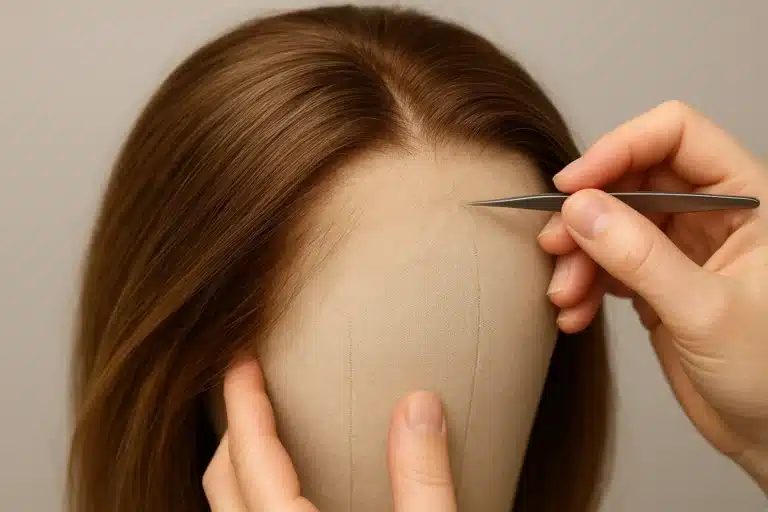
If there is one non-negotiable step in customizing a wig, it is protecting the delicate lace cap. The most common mistake beginners make is the “bleeding lace disaster,” where dark dye seeps through the hair and stains the translucent lace, creating an unnatural, dark grid line across the scalp.
The Lace Shielding Protocol:
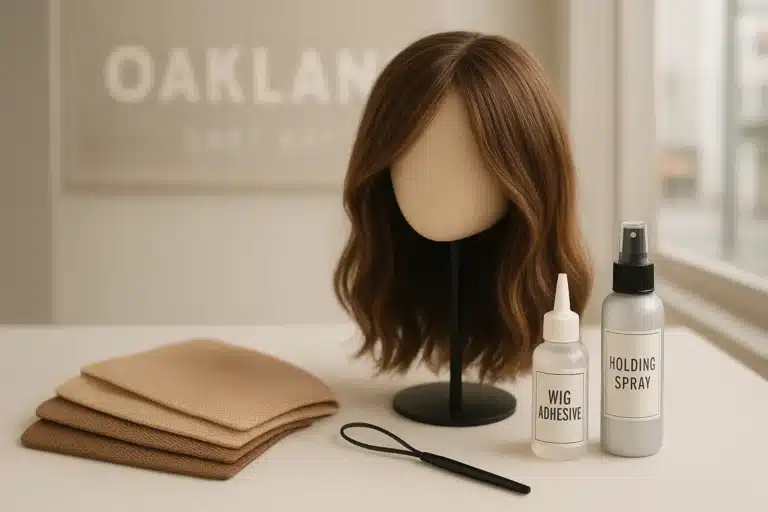
- Pin it tight: Secure your wig firmly to a canvas block head using T-pins.
- The Petroleum Jelly Barrier: Carefully apply a thin layer of petroleum jelly to the underside of the lace, paying special attention to the parting space and the hairline.
- Plastic Wrap: Place a layer of clear plastic wrap between the canvas block head and the inside of the wig cap for double protection.
- Protect the Knots: Avoid applying dye directly to the root knots. When painting your lowlights, stop just a fraction of an inch before the lace to ensure the dark color doesn’t bleed into the sheer base.
The “Internal Shadow” Technique: Mapping Your Dimension
To create a wig that looks remarkably real, we have to look at where depth naturally lives on a human head. Natural hair is always darker underneath, near the nape of the neck, and slightly shadowed at the roots. We call this the “Internal Shadow.”
Creating a Visual Sectioning Map
Think of your wig cap as a geographical map divided into “Dark Zones” and “Light Zones.”
- The Light Zones: The crown, the face-framing pieces, and the very top layers. These are the areas the sun naturally hits.
- The Dark Zones: The nape of the neck, the mid-lengths hidden beneath the top layer, and the immediate root area.
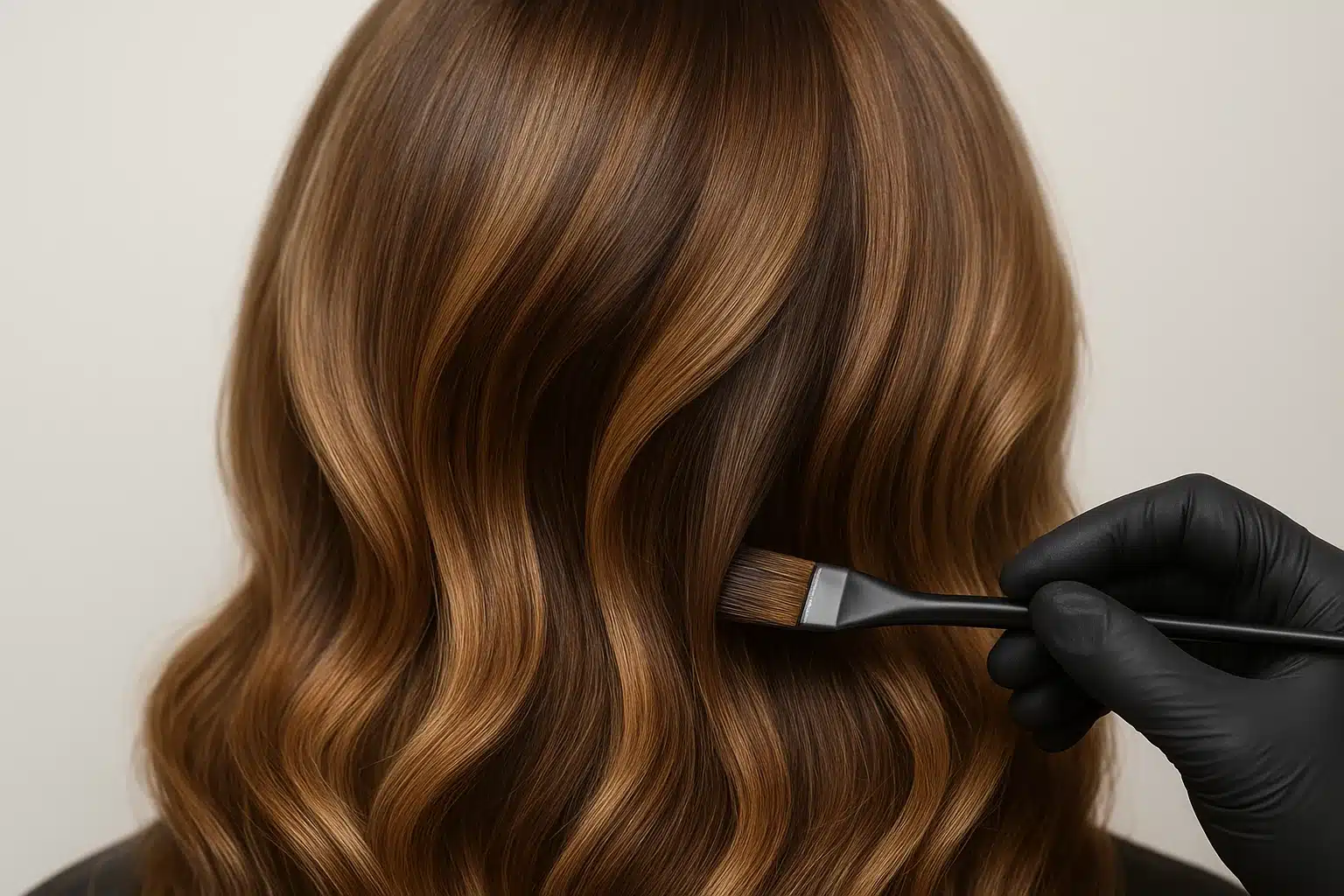
When sectioning your wig for lowlights, focus heavily on the Dark Zones. Taking small, woven sections from the under-layers and coloring them one to two shades darker than the base color creates a stunning 3D effect.
The Four-Finger Rule
When applying color near the front, use the “Four-Finger Rule.” Place four fingers horizontally starting from the front hairline. You generally want to avoid putting heavy, dark lowlights directly in this face-framing zone, as it can look harsh. Let the natural highlights live in the front, and allow the darker lowlights to sit slightly behind and underneath to push those brighter pieces forward.
Choosing the Right Developer and Application
When working with processed human hair wigs, you do not need the harsh chemicals required to lift virgin biological hair. Because you are depositing color (making it darker) rather than lifting it, a gentle approach is always best.
The Developer Rule for Wigs: Always use a low-volume developer. A 10-volume developer (or even a specialized demi-permanent processing lotion) is usually more than enough to deposit rich, beautiful lowlights into a human hair wig. Using anything stronger, like a 20 or 30-volume developer, will unnecessarily damage the delicate strands and cuticles.
Rinsing Safely: When your timer goes off, rinse the wig in cool water. Warm water opens the hair cuticle, which can cause your newly applied lowlights to bleed onto the lighter sections of the wig. Use a high-quality, sulfate-free and pH-balanced shampoo to gently cleanse the hair, followed by a deeply hydrating conditioner to restore moisture to the processed strands.
Frequently Asked Questions About Lowlighting Wigs
Can I use regular drugstore box dye on my human hair wig?
It is highly recommended to avoid standard box dye for premium human hair wigs. Box dyes often contain high-volume developers (20v or 30v) designed to lift biological hair. Because your wig is already processed and highly porous, box dye can cause severe damage, dryness, and unpredictable, “muddy” color results. Stick to professional-grade, demi-permanent colors with a 10-volume developer.
How do I fix my wig if the lowlights turn out too dark or patchy?
Don’t panic! Because wig hair is highly porous, it grabs color quickly, but it also lets it go. If your lowlights are too dark, wash the wig a few times with a clarifying shampoo. This will help gently strip away some of the excess pigment without damaging the hair.
Why can’t I just lowlight a synthetic wig?
Synthetic wigs are made from specialized plastic and acrylic fibers that do not possess hair cuticles. Traditional hair dye will simply slide right off a synthetic fiber or permanently stain the lace without absorbing into the hair. To achieve true, salon-quality realism and multi-tonal depth, high-quality human hair wigs are the ideal canvas.
Ready to Transform Your Wig?
Taking the leap into customizing your hairpieces can feel intimidating at first, but understanding the science behind the strands changes everything. By managing porosity, protecting your lace, and strategically mapping out your internal shadows, you can completely eliminate the “uncanny valley” effect.
You deserve to feel profoundly confident in your hair. Remember, there is no rush. Take your time, test a small hidden strand at the nape of the neck first, and embrace the empowering process of making your human hair wig authentically, beautifully yours.