Imagine the moment: the box arrives, and you lift the lid, expecting to feel the renowned, silky texture of premium European hair. But instead, something feels… off. The movement is stiff, the cap feels scratchy, and that sinking feeling in your stomach tells you that the “deal of a lifetime” was exactly that—too good to be true. When you invest in a luxury piece like a Follea by Daniel Alain, you are purchasing a masterpiece of engineering and artistry, not just a hairpiece.
Understanding the nuances of these luxury pieces is essential for any prospective owner. Before diving into the specifics of anti-counterfeiting, it is highly recommended to consult The Definitive Guide to Follea Wigs: An Investment in Unmatched Realism and Confidence, which establishes the baseline quality standards for these premium units. Protecting your investment begins with knowing what true craftsmanship looks and feels like.
The Reality of the “Super-Fake” in the Luxury Wig Market
Just as the world of designer handbags and luxury watches is plagued by counterfeits, the high-end alternative hair market has become a target for sophisticated scams. With authentic Follea pieces often representing a significant financial commitment—typically ranging from $3,000 to over $5,000—they are high-value targets for counterfeit operations.
These aren’t just low-quality wigs; they are often marketed using stolen brand imagery on fraudulent websites that look surprisingly professional. The goal of this guide is to move beyond fear and equip you with a technical, checkpoint-based verification strategy. By understanding the “discreetly embedded” markers and patented mechanics of a genuine Follea, you can navigate your journey with absolute confidence.
Pillar 1: Physical Examination and Cap Mechanics
The most difficult element for counterfeiters to replicate is the proprietary technology within the cap. While they can photograph a wig to look similar, they cannot replicate the medical-grade materials used in a genuine Follea.
The Silicone “Grip” Test
Follea’s fame is largely built on their patented cap designs, specifically the Gripri and Aero collections. These caps utilize a specific medical-grade silicone that provides security without the need for tape or glues.
- The Genuine Feel: The silicone areas should feel soft, almost velvety to the touch, and grip the skin gently.
- The Counterfeit Feel: Fake units often use standard industrial silicone or hard plastic strips. If the grip zones feel stiff, “plasticky,” or cause immediate pressure when placed against your wrist, it is a major red flag.
Serial Number Location
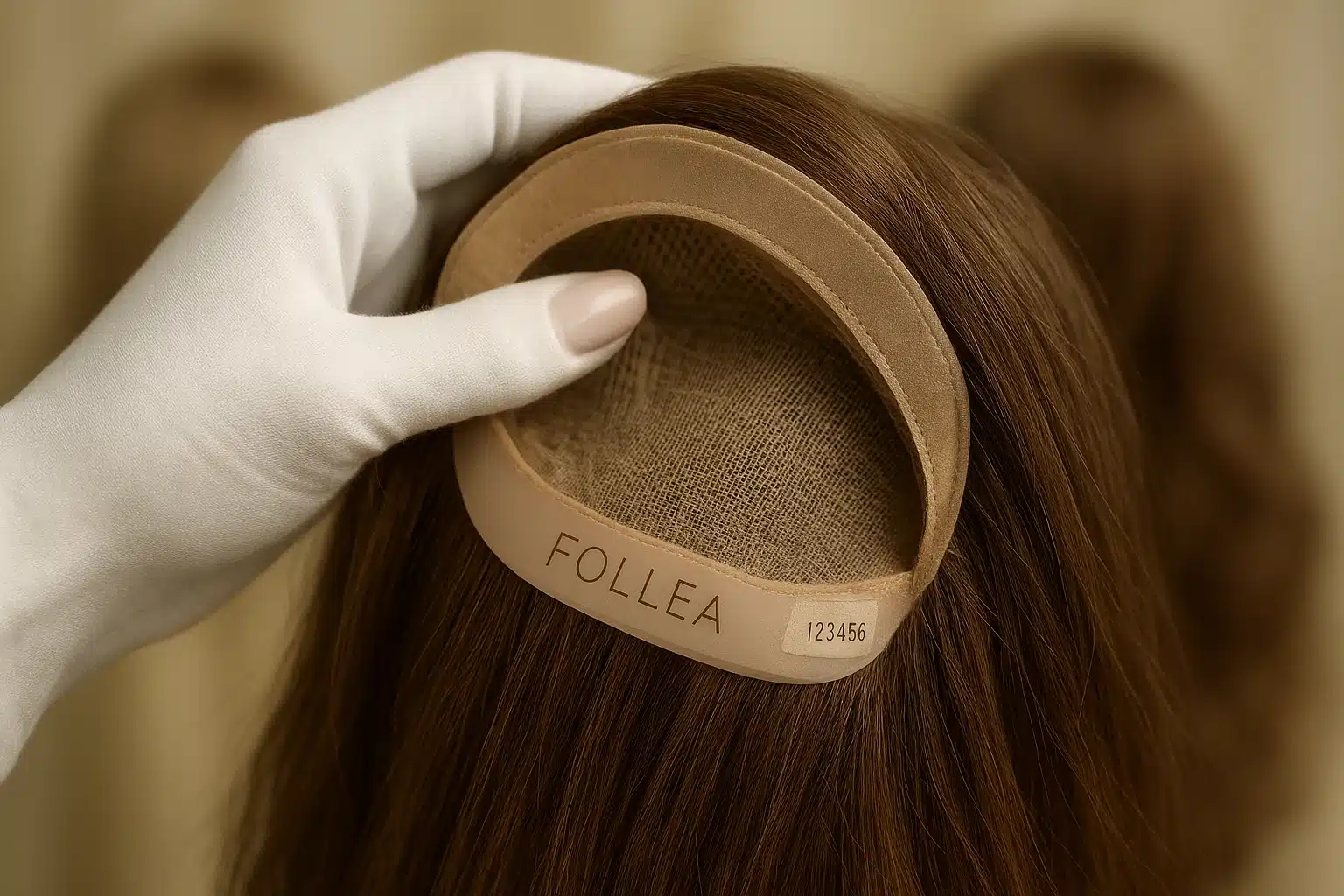
Every genuine Follea wig has a unique identity. Unlike mass-produced wigs that might share batch numbers, a Follea unit has a specific serial number associated with its creation.
- Where to Look: You won’t find this on a hang-tag that can be easily swapped. Look for the tag discreetly embedded into the cap construction, typically found at the nape of the neck or the inner crown area.
- The Verification: If a seller claims the tag was “removed for comfort” or refuses to show you a close-up photo of the serial tag before purchase, walk away. This number is your link to the manufacturer’s records.
Pillar 2: Biological Markers and Hair Quality
Authenticating the hair itself is trickier for the untrained eye, but there are specific tests you can perform that don’t involve damaging the wig.
The “Cold Water Test” vs. The “Burn Test”
You may see advice online suggesting a “burn test” to distinguish human hair from synthetic. Do not do this. It is destructive and unnecessary. Instead, use the Cold Water Test to check for cuticle quality and processing.
- The Test: Wet a small section of the hair with cold water.
- Genuine Follea: The World Select and European hair used by Follea will remain silky and manageable even when wet, as the cuticles are intact and aligned.
- The Counterfeit: Fake “luxury” wigs are often heavily coated in silicone to simulate softness. When verified with water, this coating can become gummy or sticky, and the hair may immediately tangle or feel rough (like straw) once the temporary coating is rinsed away.
Return Hairs and Volumizing
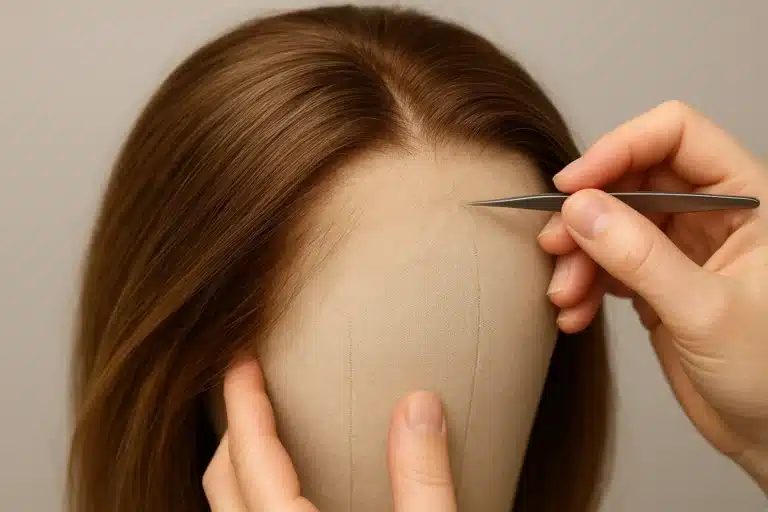
Examine the roots of the wig. Genuine Follea craftsmanship often involves a technique using “return hairs”—shorter hairs knotted at the base to create natural volume and lift without heavy teasing. Counterfeits often lack this detailing, resulting in a wig that lies unnaturally flat or uses excessive, messy teasing at the root to hide the wefts.
Pillar 3: Digital Verification and The Paper Trail
In the digital age, the website where you buy is just as important as the product itself. Scammers are becoming experts at digital mimicry.
The Price Disparity Warning
If you find a Follea wig listed for $300, or even $1,500, on a site that isn’t a verified clearance section of an authorized retailer, it is a scam. There is no such thing as a “factory direct override” or “wholesale loophole” that drops the price by 80%.
Validating The Retailer
Legitimate Follea retailers are proud of their partnership. They don’t hide.
- Check the VAT/Tax ID: Many scam sites pose as boutiques in Europe or the UK. You can use the VIES (VAT Information Exchange System) to validate a seller’s tax ID. If the number is invalid or belongs to a different type of business (like a laundromat or a shell company), the site is fraudulent.
- The “Authorized” Badge: Verify the retailer directly through the manufacturer’s authorized dealer locator if you are unsure.
The “Aha!” Moment: Why It Matters
Why go through all this trouble? Because the difference isn’t just in the label—it’s in the life you live while wearing it.
A counterfeit wig brings with it the “headache factor”—quite literally. The lack of proper tension distribution and inferior materials often leads to tension headaches, skin irritation, and the heartbreak of severe shedding within weeks.
A genuine Follea is designed to be forgotten. The “aha moment” for new owners is often realizing they’ve gone a whole day without thinking about their hair. That peace of mind, combined with the longevity of the piece (which can last years with proper care), is what makes the investment valid.
Frequently Asked Questions About Follea Authenticity
Q: Can I buy a genuine Follea on Amazon or eBay?
A: It is extremely risky. While pre-owned units appear on eBay, authorized retailers generally do not sell new Follea products through third-party marketplaces like Amazon. To ensure your warranty and authenticity, stick to dedicated wig boutiques and authorized online retailers.
Q: Does the Certificate of Authenticity guarantee the hair is European?
A: Yes, but only if the certificate matches the serial number on the wig. Counterfeiters can forge paper certificates, but they rarely match the physical tag inside the cap. Always cross-reference the two.
Q: My wig is shedding. Is it a fake?
A: Not necessarily. All hand-tied wigs experience some degree of settling or “hair fall.” However, if you are experiencing clumps of hair coming out or the knots are visibly unraveling, this is a sign of poor construction typical of counterfeits. Genuine Follea knots are double-tied for durability.
Q: What should I do if I suspect I’ve bought a fake?
A: If you purchased from a website and received a counterfeit, contact your credit card company immediately to dispute the charge. Document the differences using the checkpoints above (photos of the cap, the hair texture wet vs. dry) to support your claim.
Continue Your Journey
Knowledge is your best defense and your greatest asset in finding the perfect hair solution. By knowing what to look for, you transform from a shopper into an educated investor in your own confidence.
Now that you know how to verify the quality, you might be wondering about the specific styles and collections available to you. Understanding the difference between the Gripper, the Style, and the Topette can help you zero in on the perfect match for your lifestyle.