Imagine walking out of the perfectly climate-controlled lobby of a Las Vegas casino and stepping directly into a 110-degree July afternoon. It’s a shock to your system, but for your wig, it is an absolute stress test. The Mojave Desert environment—with its blazing UV rays, extreme heat, and practically non-existent humidity—wages a daily war on alternative hair. Simply walking to your car can “flash-dry” synthetic fibers and strip the moisture right out of premium human hair pieces.
If you’re still in the research phase and exploring your options, our guide to the best wig stores in Las Vegas, NV is a great starting point for finding your perfect piece. But what happens after you make that investment? How do you protect it from the harsh Nevada climate? The secret to extending the life of your wig isn’t just buying a new one when it starts looking tired; it’s understanding the “Restoration Science” behind specialized steaming and re-texturing.
Grab a cup of coffee, and let’s decode exactly how professional maintenance can rescue your favorite styles, save you hundreds of dollars, and keep your hair looking flawless in the desert heat.
Why the Las Vegas Climate is the Ultimate Stress Test
To understand why your wig behaves the way it does in Vegas, you have to understand the environment. When humidity drops to 10%, you experience something called “Static Friction Frizz.”
Have you noticed the ends of your synthetic wig getting crispy and tangled where they rub against your collar? Most people assume the hair is simply “dry.” In reality, that friction in a low-humidity environment physically stretches the synthetic plastic fibers. They become jagged, like a stretched-out coiled telephone cord.
This environmental friction is why mastering synthetic wig care is so critical for desert dwellers. You can’t just condition synthetic hair to fix this; you have to alter its structural memory.
The Science of the Steam: Rescuing Synthetic Wigs
The absolute best way to reverse friction frizz is through specialized steaming. But understanding how to steam a synthetic wig is essentially an exercise in chemistry.
Synthetic fibers have a “Glass Transition Temperature” (Tg). This is the exact thermal sweet spot where the plastic fiber becomes malleable enough to reset its shape without melting. When a professional wig technician applies targeted steam, the stretched, jagged fibers relax and shrink back to their original, smooth state. It’s like hitting the factory reset button on your wig.
Thermal Damage Chart for Wigs
It’s important to know your fiber’s limits before applying any heat:
- Standard Synthetic (Kanekalon): Begins degrading around 160°F. Cannot be heat-styled; requires indirect professional steam only.
- Heat-Defiant (HD) Synthetic: Safe up to 270°F – 280°F. Exceeding this causes irreversible melting.
- Human Hair: Can withstand 350°F+, but constant high heat in a dry climate causes rapid cuticle breakage.
Human Hair Re-Texturing in the Desert
If you wear a human hair wig, your challenges are slightly different. Because the air in Las Vegas lacks moisture, human hair pieces can quickly lose their bounce, wave, or curl pattern.
Relying on daily flat irons or curling wands to fix this is a recipe for disaster in a dry climate. Instead, professional re-texturing (like customized perms or relaxing treatments) is a protective alternative. Re-texturing requires a delicate pH balance to safely open the hair cuticle, reset the curl, and seal it back up without causing damage.
By having your wig professionally re-textured, you lock in a semi-permanent style that won’t fall flat during a dry, windy day on the Strip. To maintain this new texture at home, investing in the best wig care products specifically formulated for color-treated or processed alternative hair is essential.
Professional vs. DIY: The “Never-Do” List for Desert Dwellers
It’s tempting to watch a quick online tutorial and try to restore your wig in your bathroom. However, DIY restorations often lead to irreversible damage. Here is our Las Vegas “Never-Do” list:
- Never Use a Clothes Steamer: Handheld clothes steamers lack precise temperature controls. They can easily melt fine lace fronts or cause the delicate cap foundation to permanently shrink.
- Never Use Las Vegas Tap Water: The hard water in Nevada is full of minerals like calcium and magnesium. Steaming with tap water bakes these minerals directly into the wig fibers, leaving a dull, chalky residue.
- Never Leave Your Wig in a Hot Car: Ambient heat is real. A car parked in the Vegas sun can reach 160°F in minutes—hot enough to permanently deform synthetic fibers and melt wig tape adhesives.
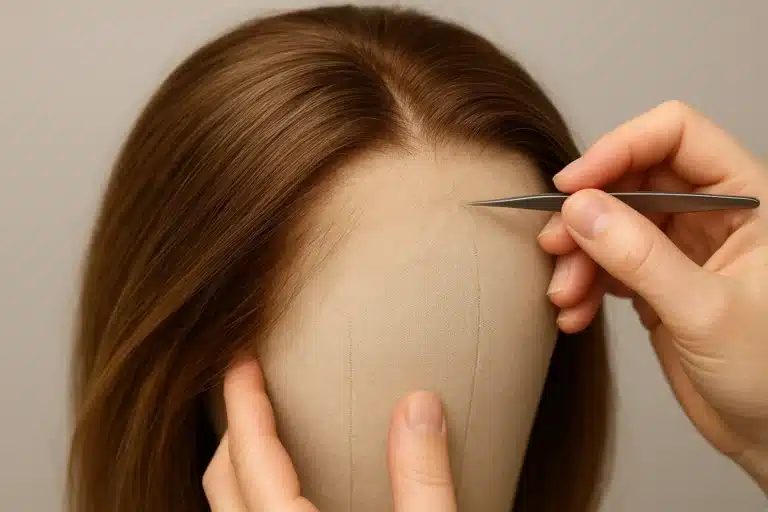
Professional wig maintenance technicians use specialized tools, such as industrial-grade steamers, distilled water systems, and canvas wig blocks tailored to your exact cap size, ensuring the foundation doesn’t shrink during the process.
The Interactive Frizz Diagnostic Tool
Not sure what your wig needs? Use this simple flow to figure out your next step:
- Is the hair crispy and tangling at the nape of the neck?
- If Yes: You have Static Friction Frizz. It’s time for a professional steam treatment.
- Has your human hair wig lost its bounce and refuses to hold a curl?
- If Yes: The hair is dehydrated and the structural memory is gone. Seek out professional re-texturing and deep conditioning.
- Is the lace front fraying or the cap stretching out?
- If Yes: This is a structural issue, not a fiber issue. Look for a specialist in cap repair.
Where to Find Local Maintenance Experts
The Las Vegas market has several prominent wig shops, but they cater to different needs. When looking for local help, it’s vital to understand what each provider specializes in:
- The Wig Cottage (Henderson): Known for their deeply compassionate approach, especially for those experiencing medical hair loss. They provide excellent emotional support and basic styling.
- Serge’s Wigs: A staple for high-end selection and sharp, beautiful cuts and shaping.
However, if you need advanced restoration—like resetting the Glass Transition Temperature of a heat-damaged piece—you need a stylist who operates with a technical “Wig Spa” mentality. Booking routine wig care appointments with a knowledgeable technician can save a $500+ investment from the trash bin.
The “Wig Spa” Checklist: Questions to Ask Your Stylist
Before handing over your high-value piece to a local salon, ask these three questions:
- Do you use industrial wig steamers and block the cap to my exact size before steaming?
- What is your process for re-texturing human hair without over-processing the cuticle in our dry climate?
- Do you use distilled water in your steaming process?
The Las Vegas Wig Care Calendar
To stay ahead of the elements, treat your wig to routine seasonal check-ups:
- Spring Check: Deep conditioning for human hair to prepare for rising temperatures.
- Summer Rescue: Mid-summer synthetic steaming to smooth out heat and sweat-induced friction frizz.
- Fall Refresh: Re-texturing or color-refreshing faded fibers after months of intense UV exposure.
- Winter Prep: Static-guard treatments to combat the friction of heavy winter coats and scarves.
Scheduling preventative wig care is significantly more cost-effective than buying a replacement piece every few months.
Frequently Asked Questions (FAQ)
Can I use my regular hair flat iron on my wig?
For standard synthetic wigs, absolutely not—the heat will instantly melt the plastic fibers. For human hair or HD synthetics, you can use heat tools, but they must be kept strictly below the recommended temperature threshold (usually under 270°F for HD synthetics) to prevent damage.
How often should I have my synthetic wig professionally steamed?
If you wear your wig daily, a professional steaming every 4 to 6 weeks will prevent friction frizz from becoming permanent and keep the fibers looking incredibly smooth.
Does steaming a wig make it completely straight?
It depends on the technique! Steam resets the “memory” of the fiber. If the wig is pulled straight while steaming, it will stay straight. If it is set on rollers and then steamed, it will retain those gorgeous curls once it cools down.
Why does my wig look dry even after I wash it?
In Las Vegas, the lack of humidity causes moisture to evaporate rapidly. If you are using standard drugstore shampoo on a wig, it can strip away the specialized coatings that protect the fibers. Always use products formulated specifically for alternative hair.
Next Steps in Your Wig Journey
Understanding the science behind your wig is the most empowering step in your alternative hair journey. You don’t have to surrender to frizz, dryness, or the intense Nevada sun. By seeking out specialized steaming and re-texturing services, you can preserve the movement, shine, and comfort of your favorite wigs for years to come.
Ready to dive deeper into protecting your investment? Explore our comprehensive educational resources to learn more about the daily habits that will keep your hair looking absolutely flawless, no matter how hot it gets outside.