If you’ve ever ordered alternative hair online, you likely know the feeling: you open the beautifully packaged box, pull out your new piece, and immediately rush to a window to inspect the color in natural light. For many, selecting the perfect shade is the most intimidating step of the entire hair replacement journey. You might ask yourself, Will this look like real hair, or will it look flat and artificial?
Before you can confidently navigate the vast world of alternative hair colors, it helps to have your foundational style in place. Utilizing the definitive guide to Jon Renau wigs allows you to pinpoint your ideal cap construction and silhouette first. Once you know your perfect fit, you are ready to master the intricate, fascinating science of Jon Renau’s proprietary Renau Naturals (RN) color system.
Grab a cup of coffee, and let’s demystify the letters, numbers, and chemistry behind some of the most realistic alternative hair in the world.
The Psychology of “Wig Shock” and the Flat Color Dilemma
If you’ve ever felt that standard factory wig colors look a bit “off,” your eyes aren’t deceiving you. Biological human hair is rarely just one flat color. Even hair that has never been dyed naturally features subtle highlights from the sun, deeper shadows at the root, and a rich blend of undertones.
When transitioning to alternative hair, encountering a flat, single-tone color can cause what many in the community call “wig shock.” It doesn’t look quite like the hair you remember. This visual anxiety is completely normal. It’s also exactly the problem that the Jon Renau Renau Naturals (RN) exclusive color palette was engineered to solve.
The Secret Chemistry: Textile Dyes vs. Natural Lifting
To understand why Renau Naturals are considered a revolutionary step in alternative hair, we need to look at how standard human hair wigs are typically made.
The Standard Human Hair Process
Most human hair used in wig making undergoes a heavy chemical process. First, the hair is aggressively bleached to strip away its original dark pigment. Then, it is essentially “dyed” using industrial textile pigments to achieve the target shade (like a standard Level 2 Dark Brown or Level 613 Platinum Blonde).
Think of this like a spray tan: the color sits heavily on the surface and permanently stains the hair’s core structure. Because of these textile dyes, a standard human hair wig will stubbornly resist any attempts at salon customization. If a professional stylist tries to dye it, the results are often unpredictable or damaging.
The Renau Naturals (RN) Difference
The RN process throws out the textile dyes entirely. Instead of stripping the hair and painting it with synthetic colors, Jon Renau uses a slow, gentle lifting process on their high-grade Chinese and Indian human hair blends.
Think of this process more like spending a summer at the beach, where the sun gently lightens your hair. Because no textile dyes are used, the hair’s natural cuticle health is preserved. The cuticles remain “open” and healthy, meaning the hair retains its organic warm pigments and acts exactly like virgin biological hair. Most importantly, it is fully ready to absorb custom salon formulas, toners, and dyes.
The Rosetta Stone of Wig Coding: How to Read the Labels
At first glance, Jon Renau color codes look like complex algebra (e.g., 24BT18S8). However, once you learn the alphabet of dimension, reading these codes becomes second nature.
The Universal Numbering Hierarchy
Alternative hair colors operate on a universal level system:
- 1 & 1B: Jet Black and Off-Black
- 2 to 12: The Brunette spectrum (Color 2 is a Darkest Brown, offering a softer alternative to harsh black)
- 14 to 26: The Blonde spectrum
- 27 to 33: The Natural Red spectrum
- 130 to 134: Vibrant and fashion reds
- 613: The iconic, bright Platinum Blonde base
The Alphabet of Dimension
The letters in a color code tell you how the colors are mixed:
- B (Blended): The colors are evenly mixed throughout.
- H (Highlighted): Features roughly 20% highlighting.
- RH (Renau Highlighted): Features a heavier 33% highlighting.
- FS (Fashion Syrup): Bold, chunky, salon-style balayage highlights.
- S (Shaded): Features a darker, shaded root to mimic natural hair growth.
- RN: Renau Naturals (dye-free, customizable human hair).
Reading the Swatch: Shaded Mocha Decoded
Let’s break down one of the most popular dimensional colors, Shaded Mocha (24BT18S8):
- 24: The base is a Golden Blonde.
- B: It is Blended seamlessly.
- T18: It is Tipped (the ends) with a Level 18 Ash Blonde.
- S8: It is Shaded with a Level 8 Medium Brown root.
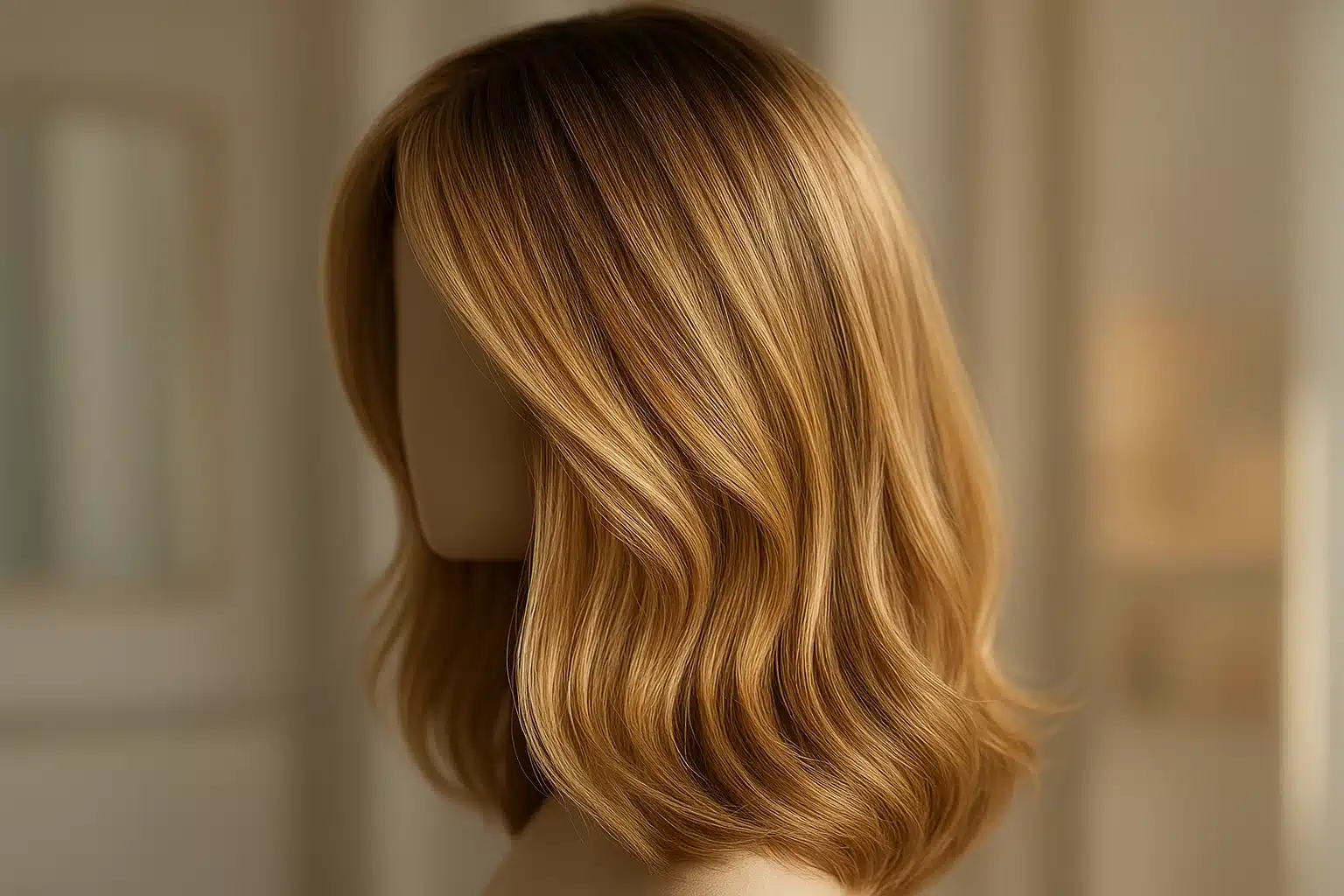
Suddenly, that confusing code perfectly describes a multidimensional, salon-fresh blonde with a realistic natural brunette root!
The Customization Masterclass: Toning, Dyeing, and Rooting
Because RN hair has not been compromised by textile dyes, it is a blank canvas for your professional stylist.
Embracing (or Taming) the Warmth
One of the most common observations about RN colors (like 4RN, 6RN, or 8RN) is that they naturally lean warm, showcasing gold or red undertones. This happens because the gentle lifting process exposes the raw, underlying natural pigments of the hair.
If you prefer a cool, ashy brunette, your stylist has an easy fix. Because the cuticle is healthy and open, a stylist can use a demi-permanent blue or green-based toner to neutralize the warmth. For example, to cool down an 8RN to an ash-brunette, a stylist will simply deposit a Level 6 ash toner. Alternatively, if you want pastel pink hair, a stylist can easily apply a direct deposit dye over a 613RN base to achieve a flawless rose gold.
Essential Warnings for Customization
While RN hair is highly customizable, the wig cap itself is delicate. You must always consult a professional for your wig maintenance and coloring.
- Avoid Box Dyes: Standard drugstore box dyes contain high levels of ammonia and developers that can severely damage the delicate cap construction.
- Protect the Knots: Never apply bleach or high-volume developers to the hand-tied knots, especially when modifying lace front wigs. The chemicals will cause the knots to break, leading to irreversible shedding and bald spots on the cap.
Beyond Human Hair: Synthetic Mastery and The Arctic Collection
While the RN collection offers unparalleled customization for human hair wearers, high-end synthetics have made massive leaps in dimensional color technology.
If you love the idea of bold, icy fashion hues but want the low maintenance of synthetic wigs, Jon Renau’s Arctic Collection is a marvel of optical blending. Rather than chemical lifting, this collection achieves hyper-fashion hues by intricately weaving heat-resistant synthetic fibers together.
- Flurry: FS38/PLS8
- Glacier: FS60/BLS6
- Frost: FS60/PKS18
- Sleet: 60S18
- Storm: FS36/56/60S4
Whether you’re exploring full wigs or looking into hair toppers for partial coverage, both human hair RN shades and modern synthetics offer distinct, beautiful advantages depending on your lifestyle.
Frequently Asked Questions (FAQ)
Can I use standard box dye on my RN wig?
Absolutely not. While RN hair is human hair, box dyes contain aggressive ammonia and developers designed for biological hair growing from a living scalp. These chemicals will rapidly degrade the wig cap materials, loosen hand-tied knots, and ruin your investment. Always use professional deposit-only or low-volume demi-permanent colors applied by a stylist.
What exactly does “RN” stand for?
RN stands for Renau Naturals. It is Jon Renau’s exclusive line of human hair that has been gently lifted without the use of permanent textile dyes, allowing for natural warmth and professional salon customization.
Why does my RN wig look a bit red or gold in the sun?
Because RN hair is gently lifted and completely dye-free, it retains the natural, underlying warm pigments found in human hair. When the sun hits it, those organic red and gold tones shine through—just like natural, sun-kissed biological hair.
Does the darker “root” color on shaded (S) wigs run all the way through the knotting?
Hand-tying techniques affect how roots appear. To keep the hairline looking as invisible and natural as possible, the hand-tied knots at the very base of a lace front may appear slightly lighter before transitioning seamlessly into the darker shaded root.
Your Next Steps in Alternative Hair
Choosing your hair color is deeply personal—it’s about reclaiming your identity and feeling like yourself again. By understanding the chemistry, decoding the color strings, and recognizing the unmatched customization potential of the Renau Naturals collection, you are no longer just a buyer; you are an educated, empowered wearer.
Take your time exploring different swatches, consider your lifestyle needs, and never hesitate to partner with a trusted professional stylist to turn a beautiful RN wig into your perfect, signature hair.