Imagine finally receiving your custom Cesare Ragazzi CNC system. You look in the mirror and feel an incredible surge of confidence—the hair looks entirely natural, and the fit is remarkably seamless. But then, a brilliantly sunny day calls for your favorite pair of sunglasses, or you need to slip on a pair of over-ear headphones for an important virtual meeting. Suddenly, a very real wave of anxiety hits: Will the arms of my glasses push up the edges of my system? Is this headband going to cause a tension headache or damage the adhesive?
If you are currently choosing the right hair solution and researching the specific intricacies of a Cesare Ragazzi hair system, understanding how this advanced medical-grade prosthetic interacts with your daily accessories is crucial. A CNC (Capello Naturale Contatto) system is a masterpiece of engineering, and treating it like a standard wig will only lead to frustration.
Let’s demystify the physical mechanics of wearing accessories with a CNC system so you can enjoy your life—and your style—without a second thought.
The Physics of Comfort: Why the CNC Polymer is Unique
If you’ve spent any time reading generic advice on alternative hair forums, you’ve likely seen tips like “just slide your glasses through the open wefts” or “tuck the stems under the flexible ear tabs.” For a Cesare Ragazzi wearer, this advice is completely useless.
A CNC system doesn’t have open wefts or fabric ear tabs. It is built on a 3D-printed, continuous biomedical polymer base that acts as a second skin. It is semi-rigid, hypoallergenic, and non-porous. Because it is dermatologically bonded to your scalp, it responds to physical pressure very differently than traditional lace or polyurethane film.
The main culprit behind accessory discomfort is clamping force. A standard pair of acetate glasses frames can exert up to 1.5 Newtons of lateral force against the side of your head. When that pressure is concentrated directly onto the 0.5mm edge of your system’s polymer base, it compresses the scalp’s micro-vessels against your temporal bone. This is exactly what causes those throbbing, ischaemic tension headaches some users experience.
Fortunately, making your CNC system compatible with your favorite accessories doesn’t require magic—it just requires a slight adjustment to the physics.
Glasses and Sunglasses: Achieving the Perfect Anatomical Fit
Wearing glasses with a continuous polymer base requires managing the “temporal junction”—the exact spot where your glasses stem meets the edge of your hair system.
The Frame Selection Guide
Not all glasses are created equal when it comes to resting against a cranial prosthetic.
- Safe Materials: Opt for titanium frames or wire-core acetate. These materials are lightweight, highly adjustable, and distribute pressure evenly.
- Materials to Avoid: Steer clear of hard polycarbonate plastics, heavy brass frames, and glasses with high-tension spring hinges. These exert a rigid clamping force that will inevitably pinch the system’s border.
The Optician Conversation (Your Cheat Sheet)
You don’t have to navigate frame adjustments alone. Your optician can customize the fit of your glasses to beautifully accommodate the microscopic thickness of your system. Next time you visit your eye care professional, simply tell them:
“I wear a bonded cranial prosthetic. Could you please cold-bend the temple tips outward by about 1.5mm? I need the stems to hover slightly rather than gripping tightly against my temporal bone.”
The “Shadow Buffer” Styling Technique
When glasses push gently against the edge of the polymer base, they can sometimes cause the hair at the temples to part unnaturally, exposing the boundary. Talk to your stylist about creating a “Shadow Buffer.” By intentionally layering the hair density slightly thicker right around the ears, the hair naturally falls over the glasses stems, completely masking the physical edge of the polymer base.
Headbands and Tension Management
Whether you’re hitting the gym, doing your skincare routine, or just enjoying a casual look, headbands are a staple accessory. However, applying a headband improperly can introduce severe “shear stress” to your system’s adhesive.
Think of shear stress like peeling tape off a wall: pulling the tape straight back is highly destructive to the bond. Sliding a tight headband aggressively backward over your hairline does the exact same thing to your system, causing micro-lifting at the front borders.
The “Two-Inch Rule”
To preserve your bond and prevent edge lifting, always follow the Two-Inch Rule. Place your headband down vertically (rather than dragging it horizontally) about two inches behind your actual front hairline. This keeps the elastic tension away from the delicate front border and rests the pressure safely on the stronger, structural center of the polymer base.
Safe vs. Destructive Fabrics
- Safe Choices: Look for soft cotton, bamboo jersey, or memory foam-lined bands. These fabrics stretch easily and absorb friction.
- Destructive Choices: Never use hard plastic headbands with inner teeth or combs. These will scrape against the polymer, scratch the biomedical base, and prematurely degrade the hair knots.
Headphones and Ear Accessories
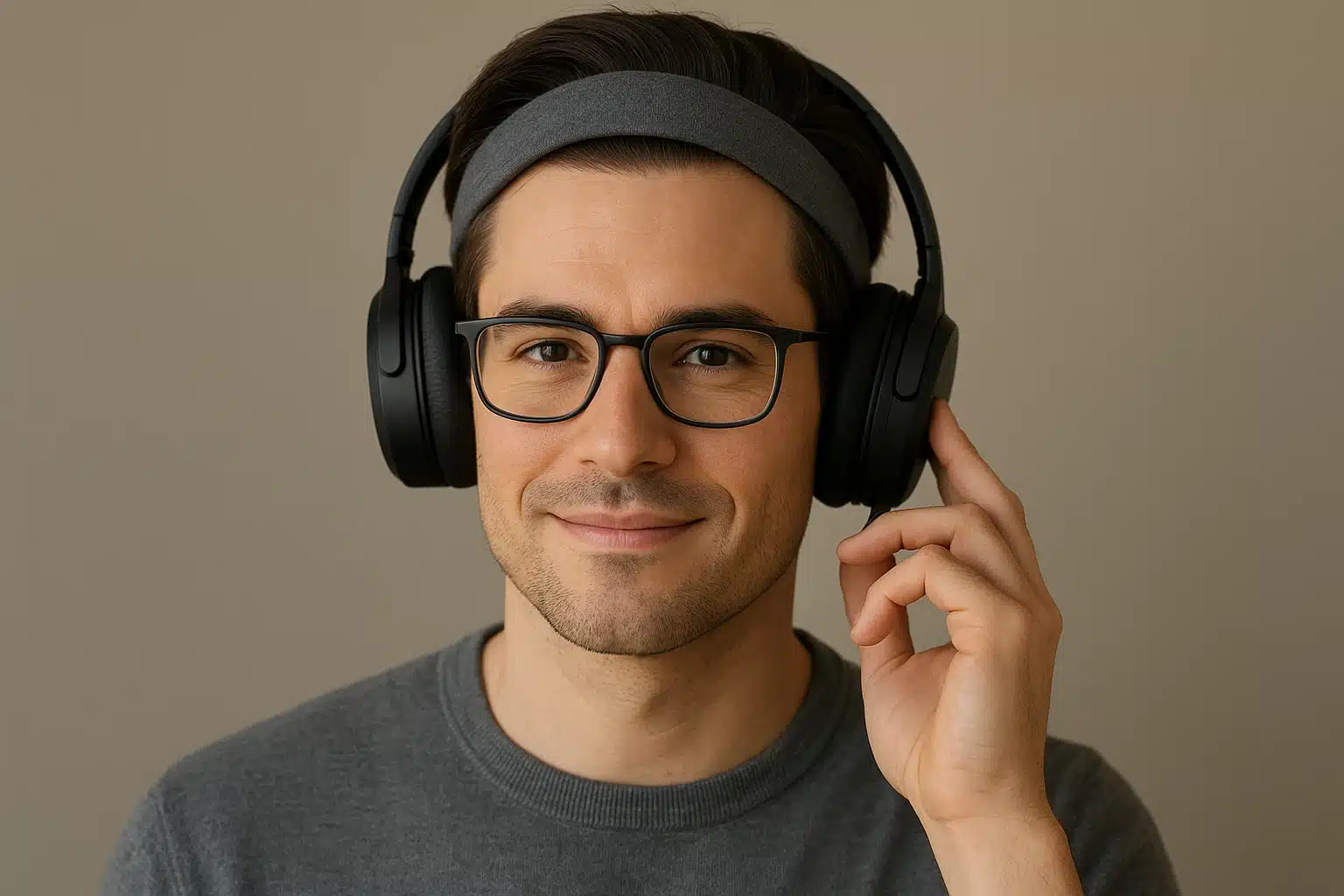
For gamers, audiophiles, or anyone working in an office, over-ear headphones are a daily necessity. The challenge here is the wide surface area of the ear cups pressing the hair into the polymer base.
When choosing headphones, pay close attention to the clamping force. Many premium over-ear headphones (like studio monitors) have a tight factory grip. You can gently stretch the headphone band over a stack of books overnight to reduce the tension so they rest softly against your head rather than squeezing it.
Additionally, be mindful of friction-induced matting. When hair is trapped between a heavy ear cup and the non-porous polymer base for hours at a time, the body heat and micro-movements can cause the hair to tangle and mat. To prevent this, always ensure the hair around your ears is smoothed down neatly before putting your headphones on, and give your hair a gentle brush when you take them off.
Actionable Checks and Maintenance
Living actively with a CNC system is completely possible when you incorporate a simple daily checkpoint into your routine.
At the end of the day, when you take off your glasses or headband, do a quick visual and physical inspection:
- Check for Red Marks: Gently feel the temporal ridge and the mastoid process (the bone right behind your ear). If you feel a deep groove or throbbing, your glasses or headphones need to be loosened.
- Inspect the Edges: Look at the front hairline and the temples. Do you see any micro-lifting or adhesive residue gathering where your accessory rested? If so, your headband might be causing shear stress, and you should adjust your placement tomorrow.
Frequently Asked Questions (FAQ)
Will wearing glasses pull off my CNC hair system?
No, wearing glasses will not pull off a properly bonded Cesare Ragazzi system. However, if your frames are too tight, the continuous rubbing can cause the adhesive at the temples to break down faster, leading to premature lifting at the edges. Adjusting the temple tips outward will solve this issue.
Can I wear over-ear gaming headphones with a bonded hair system?
Absolutely. The key is to choose headphones with a low clamping force and thick, soft ear pads (like memory foam or velour). Remember to smooth your hair flat before putting them on to avoid tangles and matting against the base.
Does the plastic base of a CNC system cause headaches when pressed by glasses?
Because the CNC system is made of a semi-rigid biomedical polymer, it does not compress the same way a fabric wig does. If heavy or tight glasses press against the edge of the system, that pressure transfers directly to your scalp, which can cause tension headaches. This is easily remedied by having your optician widen the arms of your frames.
What should I do if my headband leaves adhesive residue on my hair?
If a headband pulls on the front border, it can expose the medical adhesive, which then transfers to the headband and your hair. Use a gentle, citrus-based adhesive remover meant specifically for hair systems to clean the area, and moving forward, apply your headbands using the vertical “Two-Inch Rule” to eliminate backward pulling.
By understanding the unique materials and physics behind your Cesare Ragazzi CNC system, you can wear any accessory with total confidence. Your hair replacement journey is about regaining your freedom—and with a few smart adjustments, your style choices will be limitless.