When you first started researching your hair restoration options, finding the right solution probably felt like learning a new language. If you are currently exploring or already wearing a cesare ragazzi hair system, you know the incredible confidence that comes with its lifelike, 3D-printed design. Stepping out into the world with a medical-grade prosthetic that flawlessly mimics your natural scalp is a game-changer.
But as the months pass, a silent anxiety often begins to creep in. Like any premium prosthetic worn 24/7, a CNC (Capello Naturale a Contatto) system will eventually show signs of wear and tear. You might notice slight shedding around the ten-month mark, or wonder about the long-term integrity of the base. Suddenly, you’re faced with a new set of questions: How do I maintain this investment? What happens if it needs repairs? And what am I supposed to do while it’s being fixed?
Navigating the lifecycle of your hair system doesn’t have to be stressful. By understanding the three main paths of CNC maintenance—refurbishment, replication, and replacement—you can plan ahead, avoid unexpected downtime, and keep your hair looking flawless for years to come.
The Reality of Premium Hair Wear
The Cesare Ragazzi system is widely considered the gold standard in non-surgical hair restoration. To understand why its maintenance is so specific, it helps to look at the science behind the system.
If you’ve ever searched for “miracle knots” to find an undetectable lace wig, you know the struggle of trying to hide the tiny visible knots where hair is tied to a mesh base. The CNC system uses zero knots. Instead, it relies on a process called “follicular mimicry.” Premium, unprocessed virgin human hair is individually injected into a biocompatible, medical-grade polyurethane polymer base. This base matches the exact contours of your scalp and allows the hair to mimic your natural growth direction and tilt perfectly.
Because the system is crafted from such advanced materials—and because it withstands daily exposure to sweat, sebum, washing, and styling—it requires specialized care. When your system needs attention, you generally have three options.
The Three Paths Demystified: Refurbish vs. Replica vs. Replace
Knowing exactly what happens behind the scenes will help you make the best financial and lifestyle choice for your hair journey.
Path 1: Laboratory Refurbishment (The Repair)
A refurbishment isn’t a quick fix done in the back room of a local salon. Your system is carefully packaged and shipped back to the CRLAB facility in Bologna, Italy.
Once there, the system undergoes a highly technical process. The technicians perform a deep sanitization, re-seal the edges, reinforce the polymer base, and perform “re-hairing”—injecting fresh virgin hair into the membrane to restore its original, lush density.
The Catch: This meticulous laboratory process takes time—typically 6 to 8 weeks. For a wearer with only one system, this means two months of downtime. Without a backup, you’re forced to revert to beanies, clip-in extensions, or navigating social situations with your natural hair, which can take a profound emotional toll.
Path 2: The Replica (The Twin System)
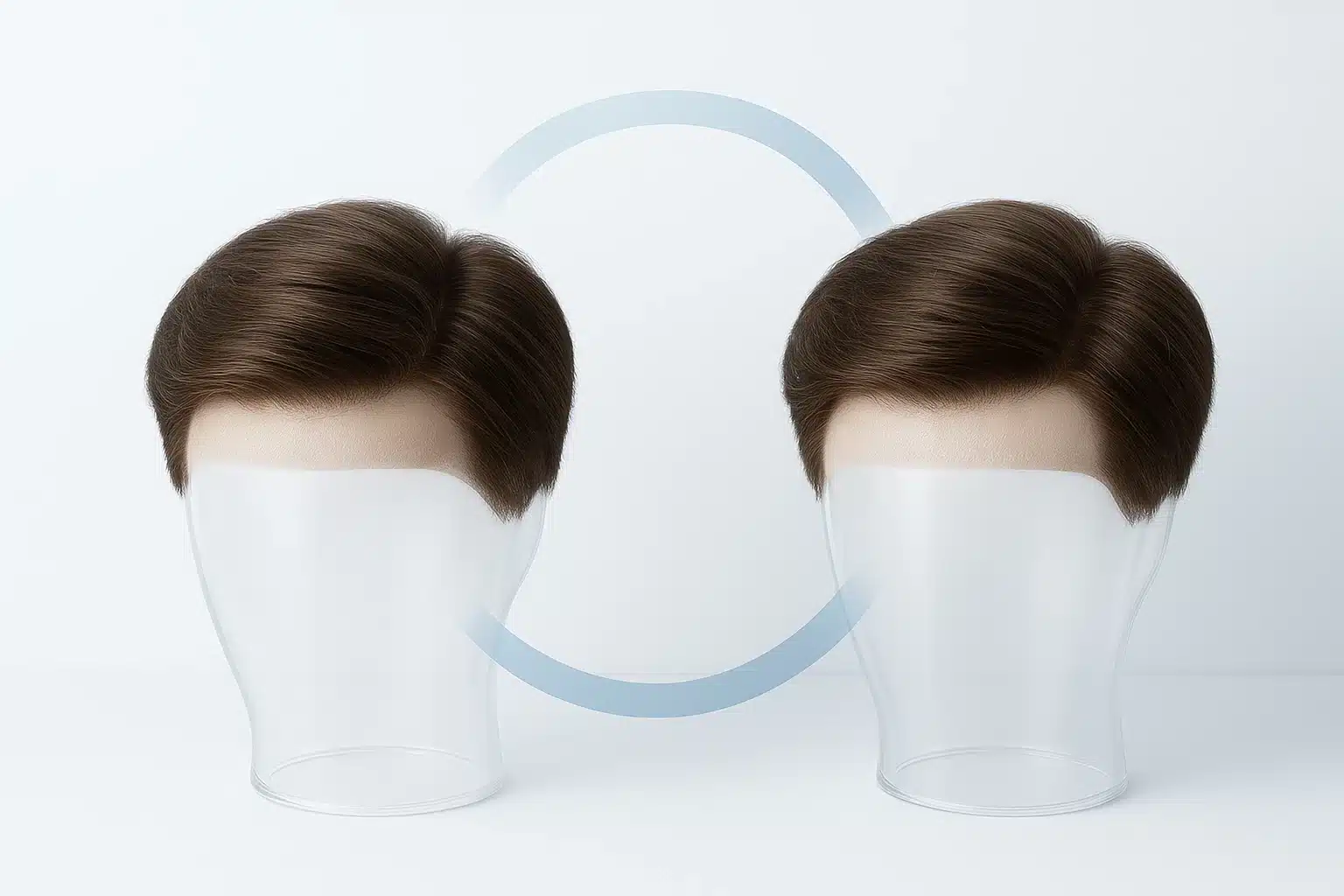
A replica is exactly what it sounds like: a “twin” backup system. Because CRLAB already has your digital 3D scalp map on file, you don’t need a new scan. The laboratory simply crafts an identical second unit based on your original specifications.
The Catch: Even with your scan on file, a replica takes about 3 months to be custom-crafted in Italy. It’s a common mistake to assume a replica can be ordered and delivered in a week.
Path 3: Full Replacement (The Clean Slate)
A full replacement means starting the process over from scratch. This requires a brand new 3D scalp scan, new boundary mapping, and fresh hair matching.
The Catch: Replacements are necessary when your physical needs change or the system is beyond repair, and like a replica, this custom medical device carries a 3-month lead time.
The Decision Matrix: How to Choose Your Next Step
How do you know which path is right for you? Use this simple diagnostic checklist to evaluate your current situation:
Go for a Refurbishment if:
- Your polyurethane base is structurally sound and intact.
- The system has lost less than 30% of its hair density.
- Crucially: You already own a backup piece to wear during the 8-week repair window.
Go for a Replica if:
- You are around the 6-month mark with your very first system.
- Your scalp anatomy and hair loss boundaries have not changed.
- You want to guarantee zero social or emotional downtime when your primary system eventually needs a tune-up.
Go for a Full Replacement if:
- Your system’s base has cracked, yellowed, or lost its elastic “memory” (polymer dry rot).
- Your area of hair loss has expanded, meaning the old system’s boundaries no longer cover your needs.
- You have experienced significant cranial weight loss or had surgery that alters your scalp shape.
A quick tip to avoid a costly mistake: Never wait until the base is visibly torn to send it in for repair. If the structural integrity of the polymer is too compromised, the lab in Italy will reject the repair, forcing you to pay for an emergency full-price replacement.
The “Twin System Shuttle Method”: Your Ultimate Lifecycle Strategy
If you want to maximize your investment and completely eliminate the anxiety of that 2-month repair downtime, the secret lies in the “Twin System Shuttle Method.”
Many people wonder if buying a second system is just an upsell. In reality, it is a strategic lifestyle insurance policy.
Think about the math of wear-and-tear: Wearing one system 24/7 means it never gets a break from body heat, natural oils, or adhesives. By investing in a replica and alternating your two systems every 3 to 4 weeks during your routine clinic maintenance appointments, you aren’t just doubling the lifespan of your systems—you are often tripling it.
The shuttle method allows the polymer base and the adhesives to rest and fully breathe between applications, drastically reducing the strain on the materials. More importantly, when System A eventually needs to go to Italy for a density boost, you simply wear System B. You never skip a beat, and you never have to worry about hiding your hair.
Frequently Asked Questions (FAQ)
What is the standard lifespan of a CNC system?
A single system worn continuously typically lasts an average of 18 months before needing major repair or replacement. However, users who utilize the “Twin System Shuttle Method” often see their systems last upwards of three years.
What is the true cost of a refurbishment versus a replacement?
While exact prices vary by clinic and the extent of your system, a laboratory refurbishment is highly cost-effective—typically ranging between $1,000 and $2,000. In contrast, purchasing a brand new system can cost anywhere from $4,000 to $10,000+. Protecting your base so it can be refurbished saves you thousands in the long run.
Why doesn’t my CNC system get “hat hair” or tangle like other wigs?
Unlike traditional fabric-based systems that deflate, the CNC’s 3D-printed base holds a structural “memory.” Additionally, because the hair is unprocessed, virgin human hair with its cuticles fully intact, it naturally resists tangling and matting far better than chemically stripped hair pieces.
What happens to my head while my system is in Italy?
If you do not have a replica system, you will be without your CNC hair for 6 to 8 weeks. This is why investing in a twin system early in your hair restoration journey is highly recommended to prevent transitioning back to temporary solutions.
Preparing for Your Next Step
Your hair system is a medical-grade investment in your confidence and well-being. Understanding its lifecycle puts you in the driver’s seat.
As you approach the 8-to-10 month mark with your piece, or before you send a piece off to Italy, ask your local hair technician for a written assessment of your base’s structural integrity. Ask them to check for micro-tears, thinning edges, or signs of polymer fatigue.
By staying proactive, keeping a close eye on your system’s base health, and planning for a replica before you actually need one, you ensure that your hair restoration journey remains exactly what it was meant to be: empowering, seamless, and completely natural.