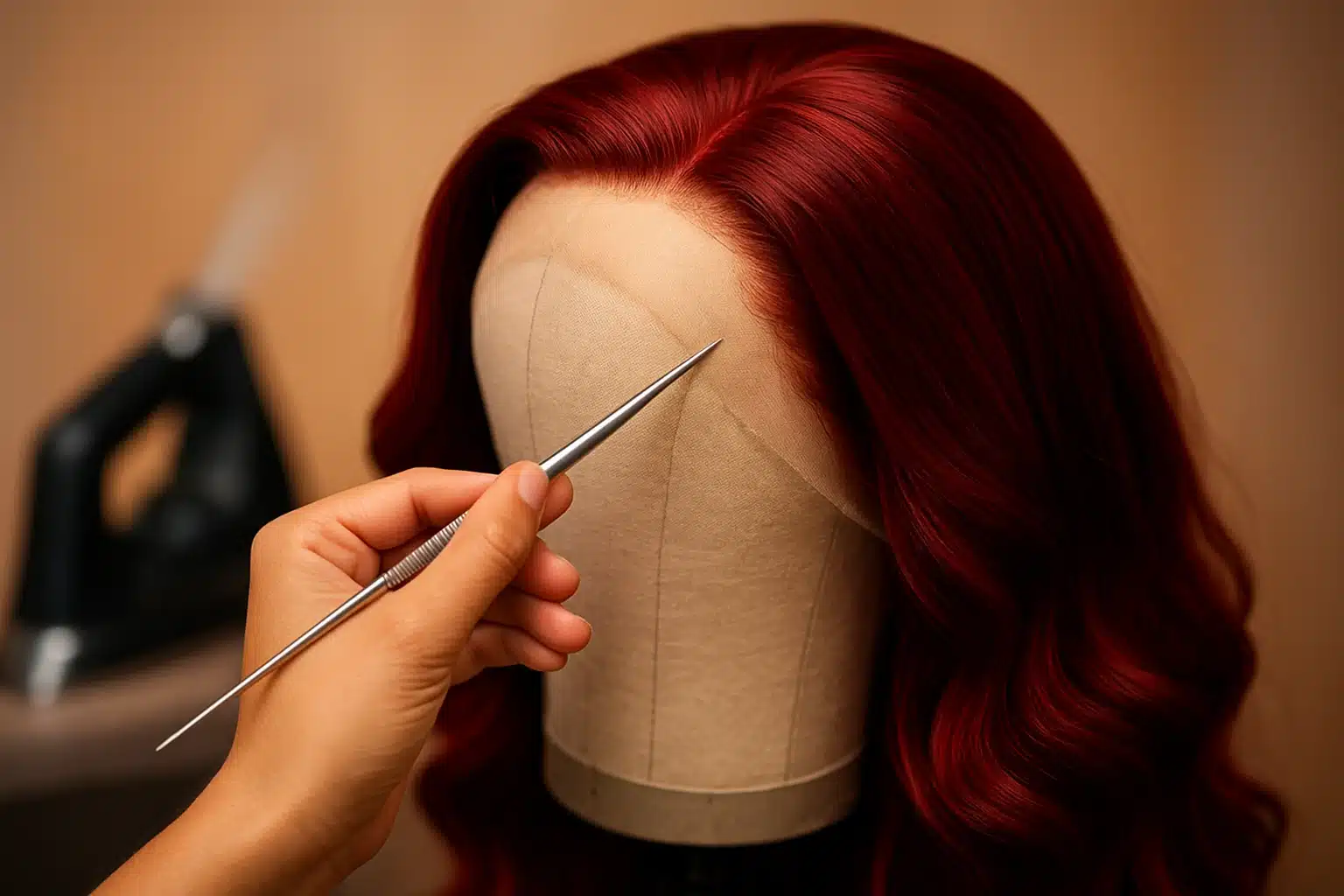
Picture this: You are standing backstage at Fresno’s Tower Theatre or prepping your costume in a hotel room before a massive local anime convention. You have spent weeks perfecting your character’s look, but the moment you step under the 3200K tungsten stage lights or the bright Fresno sun, disaster strikes. Your synthetic wig begins to melt, droop, or painfully slide backward off your hairline.
If you are a cosplayer, stage actor, or costume designer in the Central Valley, you know this dilemma all too well. Finding performance-grade hair pieces locally often feels like choosing between cheap seasonal pop-up shops and standard hair replacement clinics that don’t quite understand theatrical styling. Navigating this fragmented local landscape can be incredibly frustrating, which is why finding your perfect fit at the best wig stores in Fresno, CA is all about knowing exactly what materials to look for and where to source them.
Let’s bridge the gap between standard wig buying and professional theatrical design, transforming how you shop for, style, and preserve your performance pieces.
The Anatomy of a Performance Wig: Understanding Your Fibers
Before you set foot in a local boutique, it helps to know precisely what you are looking at. The most common mistake beginners make is assuming “synthetic is cheap, and human hair is good.” In the theatrical and cosplay worlds, this couldn’t be further from the truth.
The Great Fiber Debate
- Human Hair: Offering the most natural, seamless movement, human hair is fantastic for subtle period dramas or film work. However, human hair reacts to the environment. Under hot, sweaty stage lights, a meticulously curled human hair piece will wilt and frizz just like your natural hair would.
- Standard Synthetic: Often found in Halloween shops, these budget-friendly options cannot handle heat. Try to curl one, and the plastic polymers will melt instantly.
- Heat-Resistant Synthetic (Futura/Kanekalon): This is the holy grail for cosplayers and stage performers. High-quality synthetic fibers can hold gravity-defying, pre-set shapes through intense humidity. Once set with heat, a synthetic curl or spike will not drop until it is exposed to heat again.
Decoding Cap Construction
A wig is only as reliable as its foundation.
- Wefted/Open Cap: Breathable and affordable, featuring rows of hair sewn onto elastic strips.
- Monofilament: Features a fine mesh at the crown where each hair is hand-tied, giving the illusion of a natural scalp where the hair parts.
- Lace Front: The theatrical standard. A delicate, nearly invisible sheer mesh at the hairline allows you to pull the hair back away from the face seamlessly.
Nailing the Fit: The 3-Point Measurement System
One of the greatest benefits of shopping locally in Fresno is the ability to physically measure and test your foundation. A wig should never be “one size fits all.” If your piece slides during energetic stage choreography, your cap is likely sized incorrectly.
To find a secure fit, you need a 3-point measurement:
- Circumference: Around the hairline, behind the ears, and to the nape of the neck. (Average is 21.5″ to 22.5″).
- Front-to-Nape: From the center of your forehead to the base of your skull.
- Ear-to-Ear: Across the top of your head from the top of one ear to the other.
Keep in mind that sizing varies heavily by brand. You might ask a specialist, “do rene of paris wigs run small” compared to a heavy theatrical brand? A good local fitter will know these brand-specific nuances and will also remind you to account for the extra bulk created by the flat pin-curls and wig grips you’ll be hiding underneath.
Where to Buy Wigs for Cosplay and Theatrical Productions in Fresno, CA
Instead of gambling on online color charts, you can leverage Fresno’s local retail ecosystem to build your perfect look.
Specialty Boutiques for Tactile Fittings
For high-quality bases, cap measurements, and personalized consultations, local boutiques like Hollywood Wigs and Strut Hair Solutions are excellent starting points. While these shops are well known for providing everyday pieces and medical wigs to those experiencing hair loss, they also stock incredibly high-quality lace front bases that can be perfectly customized for stage and cosplay. Buying your blank base here ensures you get an exact color match to your skin tone and a flawless cap fit.
Costume and Theatrical Hubs
When you need character-specific theatrical pieces, Fun Factory and The Costume Land offer a more stage-ready selection. These are great spots to find base styles for specific eras, like a 1920s bob or a theatrical Santa set.
The Supply Run: Adhesives and Architecture
No performer’s toolkit is complete without the right infrastructure. For heavy-duty styling supplies—like Got2b Glued, canvas block heads (never style on a styrofoam head, as it will stretch the cap!), and specialized adhesives—local beauty outlets like Suzy’s Beauty Supply, Pink Palace, and Sally Beauty have you covered.
Transforming the Base: Pro Styling Techniques
Once you’ve sourced your wig, turning a flat piece of hair into a voluminous character masterpiece requires a few “aha” moments in fiber science.
The Magic of Micro-Crimping
Ever wonder why standard internet advice leaves your wigs looking flat, exposing the netting underneath? The secret is root-crimping (or micro-crimping). By using a micro-crimper strictly at the roots underneath the top layer of hair, you create a hidden structural skeleton. This expands the fiber density by up to 300%, eliminating visible cap netting and allowing you to build massive volume without adding heavy, headache-inducing external weight.
Steaming vs. Direct Ironing
Beginners routinely melt their cosplay wigs with flat irons. The secret to safe synthetic wig care lies in understanding the glass transition temperature. Steam resets synthetic fiber memory at a lower temperature (around 200°F) without burning the plastic polymers. Using a handheld garment steamer along with heat-resistant gloves allows you to gently reshape, straighten, or curl fibers safely.
If you must use dry heat, know your limits: Kanekalon taps out around 250°F, Futura can handle up to 350°F, and Human Hair can take 400°F.
The Crossed Bobby Pin X-Anchor
Say goodbye to slipping wigs. The most secure way to anchor a wig for active stage combat or crowded conventions is the X-cross method. Braid or pin-curl your natural hair flat against your scalp. Apply your wig cap, and drive two bobby pins through the wig’s ear tabs directly into your pin curls, crossing them into an “X” shape. They will interlock and refuse to budge.
The Conservatory Standard: Sanitation and Maintenance
Treating a $150 lace front wig as a disposable item is a tragedy. Professional theatrical conservatory standards dictate that correct wig maintenance is fundamentally about preservation.
Safe Lace Cleaning
Internet tutorials often suggest scrubbing your lace front with soap and warm water. This is a fast track to tearing delicate, expensive Swiss lace. Instead, the professional method involves chemical dissolution. Lay the lace edge flat on a paper towel and use a cotton swab to gently daub 91% isopropyl alcohol onto the adhesive (like spirit gum or Got2b). The alcohol dissolves the glue, pushing it out of the mesh and into the paper towel without any damaging friction.
The Post-Performance Reset
When you sweat under stage lights, salt and oils build up. For a deep reset, mix a paste of baking soda and water to gently lift hairspray buildup and heavy sweat. Follow this with a gentle soak in baby shampoo or specially formulated synthetic wig wash, and always let the wig air dry completely before attempting to detangle.
Where to Store Cosplay Wigs (And Avoid the “Helmet of Doom”)
How you store your wig is just as important as how you style it.
- Active Runs: If you are in the middle of a two-week theatrical run or a weekend convention, store your styled wig pinned to a canvas block head. Wrap hairnets gently around heavily styled spikes or curls to prevent them from dropping overnight.
- Off-Season Storage: The biggest anti-pattern in the cosplay community is throwing styled wigs into airtight plastic bins. Trapped moisture breeds mildew, and gravity crushes your styling, resulting in a flattened “helmet of doom.” For long-term storage, carefully remove the wig from its block, turn the cap inside out, stuff the cap with tissue paper to hold its shape, and place it in a breathable, hole-punched storage bag or a silk/satin wrap. Keep it in a cool, dark closet away from Central Valley humidity.
Frequently Asked Questions
What is the difference between spirit gum and water-soluble glues?
Spirit gum is a classic theatrical resin adhesive that holds incredibly well under stage sweat but requires dedicated removers or 91% alcohol to dissolve. Water-soluble glues (like the popular Got2b styling gel used as an adhesive) are gentler on the skin and can be removed with warm water, but they may break down faster if you sweat heavily during a performance.
How much lace should I trim off a new lace front wig?
The golden rule is to leave about 1/4 of an inch of lace beyond the hairline. Cutting too close to the hair knots can cause the hair to shed prematurely and the lace to roll up at the edges.
Why does my wig look unnaturally shiny on stage?
Standard synthetic fibers often have a plastic-like sheen that catches LED and tungsten stage lights. You can dull this shine by lightly dusting the wig with translucent setting powder, dry shampoo, or doing a quick soak in fabric softener before styling.
Taking the Next Step in Your Wig Journey
Mastering theatrical and cosplay wigs is an ongoing journey of blending art, science, and a little bit of structural engineering. Whether you are prepping for a leading role in a community play or getting ready to debut a complex cosplay, knowing how to select, fit, and preserve your hairpieces elevates your entire look.
Start by visiting local Fresno shops to get a feel for cap sizes and fiber textures in person. Embrace the learning curve of steaming, micro-crimping, and lace cleaning. By treating your wigs with professional care, they won’t just be costume accessories—they will become long-lasting investments in your craft.