There is a distinct moment of hesitation that almost every new wig wearer experiences. You’ve found a style that looks perfect—the cut is chic, the volume is right—but then you scroll down to the color options, and confidence turns to confusion. You’re met with names like “Melted Marshmallow,” “Sugar Cane,” or “Creamy Toffee.” They sound delicious, but what do they actually look like on you?
Finding a wig that feels like “you” is about more than just picking a pretty shade; it’s about understanding the science of color theory and how it interacts with your unique complexion. When you are Choosing Your Amore Wig: The Complete Guide, you aren’t just selecting a product code—you are selecting the tone that will frame your face and light up your features. Unlike standard flat colors, Amore wigs are renowned for their multi-tonal technology, blending highlights and lowlights to mimic biological hair. But navigating this artistic palette requires a little insider knowledge.
Decoding the “Amore Alphabet”: What the Suffixes Mean
Before we dive into skin tones, we need to translate the language of the label. In the world of high-quality alternative hair, the magic often lies in the letters following the color name. These aren’t random codes; they are the architectural blueprints of how the color is constructed.
The “R” Factor (Rooted)
If you see a color name followed by an -R (e.g., Creamy Toffee-R), it stands for Rooted.In the past, wigs often looked “wiggy” because the color was uniform from the scalp to the ends. Biological hair, however, is naturally slightly darker at the root, even if you just left the salon. Amore’s Rooted colors feature a darker root base that gradually transitions into the main shade.
- Why it matters: This creates an illusion of natural growth from the scalp, making the hairline look incredibly realistic.
The “LR” Difference (Longer Rooted)
The -LR suffix stands for Longer Rooted. This provides a more dramatic, fashion-forward “ombre” effect. The darker root color extends further down the hair shaft before blending into the lighter shade.
- Why it matters: If you prefer a trendy, lived-in look or want to match a natural eyebrow color that is significantly darker than your desired hair length color, -LR shades are your best friend.
The Science of Undertones: The “Vein Test”
The biggest myth in hair color selection is that you should choose based on whether your skin is “pale” or “dark.” In reality, the success of a color match depends almost entirely on your undertone.
Two people can have the exact same depth of skin color, but one might look radiant in “Harvest Gold” while the other looks washed out. The difference is that one has a warm undertone and the other has a cool undertone.
Here is the 3-minute test to discover yours:
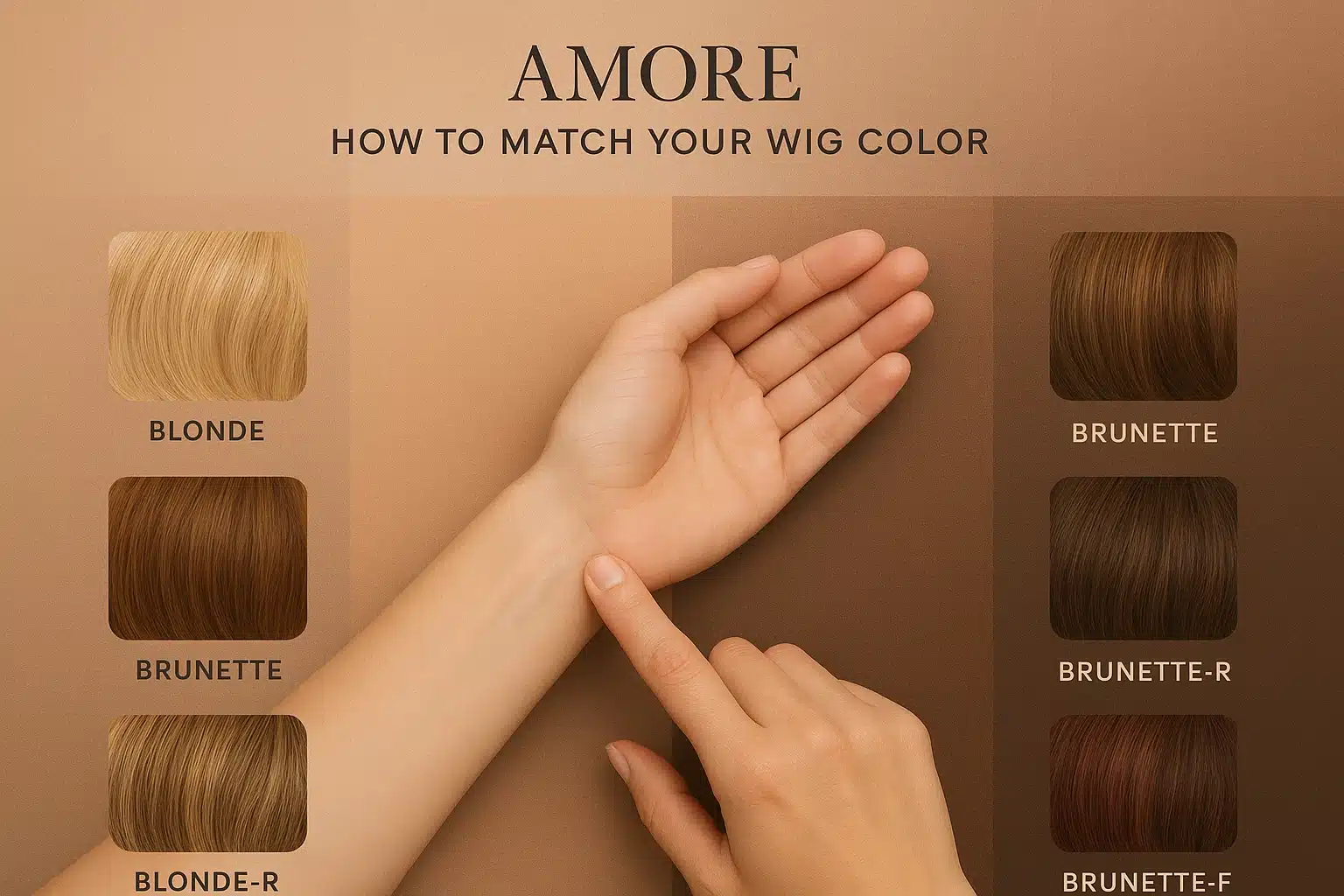
Check Your Veins: Look at the veins on the inside of your wrist in natural daylight.
- Greenish veins? You have Warm undertones.
- Bluish or Purple veins? You have Cool undertones.
- Hard to tell? You likely have Neutral undertones (lucky you—you can wear almost anything!).
The Jewelry Trick:
- Do you look healthier and more vibrant in Gold jewelry? You are likely Warm.
- Do you shine in Silver? You are likely Cool.
The “Golden Palette”: Best Shades for Warm, Indian, and Brown Skin Tones
For individuals with warm undertones—including many people with Indian, Hispanic, and deeper brown skin tones—the goal is to harmonize with the golden, yellow, or peach hues in your skin.
The Golden Rule: Avoid excessive “ash” or “silvery” tones. Cool, ashy colors can sometimes make warm brown skin look flat or even give it a greenish cast.
Instead, look for Amore colors that incorporate rich, spicy, or chocolate elements:
- Mochas and Chocolates: Colors like Coffee Latte or Chocolate Frost provide depth without clashing.
- Warm Reds and Coppers: Shades containing hints of auburn highlight the natural warmth in your cheeks.
This principle is similar to selecting fall colors for african american hair, where rich ambers and chestnuts create a glowing, radiant effect against the skin rather than a stark contrast.
The “Ash & Ice Palette”: Best Shades for Cool and Fair Skin
If you have cool undertones (pink, red, or blue hues in your skin), your objective is to create contrast without emphasizing redness.
The Cool Rule: Be careful with gold. Too much yellow or “honey” in a wig can make cool skin look inflamed or ruddy.
Your best matches in the Amore collection will often lean toward:
- Ash Blondes and Browns: Look for descriptors like “Vanilla,” “Champagne,” or “Iced.”
- Silvers and Greys: Silver Stone is a stunning choice that harmonizes beautifully with cool undertones.
- True Blacks: A sharp black or deep espresso works well, whereas a warm brown might look brassy.
The Olive Secret: Making Green and Hazel Eyes Pop
Olive skin is unique because it often has green or gray undertones. This skin tone is beautiful but can be tricky because it sits right between warm and cool.
The Aesthetic Hack: Look at the color wheel. Red is opposite green. If you have olive skin and green or hazel eyes, choosing a wig with subtle copper or reddish highlights (like Maple Sugar or Razberry Ice) will make your eye color appear much brighter and more intense.
If you prefer to stay brunette, opt for “neutral” browns that don’t lean too heavily into red or gold, keeping the focus on your features.
Advanced Blending: Making It Look Real
Once you’ve selected your color, the final step in your journey is ensuring the transition from wig to skin is seamless.
For Topper Wearers
If you are integrating a hair topper with your biological hair, an exact match is less critical than you might think. The most important area to match is the root and the mid-shaft. If the ends of the wig are slightly lighter (like an -LR color), it simply looks like you have sun-kissed highlights.
The Lace Front Connection
Regardless of the color you choose, the hairline is where the illusion is maintained. Amore wigs feature high-quality lace fronts, but sometimes the lace itself needs a tiny bit of help to vanish completely against your specific skin tone. A common pro-tip is to use a small amount of makeup for lace along the part line or hairline. Using a concealer or foundation that matches your skin helps blend the knots of the wig, ensuring that even a dark root looks like it’s growing directly from your scalp.
Broadening Your Color Horizons
It is helpful to remember that color coding systems vary wildly across the industry. If you are used to the ellen wille wigs color chart, you might find Amore’s “Melted” blends to be softer and more fluid, whereas European brands often have very distinct, precise highlighting. Understanding these subtle brand personalities helps you predict how a color will behave in different lighting.
Frequently Asked Questions (FAQ)
Q: Can I trust the color I see on my computer screen?
A: Monitors vary greatly. While we strive for accuracy, the best way to be 100% sure is to look at customer photos, watch video reviews, or invest in a color ring. However, understanding the description (Gold vs. Ash) is your safest bet for online ordering.
Q: I have Indian skin but want to go blonde. Which Amore shade works?
A: Avoid platinum or white-blondes. Look for rooted dark blondes with caramel tones, such as Spring Honey-R. The dark root (-R) will bridge the gap between your natural complexion and the lighter hair, making it look intentional and stylish rather than unnatural.
Q: Does “Melted” mean the same thing as “Rooted”?
A: Not exactly. “Rooted” usually implies a distinct dark root. “Melted” refers to a technique where the colors blend more seamlessly from root to tip, mimicking the soft, hand-painted look of a salon balayage.
Your Next Steps
Choosing a wig color is a journey of self-discovery. It’s about finding the shade that doesn’t just match your head, but matches your spirit. Whether you are looking for a shade that quietly mimics your biological hair or a bold new color that signals a fresh chapter, the Amore collection offers the nuance and depth to make it happen.
Take a moment to check your veins, assess your jewelry, and step into the light—your perfect shade is waiting.