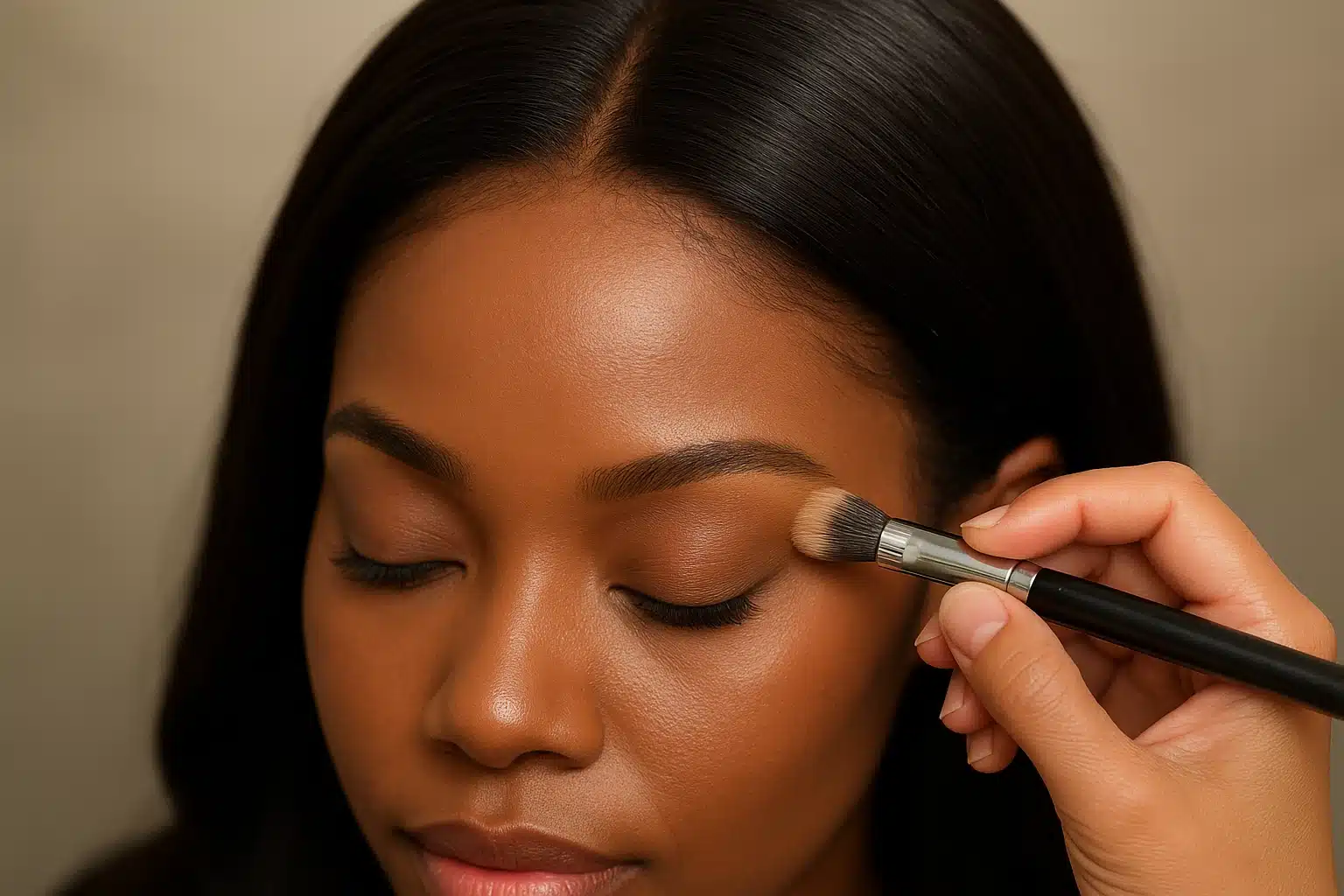
You know that feeling when you catch a glimpse of yourself in the mirror and everything just looks… right? The hair flows naturally, the style frames your face perfectly, and for a moment, you forget you’re wearing a wig at all. That is the magic we are chasing. However, for many, that magic is broken by a subtle but stubborn line across the forehead—the lace grid.
The difference between a wig that looks like a wig and one that looks like growing hair often comes down to a single, artistic detail: the blend. While modern lace technology has come a long way, lace is still a fabric, and your skin is living, breathing tissue. Bridging that gap requires a little bit of science and a little bit of art.
Achieving a truly seamless look starts before you even pick up a makeup brush; it begins with Mastering the Illusion: How to Achieve a Flawless, Natural Wig Hairline to ensure your wig’s construction is perfect from the start. Once you have that foundation, makeup becomes the tool that transforms “transparent” lace into your skin.
This guide isn’t just about slapping foundation on a wig; it’s about understanding color theory, formulation, and technique to create a hairline that invites confidence, not scrutiny.
The Chemistry of the Blend: Why Product Formulation Matters
Before we dive into colors, we need to talk about chemistry. One of the most common mistakes beginners make is grabbing the exact same bottle of foundation they use on their face and applying it heavily to their lace. While the shade might be right, the formula might be working against you.
Liquid vs. Powder: The Great Debate
When blending lace, you are essentially staining fabric to match skin.
- Powder Foundations: These are excellent for quick touch-ups and for setting the lace. Because they are dry, they are less likely to interfere with wig adhesives. However, they can sometimes look “chalky” if not melted down properly.
- Liquid/Cream Foundations: These provide a deeper pigment that actually soaks into the lace knots, offering a more permanent-looking tint. Pro Tip: Look for matte, long-wear formulas. Dewy or oil-based foundations can break down the bond of your wig glue, causing the lace to lift prematurely.
The “Less is More” Principle
The goal is to tint the lace, not cake it. If you can see the texture of the makeup sitting on top of the lace grid, you have applied too much. We want to wash the lace with color so it disappears against your skin, rather than creating a layer of makeup that sits on top of it.
The Golden Rule: Matching Your Undertone
If you have ever applied makeup to your lace and felt it looked “orange” or “gray” despite being the right darkness level, the culprit is your undertone. Lace is usually a neutral, pale beige or transparent gray. Your skin has specific underlying colors—warm (yellow/gold), cool (pink/red), or neutral.
To make the lace vanish, you aren’t just matching your skin; you are neutralizing the lace.
- For Warm Undertones: Standard lace often looks ashy or gray against warm skin. You need a foundation or concealer with strong yellow or golden undertones to counteract the coolness of the lace.
- For Cool Undertones: If you put a warm, golden foundation on cool skin, the hairline will look orange. Stick to neutral or cool-toned shades.
- The “Shadow” Trick: Sometimes, using a shade slightly darker than your facial skin tone works best for the lace. Why? Because hair casts a shadow on the scalp. A slightly deeper tone creates depth and realism, whereas a lighter tone can look like a halo.
Step-by-Step: The Ultimate Blending Technique
Transforming your wig requires a specific sequence of application to ensure longevity and realism.
Phase 1: Prepping the Canvas (The Underside)
Turn your wig inside out. This is where the heavy lifting happens. By applying product to the underside of the lace, you are tinting the material that sits directly against your skin.
- Take a small angled brush and dip it into your powder foundation or a fast-drying liquid concealer.
- Press the product into the lace specifically where the parting space and hairline are.
- Crucial Step: If using liquid, let it dry completely. You don’t want wet makeup sliding around on your forehead.
Phase 2: The “Melt” (The Topside)
Once the wig is on your head (whether glued or secured with a grip), you might still see a faint line.
- Take a fluffy eyeshadow brush with a tiny amount of powder that matches your skin exactly.
- Use a stippling motion (tapping, not swiping) along the transition line where the lace meets your skin.
- This blurs the harsh edge, much like using the blur tool in a photo editing app.
Phase 3: Setting for Endurance
To prevent the makeup from transferring onto the wig fibers or melting off in the heat, lightly spritz some setting spray on your finger and tap it over the blended area. This locks the pigment into the lace.
A Masterclass for Every Complexion
One technique does not fit all. Different skin tones encounter unique challenges when blending lace.
For Fair to Light Skin
The enemy here is the “dark line.” Transparent lace is usually best for you, but it can still look too stark white.
- The Strategy: Avoid bronzers which can read as orange. Use a translucent powder with a slight tint. Your goal is to take the “shine” off the lace rather than heavily coloring it.
For Medium to Tan Skin
This range often struggles with the “ashy” cast. Standard medium-brown lace can look gray against olive or golden skin.
- The Strategy: warmth is your friend. Use a powder foundation with golden or peach undertones to cancel out the gray quality of the lace material.
For Deep to Rich Skin
The biggest challenge here is the “white cast” or “halo effect” where the lace looks clearly lighter than the skin.
- The Strategy: You need depth. Do not be afraid to use a cream contour or a concealer stick that matches your contour shade rather than your highlight shade. Apply this to the underside of the lace to darken the grid significantly. Tinting sprays are also highly effective here for a base color, followed by powder to set.
Troubleshooting Common Setbacks
Even with the best techniques, issues can arise. Here is how to handle them.
Problem: The lace looks too dark after makeup application.
- Fix: Use a clean spoolie (eyebrow brush) dipped in 99% alcohol to gently brush the lace. This lifts excess pigment without ruining the wig.
Problem: The makeup is making the wig lift.
- Fix: You likely used an oil-based concealer near the adhesive. Clean the area with alcohol and switch to a powder-based product or a matte, oil-free liquid for the hairline area.
Problem: The hairline looks too perfectly straight.
- Fix: Realism is found in imperfection. Plucking the hairline slightly to create density gradation helps, but blending is key. When learning how to make wigs look real, remember that adding “baby hairs” or pulling out a few of your own natural hairs (if available) to mix with the wig fibers can break up that solid line of makeup.
Frequently Asked Questions
Can I use lace tint spray instead of makeup?
Absolutely. Lace tints are excellent for establishing a base color. However, makeup (concealer/powder) is still usually necessary for the detailed blending right at the edge of the hairline where the lace meets the skin.
Will the makeup stain the wig hair?
It can if you aren’t careful. Always use a small, angled brush for precision near the hair roots. If you do get makeup on the fibers, a little bit of micellar water on a Q-tip can clean it right up.
How often do I need to re-apply the makeup?
Powder applied to the top of the lace may need a touch-up daily, just like your face makeup. Liquid or cream applied to the underside of the lace usually lasts until you wash the wig.
The Journey to Confidence
Blending your lace is a skill, much like perfecting a winged eyeliner. The first time might feel clumsy, but with practice, you will develop an eye for exactly which shade and technique works for your unique complexion.
Remember, the goal isn’t just to hide the lace; it’s to reveal your confidence. When you don’t have to worry about your hairline, you are free to focus on what matters—living your life beautifully.