For anyone new to the world of alternative hair, the phrase “heat styling” usually triggers a very specific fear: the nightmare of melting a beautiful, investment-worthy wig. It’s a valid concern. For decades, the golden rule of synthetic hair was strict and unbreakable: keep it away from ovens, open flames, and especially curling irons. But technology has evolved, and with the introduction of Hairdo’s Tru2Life heat-friendly fibers, the rules have changed in your favor.
If you are accustomed to standard synthetics, the idea of taking a flat iron to your wig might feel counterintuitive. However, understanding how to manipulate these specialized fibers is the key to unlocking a customized look that feels authentically “you.” Whether you are looking to smooth out ends or add volume, learning the proper care techniques is just as important as choosing your perfect style with confidence when you first start your journey.
The Science Behind Tru2Life: Understanding the Fiber
To style with confidence, you first need to understand what you’re working with. Standard synthetic wigs are “baked” into a style at the factory. They are essentially set for life; if you wash them, they snap back to their original shape, but they cannot be altered.
Tru2Life fibers are different. They are engineered from a heat-resistant polyester blend that mimics the diameter and texture of human hair. This material possesses a unique quality known as “thermal memory.” This means the fiber doesn’t just tolerate heat—it actually relies on it to change its structure. However, unlike human hair, which reacts to heat and moisture, synthetic fiber reacts to heat and cooling. This distinction is where most beginners encounter trouble.
The Golden Rule: The Heat-Set-Cool Cycle
The single most misunderstood aspect of heat-friendly synthetic hair is how the curl is actually formed. If you have ever curled a Tru2Life wig and watched the curl fall flat the moment you released it from the iron, you likely missed the “Cooling Phase.”
We call this the Heat-Set-Cool Cycle:
- Heat: The styling tool heats the fiber, making it pliable and soft.
- Set: You hold the fiber in the desired shape (curly or straight).
- Cool: The fiber must cool down completely to room temperature while held in that shape to “lock” in the style.
Think of it like warm wax or a cookie fresh out of the oven. While it’s hot, it’s soft and shapeless. It only becomes solid and holds its structure once it cools down. If you drop a hot synthetic curl, gravity pulls it straight before it has time to set.
Your Safety Toolkit and Thermal Map
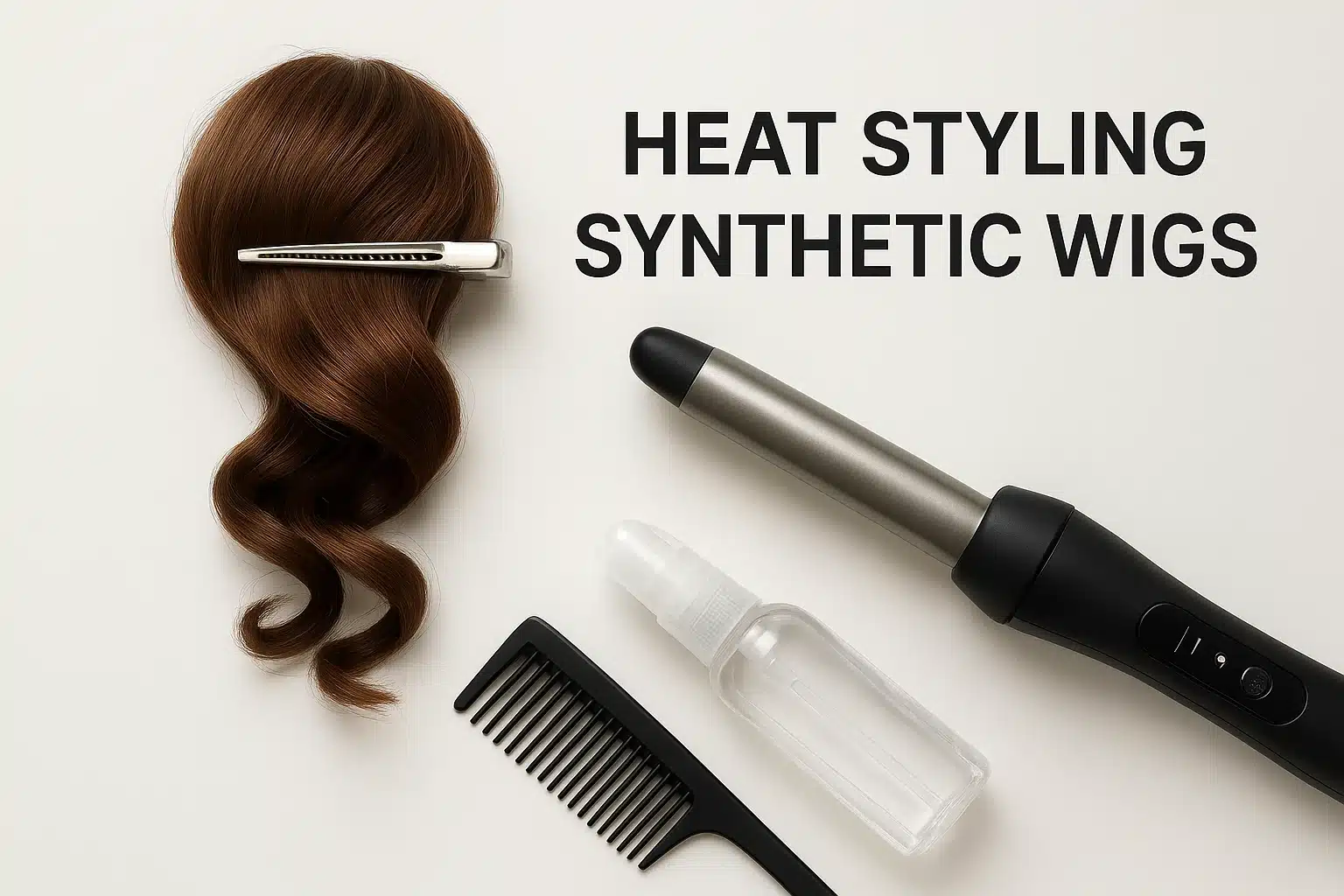
Before you plug in your tools, you need the right setup. Using the tools you use on your biological hair—like standard brushes or fixed-temperature irons—can be disastrous for synthetic fibers.
The Essential Toolkit:
- Variable Temperature Iron: You must be able to control the heat.
- Wide-Tooth Comb: Never use a standard brush on a synthetic wig, as it stretches and snaps the fiber.
- Metal Clips: essential for the “pin-and-cool” technique.
- Water Spray Bottle: A light mist helps protect the fiber during styling.
The Tru2Life Temperature Chart
While manufacturer specifications often state that Tru2Life fibers can withstand heat up to 350°F, operating at the maximum limit leaves no room for error. For the safest results and longest lifespan of your wig, stick to the “Sweet Spot.”
- 240°F (Low): The ideal range for smoothing frizz, detangling, and general maintenance. This is the “safe zone” that extends the life of your piece.
- 280°F (Medium): The optimal temperature for changing the style (curling or straightening). It provides enough heat to alter the fiber’s memory without scorching it.
- 350°F (High): The “Danger Zone.” While technically possible, this temperature should be reserved for professional stylists. One extra second of contact can lead to permanent damage.
Step-by-Step: Mastering the Curl
Achieving those bouncy, resilient curls isn’t magic—it’s just physics. Follow this method to ensure your style holds until the next time you apply heat.
- Prep the Hair: Gently comb through the hair with a wide-tooth comb to remove tangles. Spray a light mist of water on the section you plan to style.
- Heat the Section: Using a curling iron set between 270°F and 280°F, wrap a small section of hair. Hold for roughly 10-15 seconds.
- The “Pin” (Crucial Step): Slide the hair off the barrel into your palm, keeping the curl coiled tight. Do not let it drop! Use a small metal clip to pin the coiled curl against the wig cap.
- The “Cool”: Leave the curl pinned until the fiber feels completely cool to the touch. This “molecular reset” is what permanently sets the style.
- Release: Once cool, unclip the curl. It will now bounce back and hold its shape, even after washing, until you apply heat again.
Beyond Styling: The “Revival” Technique
One of the greatest advantages of heat-friendly synthetic wigs is the ability to fix damage. Over time, friction against clothing (especially at the nape of the neck) causes fibers to become frizzy, matted, and “crunchy.” This is often known as friction frizz.
Many beginners assume this means the wig is ruined. It’s not.
Because Tru2Life fiber is heat-responsive, you can use a flat iron on a low setting (230°F – 240°F) to smooth out these kinks. Slowly running a flat iron over frizzy ends essentially “resurfaces” the fiber, smoothing down the rough texture and extending the life of your wig significantly. This maintenance technique turns your styling tool into a restoration tool.
Frequently Asked Questions
Can I use a blow dryer on my Hairdo Tru2Life wig?
While you technically can, it is generally not recommended for beginners. Blow dryers blow air around, which can tangle the fibers rapidly. Air drying is always the safest method for drying, followed by styling with irons once the wig is dry.
Will the style wash out in the rain or shower?
No! This is the beauty of synthetic “memory.” Once you have heat-styled and cooled the fiber, that style is locked in. You can wash your wig, and after it air dries, the curls you put in will return. The style will only change if you apply heat again to straighten it.
Why do the ends of my wig feel rough?
This is usually caused by friction against collars or skin. It’s normal wear and tear. You can use the “Revival Technique” mentioned above with a flat iron on low heat to smooth the texture back out.
Can I use styling products like hairspray?
Regular drugstore hairspray contains alcohols that can dry out and damage synthetic fibers. Always stick to styling products specifically formulated for synthetic hair to ensure the fiber stays hydrated and healthy.
Continuing Your Journey
Mastering heat styling changes your relationship with your wig. It moves you from a passive wearer to an active stylist, giving you the freedom to match your hair to your mood or occasion. Start with low heat, practice the “cool down” technique, and remember that with the right care, your Hairdo wig can look beautiful for a long time.
If you are ready to explore more about maintaining your new look or want to dive deeper into the different types of fibers available, our library of resources is here to guide you every step of the way.