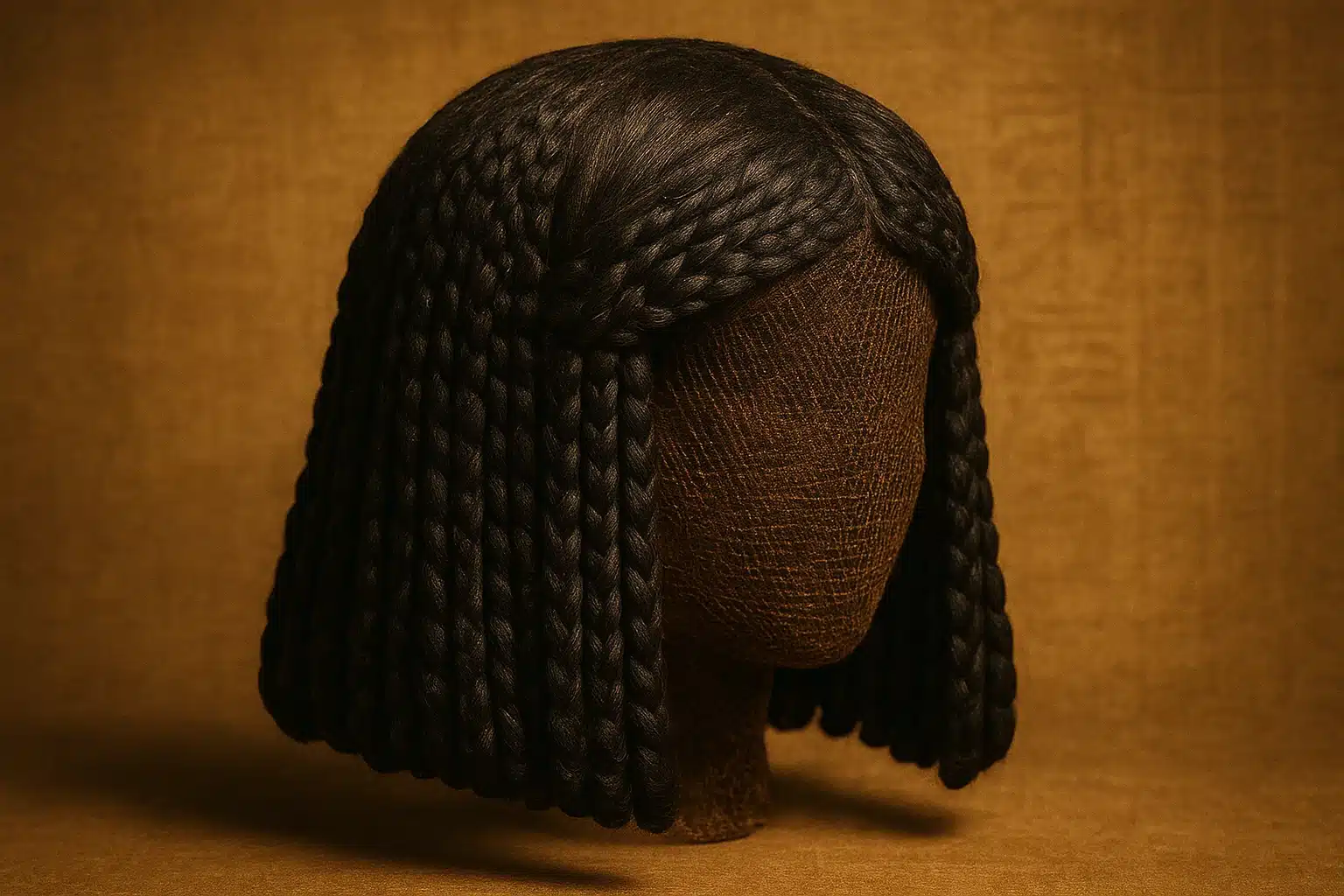
Imagine opening a cedar chest that has been sealed inside a tomb for over 3,400 years. Inside, amidst gold and pottery, rests a wig—lustrous, intricately braided, and looking as if it had been styled just yesterday. This isn’t a scene from a movie; it is the reality faced by Egyptologists when they discovered the tomb of Merit. For modern wig wearers, there is something profoundly validating in these discoveries. They reveal that the desire for beautiful hair, and the ingenuity required to create it, is not a modern vanity but a timeless human pursuit.
When we peel back the layers of time, we find that ancient civilizations were master engineers of hair. They didn’t just pile hair onto their heads; they crafted sophisticated systems designed to withstand heat, daily wear, and eventually, eternity. Exploring the ancient & classical history of wigs reveals a fascinating intersection of fashion, chemistry, and social status. By analyzing these surviving artifacts, archaeologists provide us with a window into the lives of the people who wore them, proving that the search for confidence and dignity through hair is as old as civilization itself.
The Science of Survival: How Do Wigs Last 3,000 Years?
One of the most common questions casual learners ask is: “How does hair not rot after three millennia?” The answer lies in a combination of environmental luck and biological resilience. Hair is primarily composed of keratin, a tough, fibrous protein. In damp conditions, keratin is susceptible to distinct microbial decay. However, the arid, desiccating climate of the Egyptian desert acts as a massive, natural freeze-dryer.
When a wig was placed in a tomb, the dry heat rapidly removed moisture from the strands, effectively pausing the decomposition process. But environment alone isn’t enough. Recent bio-archaeological studies suggest that the specific oils and resins used to dress the wigs created a protective barrier, sealing the cuticle against bacteria and insects. This accidental “preservation coating” is why we can still see the exact braid patterns styled by a hairdresser around 1400 BCE.
Engineering the “Duplex” Wig: Ancient Thermal Tech
Perhaps the most surprising discovery for modern wig wearers is that ancient Egyptians struggled with the same issues we do today—specifically, heat. How do you wear a heavy wig in the scorching desert sun without overheating?
Archaeological analysis of high-status artifacts, such as the famous “Duplex” wigs found in Thebes, reveals a sophisticated solution that rivals modern cap construction. These wigs were not built on solid foundations. Instead, wigmakers spent up to 200 hours knotting human hair onto a mesh base made of plaited palm fibers or human hair netting.
The “Secret Formula” of Ancient Adhesives
To secure the hair to this mesh foundation, ancient craftsmen didn’t have access to modern polymers. Instead, gas chromatography-mass spectrometry (a method used to analyze chemical compounds) has revealed a specific “secret formula”:
- 2/3 Beeswax
- 1/3 Conifer Resin
This mixture was a feat of chemical engineering. Pure beeswax melts at around 62°C (144°F)—too low for the Egyptian summer. By adding resin, they raised the melting point, creating a bond that remained stable even in extreme heat. This mesh foundation allowed for airflow to the scalp, proving that “capless construction” and breathability were priorities even 3,000 years ago.
Materials and Manufacture: The Value of Human Hair
In the ancient world, hair was a commodity as valuable as gold or incense. While we often think of the history of wigs as a monolith, there was a distinct hierarchy in materials based on what a person could afford.
The Hierarchy of Fiber
- Premium (Royalty & High Priests): 100% Human Hair. These wigs were incredibly expensive, often requiring hair to be traded or tithed.
- Mid-Tier (Nobles): A blend of human hair and vegetable fibers (like date palm fiber) used for internal padding to create volume without the cost.
- Economy (Commoners): Wigs made entirely of dyed sheep’s wool or plant fibers.
This distinction is fascinating because it mirrors the modern wig market. Just as we choose between premium human hair and high-quality synthetics today, ancient consumers made choices based on budget, occasion, and longevity.
Beyond the Tomb: From Ritual to Authority
While the physical wigs tell us how they were made, the context of their burial tells us why they were worn. In ancient Egypt, the head was considered the center of spiritual life. Shaving the head was often a requirement for ritual purity, especially for priests, to remove the risk of lice and impurities. However, a bald head left one exposed to the sun and removed a key marker of social individuality.
The wig solved this paradox. It allowed the wearer to be biologically “pure” (shaved) underneath, while projecting a public image of status and vitality. This concept of “hair as uniform” didn’t die with the Pharaohs. If we look at the evolution of hairpieces, from the elaborate wig ritual of Egyptian priests to the white powdered wigs of the 18th century, we see a through-line. In both cases, the wig separates the person’s private self from their public role. It is an artifact of power.
Frequently Asked Questions About Ancient Wigs
Did ancient Egyptians actually shave their heads? Yes, frequently. While often cited as a fashion choice, it was primarily a hygienic response to the warm climate and lice. Ancient Egyptian wigs facts confirm that shaving the head and wearing a wig was the most effective way to stay clean while maintaining social status.
Did they use wig glue? Not in the way we use liquid adhesives today. The wigs were typically secured using beeswax or resin-based pomades that became tacky when warmed by body heat. Complex headdresses were also held in place by ribbons, bands, and the custom fit of the mesh cap.
Were the wigs only black? While black was the most common color (associated with youth and vitality), archaeologists have found evidence of henna and other plant dyes used to color grey hair or create reddish tints. The “Blue Wig” often seen in art is likely a stylized representation of the glistening of black hair under the sun, rather than actual blue fiber.
Connecting the Past to the Present
Studying the archaeology of wigs does more than fill a history book; it connects us to a shared human experience. The woman who wore the wig found in Merit’s tomb likely worried about the fit, the style, and how it made her feel—just as we do today.
The technology has evolved from beeswax and palm fiber to monofilament tops and synthetic heat-friendly fibers, but the core purpose remains unchanged. Wigs are, and have always been, a tool for empowerment, dignity, and personal expression. Understanding the incredible effort our ancestors put into creating and preserving these pieces serves as a reminder that investing in one’s confidence is a pursuit that transcends time.