If you’ve ever walked into a beauty supply store hoping to find a wig that matches your natural 4C coil, only to be met with aisles of silky straight hair and “transparent” lace that looks completely grey against your skin, you know the frustration.
Finding the right textured wig in Baltimore is about more than just aesthetics. It’s about crown sovereignty—preserving your natural hair, expressing your authentic self, and finding compassionate, knowledgeable local specialists who genuinely understand Black hair dynamics.
For first-time wig buyers, women transitioning to natural hair, or those experiencing medical hair loss in the Baltimore-Washington metropolitan area, online searches often lead to a frustrating divide. You’re either pushed toward expensive, Euro-centric medical clinics or bombarded by online catalogs that offer no local way to touch, try on, or color-match the hair.
We’ve created this definitive field guide to help you find the best wigs in baltimore. Let’s decode the textures, protect your edges, and navigate Baltimore’s distinct retail landscape together.
Decoding African American Wig Textures: Finding Your Match
One of the biggest hurdles in wig shopping is the “Texture Misalignment Trap.” Many general wig guides lump all textured hair into a generic “curly” category, completely missing the nuances between loose ringlets and dense coils.
If you want a natural look, understanding these categories is your first step:
- Blow-Out / Kinky Straight: This texture perfectly mimics pressed, stretched, or roller-set 4A-4C natural hair. It offers corporate versatility with zero leave-out heat damage.
- 3B–3C Spiral Curls: Featuring defined corkscrew curls with high movement, this texture is ideal for looser natural patterns or an easy wet-and-go styling routine.
- 4A–4C Afro Kinky: Known for its realistic high shrinkage, textured zig-zag strands, and natural coarse sheen. Whether you’re looking for a synthetic blend or a virgin kinky human hair wig, this texture is best for authentic afro puffs, twist-outs, and seamless blending.
Density Matters: Keep in mind that hair density drastically changes a wig’s look. A 130% to 150% density mimics fine-to-medium natural hair for an everyday look, while 180% to 200% gives that dramatic, full-glam volume.
The Anatomy of a Safe Wig: Edge Protection & Cap Engineering
We often hear wigs praised as the ultimate “protective style.” But there is a well-known paradox: ill-fitting elastic bands, aggressive internal combs, and toxic adhesives can cause severe mechanical friction, leading to traction alopecia along your fronto-temporal hairline.
A truly protective style starts with the foundation. The base underneath matters just as much as the wig itself. A flat 6-to-10 cornrow base combined with a satin or silk wig grip will eliminate edge friction.
When shopping for lace front wigs, look for glueless HD lace fronts, 5×5 closures, or even headband wigs that require zero adhesive. For less everyday tension on your neck and hairline, shorter, lightweight styles like bob wigs are also excellent protective options. Always practice the “3-finger rule”: ensure your wig’s hairline sits at least three finger-widths above your eyebrows to avoid placing tension directly on your fragile baby hairs.
Lace Customization: Banish the “Ashy Cast” on Melanin-Rich Skin
Standard “transparent lace” frequently reflects an ashy, grey cast under indoor lighting on brown and deep skin tones. To achieve a flawless melt, you need to look for Real HD (High Definition) Swiss Lace, which features an ultra-thin 0.05mm webbing that disappears against the skin.
Here is a quick diagnostic trick: The Ashy Lace Test. Before buying, press the lace flat against your inner wrist or forehead. If it looks chalky, it will require customization.
To make a wig look like it’s growing directly from your scalp, local specialists often use two techniques:
- Bleaching the Knots: Softening the tiny black knots where the hair is tied to the lace.
- Lace Tinting: Using a tone-matched mousse or liquid lace tint to warm up the lace, matching it perfectly to your specific undertones (warm, golden, neutral, or cool).
The Baltimore Field Guide: Best Wig Stores by Category
Generic local directories will list random beauty supplies, but they won’t tell you where to go based on your specific needs. Just as we’ve meticulously mapped out resources in other regions (like our guide to wig shops in sacramento), understanding Baltimore’s specific layout is crucial for a successful shopping trip.
The Reisterstown Road Hair Corridor (Northwest Baltimore)
This bustling Northwest corridor is perfect for everyday wear and robust local inventory.
- Superior Hair Depot 410 & Braids & Beauty Supply: Great for budget-friendly finds, synthetic blends, and DIY everyday wear.
- Orna Wigs & Sarra’s Wig Salon: Known for offering higher-end consultations and a more specialized shopping experience.
East & Central Baltimore Hubs
- The Hair Palace (Erdman Ave): A staple for affordable options, offering a wide array of textures for daily protective styling.
- Beauty Plus Northwood (Havenwood Rd): An excellent mid-tier spot for natural blends, offering a great balance of local inventory and reasonable pricing.
Private Boutique & Custom Specialists
If you’re looking for an intimate environment, raw hair, and custom fittings without the rush of a beauty supply store:
- Ruby Renee Wigs (Newbury St): Offers private consultations and high-end styling.
- Bow Down ‘N Crowns: A specialized boutique perfect for custom units and authentic textures.
Medical Hair Loss & Cranial Prosthesis Centers
For those dealing with alopecia, chemotherapy, or hormonal thinning, privacy and medical expertise are paramount.
- Melessa’s Weave Palace (S Charles St): Bridges the gap between traditional African American styling and medical prosthetics, offering empathetic, service-based care.
- Lena’s Wigs (Hampden): Provides an empathetic, medical-grade consultation model with private rooms and step-by-step guidance on cap tailoring.
Medical Hair Loss Support in Maryland
There is a distinct difference between fashion wigs and medical hair systems. If you are experiencing medical hair loss, you may qualify for a cranial prosthesis.
Maryland health insurance regulations often allow for out-of-network reimbursement for cranial prostheses (frequently billed under CPT code A9282). This requires a physician’s prescription, and specialized local centers (like those mentioned in Hampden and South Baltimore) can help you navigate the paperwork, ensuring you get a beautiful, comfortable unit covered by your medical benefits.
Maintenance and Longevity for Kinky & Curly Units
Proper wig maintenance is the secret to extending the life of your investment, especially for textured units which are prone to tangling.
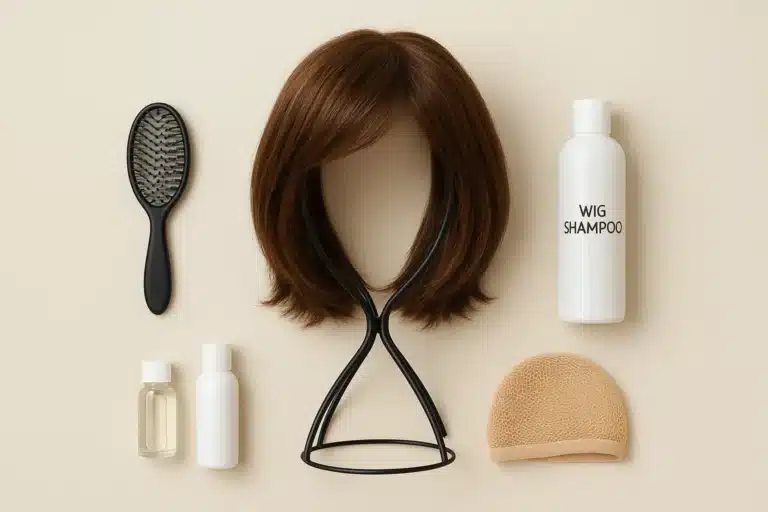
The “Slip First” Wash Routine: Never wash a kinky-curly wig like you would straight hair. Always start with a sulfate-free cleanser, followed by a heavy deep conditioner. Detangle the hair while it is soaking wet and saturated with conditioner, starting from the ends and working your way up to the roots with a flexible bristle brush.
Preventing the Nape Mat: The friction from collars and scarves often causes the hair at the nape of the neck to mat. Prevent this by daily misting with a formula of water, leave-in conditioner, and a lightweight oil (like argan or jojoba) to keep the friction zones lubricated.
In-Store Shopping Blueprint: What to Ask
Before you finalize a purchase at any Baltimore wig shop, keep this 5-question checklist in mind:
- Is this hair 100% virgin human hair, a synthetic blend, or heat-resistant synthetic?
- What kind of lace is this (Transparent, French, or HD Swiss)?
- Do you offer cap sizing, or is this a one-size-fits-all?
- What is your try-on policy, and do you use wig caps for hygiene?
- Do you offer in-house customization services like knot bleaching, plucking, or lace tinting?
Frequently Asked Questions (FAQ)
What wig looks most natural for African American hair?
The most natural look comes from matching both the texture (like a 4A kinky curly or a blowout straight) and the lace to your skin tone. HD lace front wigs with a customized, plucked hairline and bleached knots offer the most seamless, “growing from the scalp” appearance.
Can I try on wigs at stores in Baltimore?
It depends on the store. Beauty supply stores on Reisterstown Rd and Erdman Ave often have strict hygiene rules but may allow trying on with a purchased wig cap. Private boutiques and medical centers (like those in Hampden or South Baltimore) offer private fitting rooms specifically designed for trying on custom units.
How do I install a textured wig without damaging my edges?
Opt for glueless installations. Use a velvet wig grip to secure the cap, adjust the internal elastic band for a snug fit, and avoid using the metal or plastic combs built into the wig, as these cause severe friction on your edges.
Will insurance pay for a wig in Maryland?
Yes, if it is prescribed as a “cranial prosthesis” for medical hair loss (such as alopecia or chemotherapy-induced hair loss). You will need a prescription from your doctor and an itemized receipt containing specific CPT codes to submit to your insurance for reimbursement.
Next Steps on Your Educational Journey
Finding the perfect wig is an empowering journey of self-expression and self-care. Now that you understand the different textures, the importance of lace matching, and the layout of Baltimore’s best wig shops, you are equipped to make a confident, educated decision.
Take your time exploring local shops, ask the right questions, and prioritize the health of your natural hair underneath. Whether you’re seeking a quick protective style or a long-term medical hair loss solution, the right resources and the perfect crown are waiting for you right here in Baltimore.