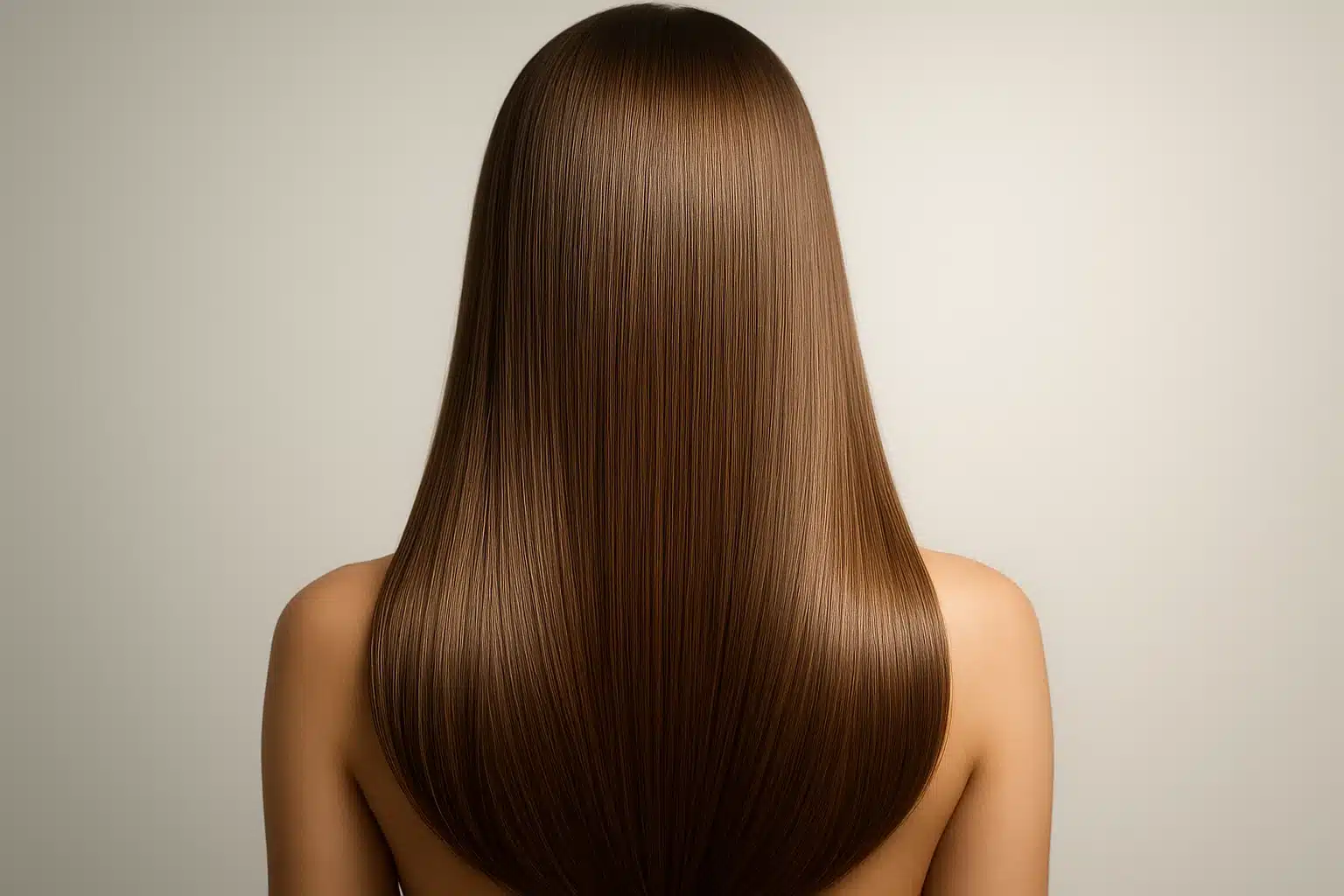
There is a specific moment of frustration that almost every long-wig wearer knows all too well. You leave the house feeling confident, your hair flowing beautifully down your back. But a few hours later, you reach up to adjust your style, and your fingers meet resistance. The hair at the nape of your neck has bunched up, creating a mat that feels less like silk and more like a bird’s nest.
It’s a common pain point, but here is the truth that often goes unsaid: tangling isn’t necessarily a sign of a “bad” wig, nor is it entirely your fault. It is a matter of physics and fiber technology. While many factors contribute to tangles—from environmental dryness to the collar of your coat—it often starts with the engineering behind the hair. Understanding the technology used by premier wig brands is the first step to a tangle-free experience, allowing you to choose styles designed to resist friction rather than succumb to it.
The Science of Smoothness: Why Wigs Tangle
To solve the tangling issue, we have to look at what is happening at a microscopic level. Whether you are wearing biological hair or synthetic fiber, tangling is essentially the result of friction and texture.
Imagine the surface of a hair strand like the trunk of a palm tree. When that surface is smooth and sealed, strands slide past each other effortlessly. However, when that surface becomes rough—due to damage, dryness, or low-quality manufacturing—the strands act like Velcro. They grab onto one another.
The “Nape Nightmare”
The area at the nape of the neck is the “perfect storm” for tangles. Here, three things happen simultaneously:
- Friction: Your wig rubs against your skin, your clothing, and the back of chairs.
- Heat: Your body heat rises, softening certain synthetic fibers and making them slightly tacky.
- Movement: Your head is constantly turning, causing the fibers to rub back and forth thousands of times a day.
Leading manufacturers understand this science. They don’t just produce “hair”; they engineer fibers and cap constructions specifically designed to maintain surface smoothness in this high-friction zone.
Fiber Technology: Not All Strands Are Created Equal
When browsing for long styles, the type of fiber you choose dictates how much maintenance you will need to prevent matting.
1. Advanced Synthetic Fibers
Standard synthetic hair has come a long way. Brands like Noriko and René of Paris use high-quality Kanekalon fibers that are pre-sealed. Because these fibers are essentially specialized plastic filaments, they don’t have a cuticle that can open up and snag. However, they rely on a factory coating to stay smooth. Once that coating wears off from friction, tangling begins. This is why “bargain” wigs tangle almost immediately—they lack the premium protective seal found in top-tier brands.
2. Heat-Friendly Synthetic Fibers
There is a common myth that heat-friendly means “tougher.” In reality, heat-friendly fibers (like those found in Raquel Welch’s Tru2Life or Jon Renau’s HD collections) are structurally different. They are designed to be flexible so they can be styled. This flexibility makes them look incredibly realistic—mimicking the texture of human hair—but it also makes them more susceptible to friction tangling at the nape if not cared for correctly.
3. Human Hair and the Cuticle
For the ultimate anti-tangle experience, Remy Human Hair remains the gold standard. Unlike standard human hair, where strands are collected randomly, Remy hair is collected with the cuticle layers all facing the same direction (root to tip). This alignment prevents the “fishhook” effect that causes locking and matting. If you are investing in a long-term piece, learning how to care for human hair wigs is essential to preserving this natural alignment.
Construction Techniques That Reduce Tangling
Ideally, you want a wig that moves with you, not against you. The construction of the wig cap plays a surprisingly large role in how the hair behaves.
- Hand-Tied Caps: In a 100% hand-tied wig, each hair is knotted individually to the cap. This allows the hair to swivel freely in any direction. In contrast, machine-wefted wigs sew hair in strips. These strips can sometimes create bulk and resistance, leading to more friction at the neck.
- Articulated Napes: Some premier brands design the nape area specifically to lay flat and hug the neck, reducing the gap where friction occurs.
- Density Control: A common misconception is that more hair is better. However, extremely high-density wigs create more friction because there are simply more fibers rubbing together. European brands like Ellen Wille are famous for their lower-density, lightweight designs that often tangle less simply because there is less bulk to bunch up.
The Maintenance Myth: Fabric Softener is Not the Answer
If you have researched this topic online, you have likely seen advice suggesting you soak your wig in fabric softener to remove tangles. Please, do not do this.
Fabric softener is designed for cotton and polyester blends, not cosmetic wigs. It leaves a waxy residue that attracts dust and dirt. While it might feel soft initially, that buildup eventually makes the fiber sticky, leading to worse matting in the long run.
Instead, relying on best wig care products specifically formulated for your fiber type is crucial. These products are chemically balanced to smooth the fiber surface without leaving a sticky residue.
A Proactive Approach to Long Wigs
If you love the look of long hair, you don’t have to give it up to avoid tangles. You simply need a strategy.
The “comb-under” technique
Throughout the day, use a wide-tooth comb to gently comb the hair specifically underneath, at the nape of the neck. Do this every few hours. It takes five seconds and prevents the “micro-tangles” from becoming mats.
The restoration routine
Even the best fibers will eventually show signs of wear. Regular wig maintenance involves more than just washing. For heat-friendly synthetic wigs, using a steamer or low heat (according to manufacturer specs) can actually “reset” the fiber, smoothing out the friction damage and making the wig feel new again.
Frequently Asked Questions
Which wig brand is best for not tangling?
No brand is 100% tangle-proof because friction is inevitable. However, Raquel Welch and Jon Renau are industry leaders in fiber technology. Ellen Wille is excellent for those who prefer lighter density, which naturally reduces tangling.
Why does my wig mat specifically at the nape of the neck?
This is the “friction zone.” The combination of your body heat warming the fibers and the constant rubbing against your back and collar raises the texture of the fiber, causing them to lock together.
Can I use a regular brush on my long wig?
Avoid standard brushes with little balls on the ends of the bristles; these can snag and stretch the fibers, causing damage that leads to tangling. Always use a wide-tooth comb or a brush specifically designed for wigs.
Does wig length affect how much it tangles?
Yes. Mid-length wigs that hit right at the shoulder/collarbone tend to tangle the most because they are constantly rubbing against your shoulders. Very long wigs can actually be pulled forward over the shoulder, sometimes reducing friction at the back.
Taking the Next Step
Navigating the world of wig fibers can feel complex, but you don’t have to do it alone. Understanding the relationship between fiber quality and wig construction empowers you to make a purchase that fits not just your style, but your lifestyle.
If you are noticing that your current wig is beyond the point of detangling, it might be time to look at professional revival techniques. We have compiled a guide on advanced wig cutting layering techniques which can sometimes save a long wig by removing the damaged ends and adding layers for better movement.
Remember, the goal isn’t just to look beautiful—it’s to feel confident and comfortable all day long.