Picture stepping out of a crowded, sweltering subway car into the humid New York City summer, or rushing down a windy Manhattan avenue bundled in a heavy wool coat. City living is an endurance sport. Now, imagine tackling that daily grind while worrying if your wig is slipping, trapping heat, or looking unnatural. For busy professionals and those navigating the vulnerable journey of hair loss, everyday hair isn’t just about fashion—it’s about undeniable comfort and peace of mind.
If you are stepping into the world of alternative hair for the first time, locating the perfect daily-wear piece can feel as complex as deciphering the MTA map. Without the right knowledge, you might find yourself bouncing between overpriced salons pushing high-maintenance human hair and generic beauty supply shops lacking privacy. That’s exactly why we created this comprehensive insider’s guide to the best wig stores in NYC—to bridge the gap between technical hair knowledge and the realities of city living, helping you find a synthetic wig that works just as hard as you do.
The Reality of Daily Wig Wear in the City
When most people start looking for a wig, they immediately assume human hair is the only “good” option. But let’s look at the “Cost-Per-Day” economics and realities of a New York lifestyle.
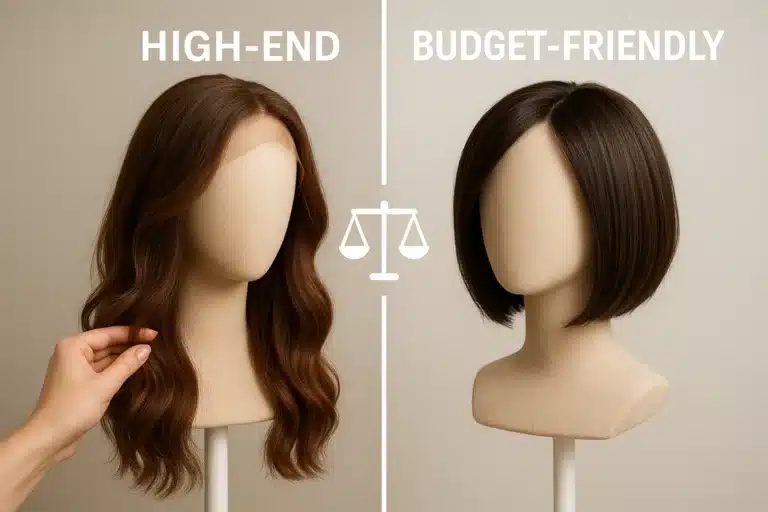
A custom human hair wig at a high-end NYC salon can easily cost $2,500 or more. Because human hair reacts to the environment just like biological hair, it requires weekly salon blowouts and will frizz the second you hit summer humidity. That’s roughly $6.84 per day over a year, not counting styling upkeep.
On the flip side, premium synthetic wigs are a modern urbanite’s secret weapon. High-quality synthetic fibers (like traditional Kanekalon or heat-friendly modacrylics) feature permanent “style memory.” That means whether you’re caught in a drizzle in Central Park or sweating on the subway, the style simply bounces back. By purchasing two premium, affordable wigs at around $250 each and rotating them, your cost drops to about $1.37 a day. You get zero humidity frizz, ultimate weather resistance, and effortless mornings.
The Commuter-Proof Cap Architecture
For a wig to be worn 10 to 12 hours a day, the secret isn’t just in the hair—it’s in the cap. A heavy, costume-grade wig can weigh 6 to 8 ounces, which quickly leads to neck strain and tension headaches. For daily wear, your sweet spot is finding a wig that registers under 3.5 ounces.
Understanding your wig cap construction is the key to all-day comfort. Here is the ideal anatomy for a city-dweller’s wig:
- Open-Wefted Back and Sides: Instead of solid fabric, open wefting features rows of hair sewn onto elastic bands with spaces in between. This allows trapped scalp heat to escape—an absolute necessity for those heated winter subway platforms.
- Monofilament Top: This involves a sheer mesh where individual hairs are hand-tied. When you part the hair, it creates the perfect illusion of your natural scalp showing through.
- The Hairline Illusion: For off-the-face styling, lace front wigs feature a delicate, virtually invisible mesh at the forehead that mimics a natural biological hairline.
- Density: Avoid the “too perfect” trap. Natural biological hair density is around 100% to 130%. Wigs that boast 150%+ density often look bulky and artificial for daily wear.
Beating “Shiny Wig Syndrome” and Nape Frizz
If you wear a synthetic wig in the winter, you will likely encounter the dreaded “nape frizz.” Many people assume this means the wig is ruined, but it’s just science! Synthetic hair is essentially an extruded plastic fiber. When it rubs continuously against your heavy winter coat collar or wool scarf, it generates static charge and friction heat. Over time, this friction actually causes the tips of the fibers to buckle and curl.
Rather than waiting until the damage forces you to seek out wig repair, you can practice preventative care. Before wearing scarves or coats, apply a silicone-based leave-in detangling spray strictly to the nape of the wig. This creates a slippery barrier against friction.
Additionally, brand-new synthetic wigs often come out of the box with a factory shine that makes them look “wiggy.” NYC stylists neutralize this quickly with dry shampoo, translucent powder, or a cool-water apple cider vinegar rinse to dull the artificial sheen immediately.
What Makes an NYC Wig Boutique “Everyday Wear” Certified?
Shopping for a daily-wear wig—especially if you are undergoing medical treatments or dealing with alopecia—requires a supportive, low-pressure environment. The best brick-and-mortar stores in New York stand out because they offer private fitting rooms, stylists capable of customizing synthetic pieces (like custom-cutting bangs or thinning heavy crowns), and transparent pricing.
Here is a curated look at what some of the most respected hubs in NYC have to offer:
Midtown & The Garment District
Stores like Barry Hendrickson’s Bitz-n-Pieces excel in specialized fittings. They are renowned for their private medical wig consultations and custom sizing, making them a safe haven for beginners looking for empathetic guidance.
The Upper East Side
This neighborhood is home to heavy-hitters like HairPlaceNYC (Andrew DiSimone Wigs) and Yaffa Wigs Manhattan. These spots are considered industry authorities for alopecia and chemotherapy patients. They understand lifestyle daily synthetic pieces inside and out and are experts at blending high-end craftsmanship with accessible, ready-to-wear options.
Flatiron & Downtown
If you want to tactilely compare different cap constructions without a formal consultation, locations like Eve Beauty Source offer extensive, accessible inventories. It’s a great way to familiarize yourself with different colorways and fiber weights.
Brooklyn Hubs
In areas like Borough Park and Midwood, ateliers such as Shuly Wigs are celebrated for their world-class cap craftsmanship. They offer private styling suites and precision fiber cutting to ensure your piece is tailored specifically to your face shape.
The Medical Route: Navigating Cranial Prosthetics
If your hair loss is due to medical reasons like chemotherapy, alopecia, or trichotillomania, you aren’t just buying a wig—you are purchasing a “cranial prosthesis.”
Many people don’t realize that their insurance or HSA/FSA accounts may cover part or all of the cost of a daily-wear synthetic wig. The key is documentation. You will need a prescription from your oncologist or dermatologist specifically stating you need a “cranial prosthesis” (not a “wig”). Additionally, having your provider use the correct wig cpt code (often HCPCS Code A9282) on the invoice is vital for successful reimbursement. High-quality boutiques, like those on the Upper East Side, often have certified cranial prosthesis specialists on staff to help you navigate this paperwork.
The Commuter’s 2-Wig Rotation Strategy
Want to double the lifespan of your synthetic hair? Buy two of the exact same wig.
When you wear the same piece every single day, the cap elastic stretches and the synthetic fibers become stressed from constant environmental exposure. By simply rotating between “Wig A” and “Wig B” every other day, you give the cap time to air out and regain its shape, extending the lifespan of both pieces by up to 150%.
Frequently Asked Questions (FAQ)
How often should I wash my daily-wear synthetic wig?
For daily NYC wear, proper wig maintenance dictates washing every 8 to 10 wears. Synthetic fibers do not absorb scalp oils like human hair does, but they will attract city pollution, smoke, and odors.
Can I use my regular salon shampoo on synthetic hair?
No. Because synthetic fibers are an extruded plastic, they do not have a cuticle. Standard sulfate shampoos and human-hair conditioners will leave a sticky film on the fibers, attracting more dirt. Always use products specifically formulated for synthetic hair.
What is the cardinal rule of synthetic wig care?
Never, ever brush a synthetic wig while it is wet. The fibers stretch and snap easily when soaked. Wash it in cool water, gently pat it with a towel, and let it air dry completely on a wig stand before detangling with a wide-tooth comb.
Can I apply heat to a synthetic wig?
Only if it is explicitly labeled as a “Heat-Friendly” or “Heat-Defiant” synthetic. Even then, you must keep your tools strictly under 270°F–300°F. Traditional synthetics will instantly melt if exposed to curling irons, flat irons, or even a sudden blast of heat from opening a hot oven.
Your Next Steps on the Journey
Finding your perfect daily-wear wig doesn’t have to be an overwhelming endeavor. Now that you understand the mechanics of breathability, the importance of a lightweight cap, and how to defend against city friction, you are fully equipped to walk into any boutique with confidence.
Before you book a consultation or visit a salon, take a moment at home to measure your head circumference, front-to-nape, and ear-to-ear dimensions. Write down your non-negotiables—whether that’s a lace front for a natural hairline or an open-wefted cap for summer subway rides.
Your perfect hair day is out there waiting for you. Take a deep breath, trust the process, and embrace this new chapter of effortless, commuter-proof confidence.