Stepping out of an air-conditioned building into a Little Rock July feels like walking into a sauna. The wall of heat hits you instantly, and if you are navigating medical hair loss, alopecia, or simply wearing alternative hair for fashion, that oppressive humidity presents a very specific challenge. Generic summer wig advice often assumes a dry, breezy 85°F day—not the swampy, moisture-saturated 90-degree realities of Central Arkansas.
If you’re finding that your current hairpiece traps heat or causes unbearable scalp sweating, you aren’t alone. Finding a comfortable solution often starts with localized advice and exploring physical boutiques that understand Southern humidity. For those shopping locally, checking out the ultimate guide to the best wig stores in Little Rock, AR is a great first step to discovering regional experts who carry cap designs tested for this exact climate. But before you shop, you need to know exactly what makes a wig truly “breathable” when the Arkansas heat index spikes.
The Arkansas Dew Point Reality: Why Temperature Isn’t the Whole Story
Let’s talk about why Central Arkansas summers are uniquely challenging for wig wearers. In July and August, Little Rock’s average daytime highs routinely push past 92°F. But the real culprit is the relative humidity resting around 70%, combined with tropical dew points frequently exceeding 70°F.
Why does the dew point matter? Because when the air is nearly saturated with moisture, your body’s natural cooling mechanism—sweating—stops working efficiently. Sweat simply cannot evaporate into air that is already full of water. Under a closed wig cap, this creates an internal microclimate that traps heat against your scalp. To stay cool whether you’re strolling through the River Market or dining on a patio in the Heights, you have to outsmart the humidity using physics and material science.
Cap Construction: The Engineering of Airflow
The foundation of summer comfort starts with how the wig is built. The way a cap is constructed dictates exactly how much trapped heat can escape from your scalp. Here is how the different options stack up against Southern humidity:
Open-Wefted (Capless) Designs: The Coolest Option
Open-wefted caps (often called basic or capless wigs) are machine-sewn with vertical spaces left entirely open between the tracks of hair. This open real estate allows maximum air circulation directly to the scalp. For outdoor activities like walking the Big Dam Bridge, an open-wefted cap with low hair density (around 80% to 100%) is your best defense against overheating.
Lace Fronts with Wefted Backs: The Balanced Choice
If you want the cooling benefits of an open cap but insist on an undetectable hairline, this hybrid is ideal. The sheer lace at the forehead creates a highly realistic hairline, while the open wefts in the back and crown allow heat to easily escape. Exploring high-quality lace front wigs with this specific construction offers the perfect middle ground between aesthetic realism and thermal comfort.
Fully Hand-Tied Monofilament: The Warmest Option
Monofilament and fully hand-tied silk caps are highly prized for their natural movement, as each hair is individually tied to a dense, sheer nylon base. However, this closed-base design restricts airflow. While excellent for heavily air-conditioned indoor environments, they act a bit like a winter beanie during a humid Arkansas August.
Fiber Material Science: Beating the Frizz
One of the biggest “aha moments” for new wig wearers is discovering exactly how different fibers react to environmental moisture.
While luxury human hair is beautiful, it behaves exactly like natural bio hair—it absorbs ambient moisture. In 70% humidity, human hair expands, gets heavy, loses its style, and collapses against the scalp, requiring constant restyling.
Conversely, synthetic fibers—specifically modern modacrylic fibers—possess a unique scientific trait called “style memory.” Because these fibers are naturally hydrophobic (water-repelling), they completely ignore the humidity. A synthetic wig will maintain its style, volume, and lift off the neck regardless of how muggy it gets. Understanding the different types of synthetic hair available today reveals just how advanced and natural-looking these heat-defying options have become.
The Sweat and Scalp Defense System
Even with the most breathable cap and lightweight synthetic fibers, you will inevitably sweat. The goal isn’t to magically stop sweating—it’s to manage it effectively so it doesn’t degrade your adhesives, cause discomfort, or lead to scalp irritation like contact dermatitis.
The 3-Step Arkansas Heat Prep Protocol:
- Astringent Prep: Before applying your wig, gently swipe your scalp with witch hazel. This removes excess sebum (oil) and provides a temporary cooling effect.
- Barrier Protection: Skip standard nylon fishnet caps, which do nothing for sweat mitigation. Instead, opt for a bamboo viscose wig liner. Bamboo is naturally moisture-wicking and absorbent, pulling sweat away from your scalp to keep you dry. Alternatively, silicone wig grips provide excellent friction-based security without absorbing any moisture, making them ideal for high-humidity days.
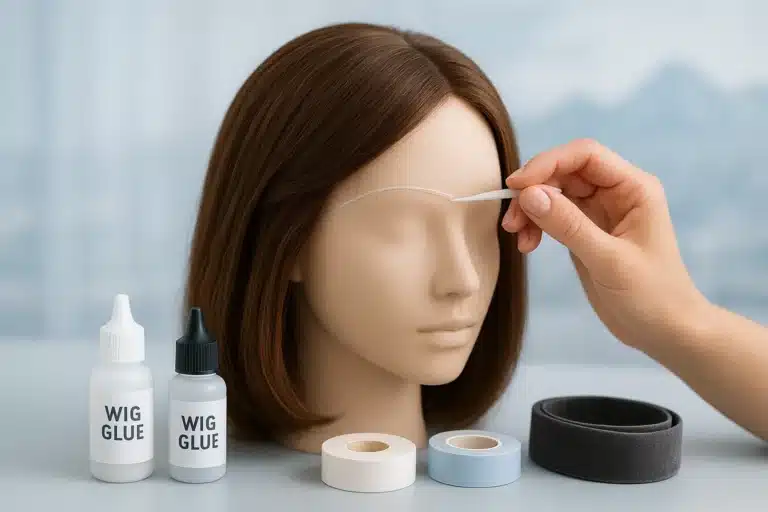
- Adhesive Alternatives: Standard water-based glues can turn to a sticky, white mess when exposed to continuous 70°F+ dew point perspiration. Consider utilizing glueless velvet grips, or switch to specialized acrylic copolymer tapes rated specifically for high heat if you must use an adhesive.
Properly managing this moisture is also a critical aspect of foundational wig care to ensure your pieces don’t harbor odor-causing bacteria over time.
Styling and Care Tips for Humid Climates
How you wear and care for your hairpiece matters just as much as what it’s made of.
- Embrace Shorter Cuts: Pixie cuts, textured lobs, and short bobs keep hair completely off your neck—the body’s primary pulse point for temperature regulation.
- Updo Aerodynamics: If you prefer longer styles, learn to style low, loose updos or relaxed braids using claw clips. Keeping the bulk of the hair elevated allows moving air to hit your nape.
- Increase Wash Frequency: In moderate climates, you might wash your wig once a month. In a Little Rock summer, you should ideally increase this to every 1 to 2 weeks to remove sweat salts and styling buildup. Staying on top of routine wig maintenance prevents the breakdown of cap materials and keeps the fibers looking vibrant.
- Never Store Damp: One of the most common and damaging mistakes is taking off a sweat-dampened wig and putting it in a dark box or closed closet. Always place it on an open wire or plastic wig stand in a well-ventilated room to dry completely, preventing mildew and bacterial growth.
Frequently Asked Questions (FAQ)
Can I wear a wig in 90-degree humid weather without overheating?
Yes! The key is pairing a lightweight, low-density open-wefted cap with moisture-wicking accessories like a bamboo liner. Taking frequent breaks in the air conditioning and wearing shorter, off-the-neck styles also significantly improves comfort levels.
Will high humidity ruin my wig’s style?
If you are wearing a human hair piece, the high humidity will cause frizz and drooping, much like natural hair. If you are wearing a synthetic piece, its built-in style memory will actively resist the ambient moisture and perfectly retain its shape all day long.
How do I stop sweat from building up under my wig cap?
You can’t completely stop sweat, but you can effectively manage it. Prep your scalp with a gentle astringent like witch hazel, wear a moisture-wicking bamboo cap to absorb the perspiration, and choose open-cap wig designs that allow the trapped moisture to safely evaporate rather than locking it against your skin.
Ready to Conquer the Summer Heat?
Navigating hair loss or alternative hair styling during a Central Arkansas summer doesn’t mean you have to sacrifice comfort for confidence. By understanding the physics of Southern humidity, choosing highly breathable cap constructions, and leveraging the power of synthetic fibers, you can look beautiful and stay wonderfully cool all season long. Take these localized insights with you as you explore the best options for your unique lifestyle, and keep that summer heat exactly where it belongs—outside.