There is a specific moment that almost every new wig wearer experiences. You’ve spent hours browsing, researching styles, and finally selecting a piece that looks beautiful on the model. The box arrives, you excitedly put it on, and… something feels slightly off. It might feel too heavy, the hairline might sit too low, or it might just look “wiggy.”
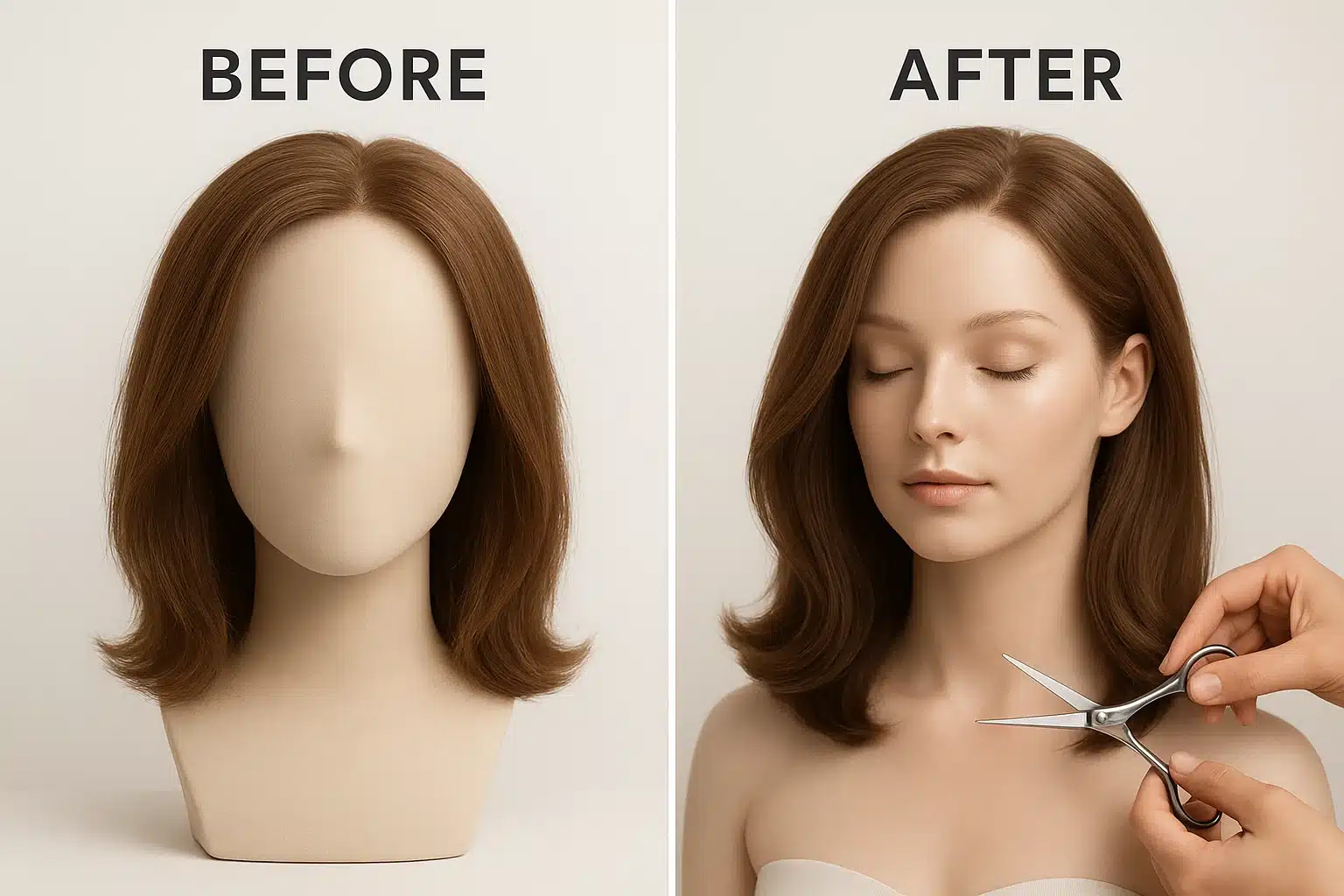
This is not a failure on your part, nor is it necessarily a flaw in the product. It is simply the nature of mass manufacturing versus individual anatomy. Just as a designer suit often requires a tailor to achieve that sharp, bespoke look, a high-quality wig frequently needs professional fine-tuning to mimic biological hair perfectly. While not all wig stores are created equal: finding your perfect match in a specialized market often comes down to identifying providers who offer these crucial customization services rather than just shipping a box.
The Myth of “Ready-to-Wear”
The term “ready-to-wear” is a standard industry label, but it can be slightly misleading for the uninitiated. Manufacturers design wigs based on average head shapes and density preferences that prioritize longevity over immediate realism.
To ensure a wig lasts, factories often include 10% to 20% more hair fiber than the average biological head carries. This is why a standard petite bob style wig might look voluminous or “poofy” straight out of the box. A specialized boutique service bridges the gap between the factory finish and the hyper-realistic look you see on social media, transforming a standard product into a personalized prosthetic that moves and feels like you.
Cap Engineering: The “Silent” Customization
Before a stylist even picks up a pair of shears, the most critical work often happens inside the cap. If a wig shifts, slides, or puts pressure on your ears, no amount of styling will make it look natural because you will be constantly adjusting it.
Advanced customization often involves structural engineering of the base. This can mean “taking in” the cap by expertly sewing elastic darts to reduce circumference without creating bulk, or adjusting the ear tabs to ensure they sit flush against the temple without interfering with glasses or comfort. Understanding the specific wig cap construction is vital before attempting any structural changes, as a hand-tied cap requires a completely different alteration technique than a standard wefted cap.
The Art of the Cut: Density Management
One of the most common complaints from first-time wearers is that their wig feels like “too much hair.” This is particularly true for shorter styles. A blunt cut bob lace front wig, for example, relies on sharp lines. If the density is too high, those lines become triangular and heavy rather than sleek and swinging.
Specialized customization involves a technique known as “debulking.” Using specialized thinning shears, a professional can remove weight from specific internal areas of the wig—usually behind the ears and at the nape—without altering the overall length. This allows the fibers to lay flat against the head and move independently, mimicking the “swing” of natural hair.
The “Four-Finger Rule” and Placement
Customization isn’t just about cutting fiber; it is also about education on placement. A common giveaway that someone is wearing a wig is a hairline that sits too low on the forehead.
During a professional fitting or consultation, you will often learn the “Four-Finger Rule.” By placing four fingers flat on your forehead above your eyebrows, you find the natural position where a hairline should begin. Specialized services will often trim the excess lace on a lace front wig to match this exact contour, sometimes creating a jagged or “pinking shear” edge that diffuses light and makes the lace invisible to the naked eye.
Color and Fiber: Knowing the Limits
There is a significant difference between customizing human hair and synthetic fiber, and knowing the “point of no return” is why professional guidance is essential.
Human Hair Customization
Human hair wigs offer the most versatility. They can be custom colored to add “rooting” (darker roots that mimic natural growth) or lowlights that add dimension. However, lifting color (bleaching) is generally discouraged as it compromises the integrity of the hair.
Synthetic Fiber Limitations
Synthetic wigs generally cannot be dyed using traditional hair color. In fact, attempting to dye a synthetic blonde wig with drugstore hair dye can permanently ruin the fiber. However, professional customization for synthetics focuses on steam manipulation. Using controlled heat, a stylist can change the curl pattern, redirection the part, or smooth out “box hair” kinks that occur during shipping.
The ROI of Professional Customization
It is natural to hesitate at the idea of investing more money into a wig you have just purchased. However, viewing customization as an investment rather than an expense can shift your perspective.
Research suggests that proper fitting and density management can extend the lifespan of a wig significantly. When a wig fits perfectly, you pull and tug at it less. When the density is managed, friction tangling—the number one killer of synthetic wigs—is reduced. By avoiding the cycle of “panic repurchasing” because a wig doesn’t feel right, professional customization can actually save the average wearer between $500 and $1,000 annually.
Frequently Asked Questions
Can I cut a synthetic wig myself?
While you technically can, synthetic fiber requires different tools than human hair. Standard scissors can slide on the plastic fibers, causing jagged, unnatural ends. Professionals use micro-serrated shears designed specifically to grip and slice synthetic materials cleanly.
How much can a wig cap be resized?
Generally, a professional can alter a wig cap by about one to two inches in circumference. If the size discrepancy is larger than that, a different cap size (Petite or Large) is usually recommended.
Will thinning a wig make it shed?
If done correctly, no. Professional thinning is done internally, removing specific hairs near the base (but not at the knot) to reduce bulk. It does not compromise the structural integrity of the wefts or the hand-tied knots.
Can I add bangs to a wig that didn’t come with them?
Absolutely. This is one of the most popular customization requests. Adding a face-framing fringe or wispy bangs can be an excellent way to conceal the front hairline if you are uncomfortable with lace fronts.
Taking the Next Step
Understanding that a wig is a raw material meant to be molded to your unique features is the first step toward wearing hair with total confidence. If you have a piece that has been sitting in its box because it just doesn’t feel “like you,” consider seeking out a professional opinion on customization. Sometimes, the smallest tweak—a half-inch off the fringe or a slight thinning behind the ears—is all it takes to turn a wig you like into a wig you love.