Have you ever tried on a high-end garment that was technically your exact size, but just didn’t look quite right until it was tailored to your specific frame? Finding the perfect hair solution operates on the exact same principle. For many people navigating hair loss or seeking a high-fashion change, purchasing a beautiful base unit is simply the starting line. The real magic happens during the customization process. If you are currently exploring the best wig stores in the city, understanding the technical transition from a standard piece to a bespoke creation will completely change how you shop.
In the heart of Massachusetts, a unique bridge exists between clinical medical needs and high-fashion personalization. Boston-area specialists—from the empathetic, medically-focused experts in Norwood to the fashion-forward stylists on Newbury Street—are transforming how we think about alternative hair. But how exactly do they make a wig look like it’s growing directly from your scalp? Let’s demystify the art and science of custom wig making.
The New Standard: Why “Off-the-Shelf” is Just the Beginning
Historically, wig shopping was viewed as a final transaction: you found a style you liked, purchased it, and wore it. Today, industry experts approach high-quality wigs like raw materials.
Many first-time wearers experience an “aha” moment when they realize that even the most expensive luxury extensions or wigs need to be personalized. A concept known as the “Hybrid Process” is becoming the gold standard. Instead of having a piece built entirely from scratch (which can take months), clients purchase a high-quality ready-to-wear wig and have it professionally altered. This gives you the best of both worlds: immediate availability paired with bespoke fitting and styling tailored to your face shape, skin tone, and lifestyle.
This is especially crucial when considering the New England climate. A custom “weather-proof” wig designed for coastal Boston’s humidity and salt air requires specific fiber choices and styling techniques that standard units simply don’t account for.
The Three Pillars of Wig Customization
Understanding how wigs are personalized requires looking under the hood. True customization relies on three foundational pillars.
1. Cap Construction and The Anatomy of Comfort
The foundation of any natural-looking wig is its cap. While standard wigs feature machine-wefted backs, luxury customization often involves modifying hand-tied caps. In a hand-tied cap, each individual hair is meticulously knotted onto a soft, stretchable Swiss lace material, allowing the hair to move naturally in any direction.
For beginners, the most important element of cap customization is the “ear tab” fit. If a wig’s ear tabs don’t align perfectly with your natural temples, the wig will shift and feel unnatural. Custom specialists can dart, tuck, and sew the cap to ensure it hugs the unique contours of your head perfectly.
2. Hair Origin and Climate Resilience
Choosing the right hair fiber is a critical customization step. While many assume human hair is always the definitive answer, the reality is more nuanced.
- 100% Human Hair: Offers the most styling versatility and longevity, but reacts to Boston’s humid summer days just like biological hair would.
- Premium Synthetic: Holds its style impeccably through rain, sleet, and humidity, offering a “wash-and-wear” ease.
- Cyber/Blended Hair: A hybrid option offering the natural feel of human hair with the style memory of synthetics.
When looking at premium wigs in boston, understanding how much time you want to spend styling your hair will dictate which fiber a specialist recommends.
3. The Density-to-Age Ratio
One of the most common reasons a wig looks “fake” isn’t the hair quality—it’s the density. Many modern wigs are manufactured at 150% to 180% density, offering a highly voluminous, glamorous look. However, an essential secret of bespoke styling is the “Density-to-Age Ratio.”
For a truly natural, undetectable look—especially for older clients or those accustomed to fine hair—a specialist will often thin the wig down to a realistic 130% density. This careful reduction ensures the hair doesn’t overwhelm the wearer’s features, creating a seamless, believable silhouette.
The Master’s Touch: Advanced Coloring and Styling
If you’ve ever wondered how stylists color-match a wig to someone’s specific root growth, you are stepping into the most complex area of wig customization. Coloring alternative hair is vastly different from coloring natural hair growing from a scalp.
When a stylist applies custom color—like a modern balayage or root shadow—they must navigate the delicate lace foundation. A major challenge in the industry is “knot staining,” where hair dye accidentally bleeds onto the sheer lace, creating dark spots that ruin the illusion of a natural scalp.
To prevent this, experts perform a “Knot Check.” They carefully bleach the tiny knots where the hair is tied to the lace, making them invisible against the skin. Then, they meticulously apply color only to the hair shafts, often using specialized barrier creams to protect the delicate Swiss lace. This results in a flawless “root shadow” that mimics natural hair growth seamlessly.
The Business of Beauty: Navigating Medical Units
For many individuals, the journey into alternative hair isn’t driven by fashion, but by medical necessity such as alopecia or chemotherapy. In these instances, a wig is often classified as a cranial prosthesis, a term that shifts the purchase from a cosmetic accessory to a medical necessity.
Navigating Massachusetts insurance codes for a cranial prosthesis can feel overwhelming, but it is a crucial part of the customization journey. Many specialized boutiques offer private, VIP consultation suites—a heavily requested feature for those undergoing sensitive health treatments. These specialists not only customize the fit of the unit to accommodate a sensitive scalp but can also provide the proper documentation, terminology, and procedural guidance needed to utilize HSA funds or file out-of-network insurance claims effectively.
Deciding Your Level of Service: The Customization Roadmap
As you explore your options, it helps to know exactly what level of intervention you need:
- Ready-to-Wear: High-quality units that require minimal intervention. Best for those who find a near-perfect fit off the shelf and just need a quick trim.
- Custom-Styled (The Hybrid Approach): You purchase a premium base unit, but a specialist thins the density, cuts face-framing layers, adds a custom root shadow, and tailors the ear tabs.
- Bespoke-Built: A completely custom mold is taken of your head, and a unit is ventilated (hand-tied) completely from scratch over several months.
Frequently Asked Questions (FAQ)
What is the “4-finger rule” for perfect wig placement?
The 4-finger rule is an industry secret for natural placement. Simply place four fingers horizontally across your forehead, starting resting just above your eyebrows. The top of your index finger marks exactly where your natural hairline should begin. Placing a wig any lower can make the forehead look unnaturally short.
How do I make a wig look like it’s growing from my scalp?
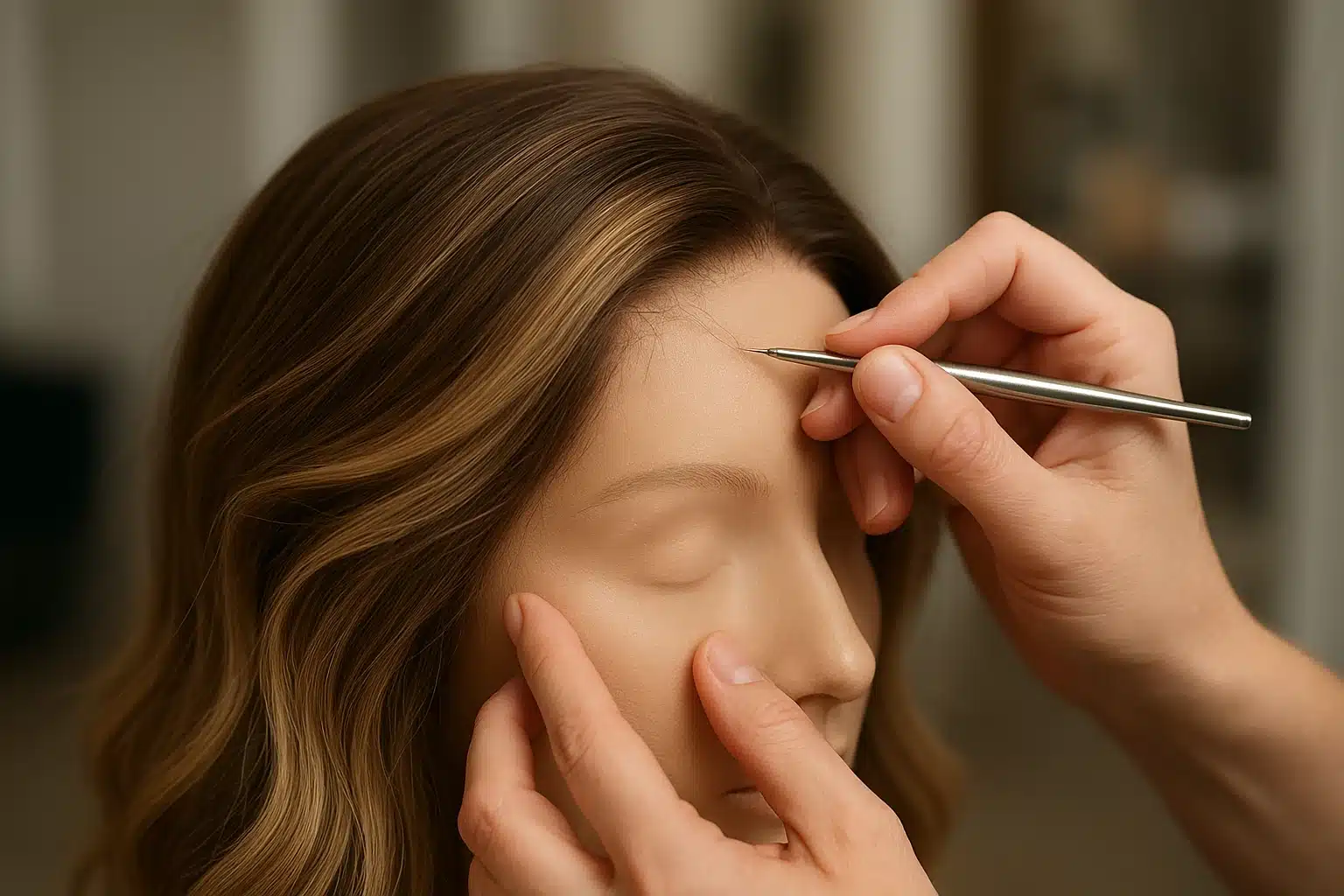
The illusion of natural growth comes down to three factors: bleached knots (making the hair ties invisible), a carefully plucked part line (so the hair doesn’t look too densely packed at the root), and utilizing a sheer lace front that melts into your specific skin tone.
Can I use my insurance for a medical wig in Massachusetts?
Yes, many insurance plans cover partial or full costs for alternative hair if it is prescribed by a doctor for medical hair loss. The key is ensuring your doctor writes the prescription for a “cranial prosthesis” rather than a “wig,” and working with a specialist who understands Massachusetts specific billing codes and documentation requirements.
What is the difference between human hair and synthetic for daily wear?
Human hair offers unmatched realism and styling versatility (you can curl it, straighten it, and dye it), but requires the same upkeep as biological hair. High-end synthetics feature “style memory,” meaning they bounce back to their original style after washing, requiring far less daily maintenance, though they typically have a shorter overall lifespan.
Next Steps in Your Hair Journey
Transitioning into alternative hair is an incredibly personal journey, but it doesn’t have to be an overwhelming one. By viewing high-quality wigs as a customizable canvas rather than a finished product, you open the door to hair that feels genuinely yours.
Begin by assessing your lifestyle, familiarizing yourself with cap constructions, and considering the density that feels most authentic to you. When you are ready to take the next step, seeking out knowledgeable, compassionate experts who prioritize education and empathy will ensure your customized piece doesn’t just look beautiful—it feels like home.