Imagine finding the perfect wig. The color is radiant, the style is flawlessly cut, and the texture feels incredibly natural. But an hour into wearing it, a familiar, dull tension headache begins to bloom at your temples. Or perhaps you step outside, and a gentle breeze causes the entire piece to slide backward, exposing your natural hairline.
If you have ever struggled with a wig that pinches, slips, or bags at the crown, you are far from alone. Human heads are wonderfully unique, three-dimensional structures, yet the wig industry has historically relied on a frustrating “one-size-fits-all” approach. For individuals with petite or large head circumferences, finding a comfortable fit requires more than just browsing generic online catalogs. Fortunately, if you are looking through the various wig stores in Denver, there are specialized local boutiques that understand the art and science of custom head sizing, offering physical fittings that turn an uncomfortable hairpiece into a secure, everyday staple.
The Physical Anatomy of a Bad Fit
Why do standard “average” wigs cause so much grief for those who fall outside standard measurements? Online direct-to-consumer brands often advise buyers to simply “buy and try,” completely ignoring the reality of high return fees, color mismatches, and the physical discomfort of an ill-fitting cap.
When a wig doesn’t match your specific head shape, your body will let you know almost immediately.
When a wig is too small (A large head in an average cap):
- The Nape Creep: The back of the wig constantly rides up your neck.
- Ear Tab Elevation: The side tabs sit noticeably high above your ears, looking unnatural.
- Tension Headaches: The cap violently squeezes your temples.
- Edge Friction: It vigorously rubs against biological hair edges, which can exacerbate conditions like alopecia.
When a wig is too large (A petite head in an average cap):
- The Backward Slide: The wig slips backward throughout the day, requiring constant adjustment.
- Cartilage Digging: The ear tabs dig painfully into the cartilage or folds of your ears.
- Crown Bagging: There is noticeable, “baggy” fabric gapping at the top or back of the head.
- Wind Vulnerability: Even a light breeze shifts the cap out of place.
Moving Beyond One-Dimensional Sizing: The 3D Measurement Masterclass
One of the biggest “aha moments” in wig shopping comes from realizing that your head is three-dimensional, but most size charts only measure one dimension. Most guides focus exclusively on head circumference. This leads many buyers to purchase a wig that fits perfectly around their forehead, but completely bags at the crown or fails to reach the nape of their neck.
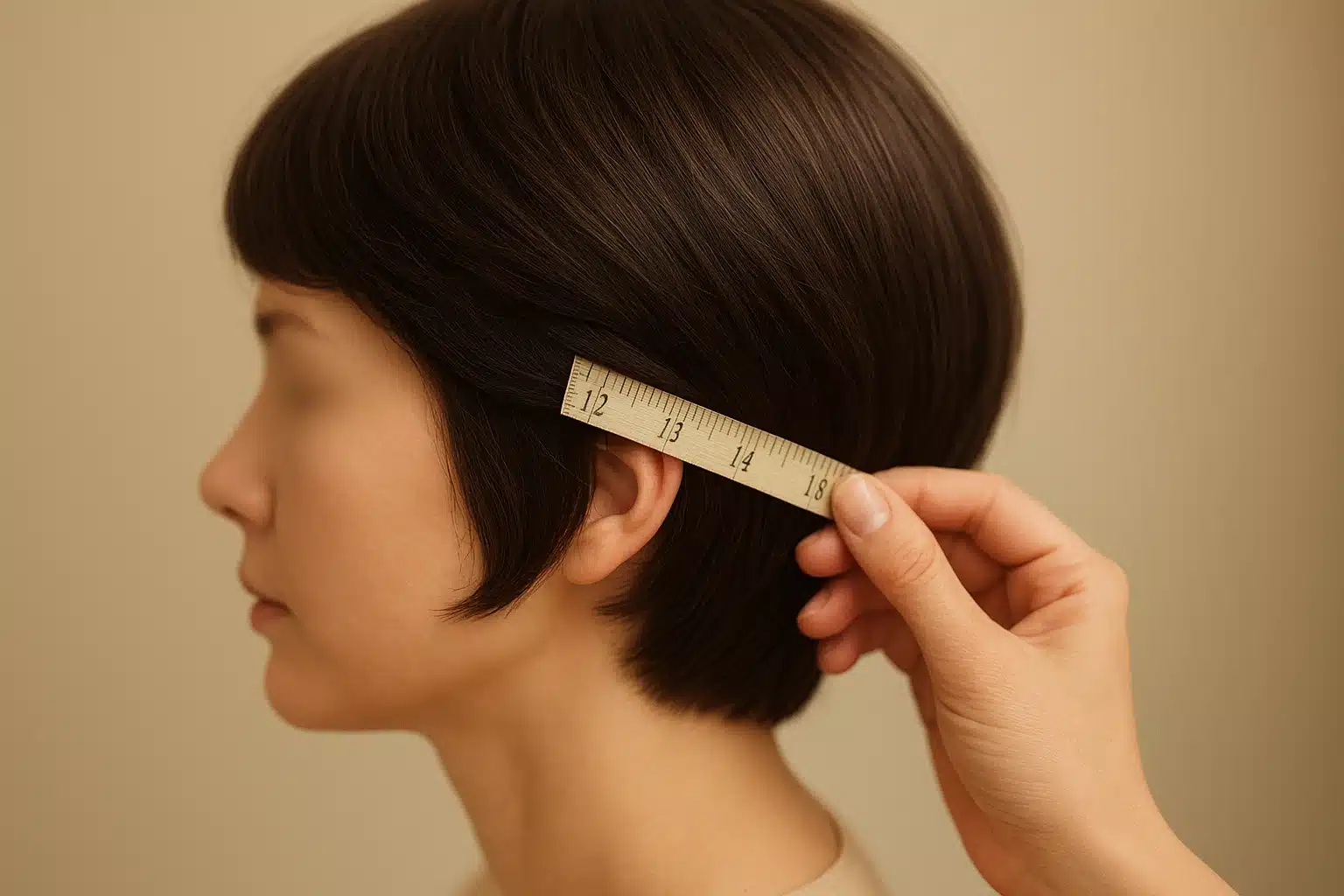
To find the perfect wig size for big heads or petite profiles, you must measure three distinct anatomical landmarks using a soft measuring tape:
1. The Circumference (The Baseline)
Measure all the way around your hairline, pulling the tape behind your ears and around the nape of your neck. Note: Keep in mind that biological hair impacts this number. Thick natural hair braided beneath a wig can add up to an inch to your circumference, while medical hair loss can reduce your circumference by up to half an inch, often shifting an “average” wearer into the petite category.
2. Front-to-Nape (The Depth)
Measure from the center of your front hairline, straight back over the crown, ending at the nape of your neck. This determines if the cap will cover your head front-to-back without riding up.
3. Ear-to-Ear (The Crown Width)
Measure from the top of one ear, across the crown of your head, to the top of the other ear. This measurement prevents the dreaded ear-tab digging and ensures the wig sits flush against your temples.
The Standard Sizing Scale (Inches vs. Centimeters)
To help you decode the labels before you step into a boutique, here is the clinical breakdown of cap sizes. Whether you are searching locally or browsing online for petite wigs for small heads UK style (which often rely heavily on metric conversions), knowing your numbers is your best defense against a bad fit.
- Ultra Petite: 19.0″ – 20.0″ (48.3 cm – 50.8 cm)
- Petite: 20.0″ – 21.25″ (50.8 cm – 54.0 cm) — The target range for petite size wigs.
- Average: 21.25″ – 22.5″ (54.0 cm – 57.2 cm)
- Large / Big Head: 22.5″ – 24.0″ (57.2 cm – 61.0 cm) — The target range for large head size wigs or big wig wigs.
Top Local Wig Stores in Denver for Custom Fittings
The true advantage of shopping locally is moving from the abstract world of measurement charts to the physical reality of a custom fit. Rather than treating wigs as static garments that cannot be tailored, these Denver-area boutiques excel at physical cap customization.
Susie’s Wigs & Hair Replacement (Cherry Creek / Denver)
Renowned throughout the Denver metro area for their medical-grade hair solutions, Susie’s specializes in bridging the gap between clinical needs and beautiful aesthetics. They maintain a dedicated inventory of custom wigs for large heads and petite profiles, working closely with clients to build a custom size wig head mold. Their expertise ensures that whether you’re dealing with volume loss or require specialized human hair pieces, the cap will be tailored to your specific measurements.
Kim’s Wig Botik (DTC / Greenwood Village)
With over 30 years of local expertise, Kim’s Wig Botik brings masterful, old-school tailoring to modern wig caps. Their in-house professionals do not simply sell you a wig; they modify it. They are experts at altering both synthetic and human hair caps, seamlessly sewing in velvet grip bands, installing elastic tension straps, and strategically reducing cap bulk for wearers needing specialized wigs for small heads.
Hana Designs (Littleton)
Operating as a holistic salon, Hana Designs is deeply focused on oncology fittings and hair-loss solutions. Because medical hair loss profoundly changes the landscape of a wearer’s head, Hana Designs offers advanced custom tailoring. They can expertly adjust standard caps to accommodate extreme petite or large sizing through custom hand-tied adjustments and the integration of specialized elastic bands for ultimate security without adhesive.
How Professional Stylists Modify Wigs
If you find a style you absolutely love but the cap isn’t quite right, all is not lost. Professional stylists use techniques similar to high-end clothing tailoring to alter wigs.
For Petite Heads: Stylists utilize “cap darting”—pinching and sewing away excess fabric to shrink the cap volume, ensuring it hugs the crown. They may also adjust the ear tab placement and sew in silicone grip strips to prevent sliding.
For Large Heads: Stylists can carefully remove structural wefts or use a technique called “cap gusseting,” which involves strategically slashing the cap and adding elastic stretch panels to expand the circumference without compromising the hair’s style or density.
Frequently Asked Questions (FAQ)
How do I know if I need a petite size wig?
If you frequently experience your wig slipping backward, notice baggy fabric bunching at the crown of your head, or feel the ear tabs resting uncomfortably on the cartilage of your ears rather than in front of them, you likely have a petite head size. Taking a 3D measurement (Circumference, Front-to-Nape, and Ear-to-Ear) will confirm this.
Can you shrink or stretch a pre-made synthetic wig cap?
Yes! Wigs are not entirely rigid. A professional wig stylist can alter a synthetic wig cap through darting (folding and sewing the fabric to reduce size) or by adding elastic tension bands and gussets (to safely stretch and expand the cap for larger heads).
Does hair loss change my wig size?
Absolutely. Biological hair adds significant density. Chemotherapy and alopecia patients frequently find that hair loss reduces their head circumference by up to half an inch. This sudden change is why many individuals transition from needing an “average” cap to requiring a petite size during their hair loss journey.
Why do my wig ear tabs hurt?
This usually means your wig’s ear-to-ear measurement is incorrect for your head shape. If the cap is too large, the tabs sit too low and dig into the ear folds. If the cap is too small, the tension pulls the tabs upward and presses hard against the temples. A custom fitting at a specialized wig boutique can correct this geometry.
Taking the Next Step
Understanding your unique head measurements is the most empowering step you can take in your wig-wearing journey. You no longer have to settle for the slipping, the headaches, or the anxiety of a poorly fitting cap. By stepping away from the generic online sizing charts and visiting a trusted Denver boutique for a localized, customized fitting, you can finally experience the comfort and confidence of a wig made just for you. Take your measurements, book a consultation with a local specialist, and discover what a true, custom fit feels like.