Imagine holding a beautifully crafted human hair wig. It’s soft, incredibly natural, and offers that instant, magical boost of confidence you’ve been looking for. But as you run your fingers through those pristine strands, have you ever paused to wonder about the journey that hair took before it reached your hands?
For many of us navigating the emotional complexities of hair loss, buying a wig is a deeply personal experience. We want to feel beautiful, but we also want to feel good about the products we’re wearing. This brings us to a crucial conversation about a “transparency paradox” in the beauty industry: while consumer demand for responsible products is at an all-time high, the hair trade remains largely unregulated. Understanding the ethical sourcing and sustainability of human hair wigs is the ultimate first step toward transforming from a passive buyer into an empowered, informed advocate.
The “Fair Trade” Myth and the Wild West of Hair Sourcing
If you’ve ever found yourself asking what is ethically sourced hair, you are certainly not alone. Most of us assume that if a product is ethically made, it will carry a neat little “Fair Trade” sticker, just like our morning coffee or our favorite dark chocolate.
Here is your first major “aha” moment: There is no official, global “Fair Trade” certification body for human hair.
Because no universal regulatory board oversees the global hair trade, brands are largely left to police themselves. Genuinely ethical sourcing means the hair was gathered voluntarily, the donors were fairly compensated (or donated for religious reasons where the proceeds benefit their community), and the factory workers processing the hair operate in safe, sanitary conditions with fair wages. Unfortunately, without a global standard, it’s incredibly easy for bad actors to hide behind clever marketing.
Decoding the Labels: Marketing Fluff vs. Ethical Reality
To navigate this unregulated space, we first have to unlearn some of the most common marketing buzzwords that masquerade as ethical guarantees.
Myth 1: “Remy” Means Ethical
You will see the word “Remy” plastered across wig websites everywhere. Many people assume it’s a stamp of premium, ethical sourcing. In reality, Remy simply refers to the direction of the hair cuticle. It means all the hair strands are aligned from root to tip, preventing tangling. While Remy hair is physically superior, a “Remy” label tells you absolutely nothing about how the donor was treated or paid.
Myth 2: The “Grade” Scam (10A, 12A, etc.)
Have you ever seen hair advertised as “Grade 10A” or “Premium 12A”? Here is the industry secret: these numbers are entirely made up. They are marketing metrics, not scientific or regulated standards. A company selling unethically sourced hair can slap a “12A” label on their product just as easily as anyone else.
The “Acid-Bath” Secret
When hair is collected unethically—often swept up off floors or forcibly taken—the cuticles are misaligned and tangled. To fix this, manufacturers submerge the hair in a harsh acid bath to strip the cuticle entirely, then coat it in a thick layer of silicone to make it look shiny and healthy. After a few washes, the silicone rinses away, leaving you with a matted bird’s nest. Ethically sourced, carefully gathered hair preserves the natural cuticle, meaning it requires no acid baths and lasts significantly longer.
The Global Flow: Where Does Human Hair Actually Come From?
To verify your wig, you need to understand the map of the global human hair trade.
- Indian Temple Hair: One of the most common sources of highly ethical hair comes from Hindu temples in India (like the Tirumala temple). Pilgrims voluntarily shave their heads (tonsuring) as an act of religious devotion. The temples then auction this hair, and the millions of dollars raised are used to fund local schools, hospitals, and community infrastructure.
- The Italian Connection: You might see brands proudly proclaiming “Italian Hair.” While Italy is historically a world-renowned hub for processing luxury hair (cleaning, coloring, and ventilating), it is rarely the source of the raw hair. The hair is usually ethically sourced in India or Eastern Europe and then shipped to Italy for high-end manufacturing.
- The Dark Side of Sourcing: On the other end of the spectrum, investigative journalists and border protection agencies frequently uncover hair sourced from vulnerable populations, forced labor camps, or exploitative brokers who target impoverished women.
The 5 Red Flags of Unethical Wig Sourcing
When you are browsing for your next wig, treat your shopping experience like a forensic investigation. Look out for these five warning signs:
- Vague Origin Stories: If a brand says their hair is simply “Sourced from Asia” or “Imported,” without specifying a country, region, or method (e.g., “Sourced from Indian Temples”), they likely don’t know where it came from—or they don’t want you to know.
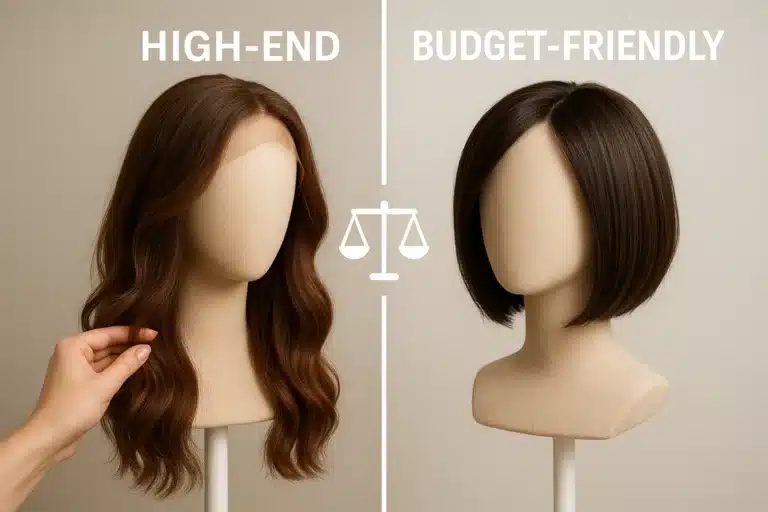
- Too-Good-To-Be-True Pricing: Let’s be radically honest: an ethically sourced, fully hand-tied human hair wig cannot cost $150. When you factor in fair compensation for the donor, safe working environments, expert ventilation (hand-tying the hairs), and third-party social compliance audits, the price naturally reflects human dignity. Cheap hair usually comes at a high human cost.
- Obsession with Number Grades: If a brand focuses heavily on selling you “10A” or “12A” hair but offers zero information on their supply chain, their priority is marketing, not transparency.
- No “About Us” or Responsibility Statement: Reputable brands are incredibly proud of their ethical supply chains. If a website lacks a clear statement on social compliance, vendor scorecards, or sustainability practices, consider it a red flag.
- Refusal to Answer Direct Questions: If you email a company’s customer service asking about their sourcing and receive a copy-pasted, vague response (or no response at all), walk away.
Your Verification Toolkit: The Buyer’s Script
You have the power to hold companies accountable. Before you make a significant investment in a human hair wig, don’t be afraid to send the company a quick email. Here are three exact questions you can ask to test their transparency:
- “Can you trace this specific wig collection back to its country and region of origin?”
- “Do you or your manufacturing partners conduct third-party social compliance audits to ensure safe working conditions?”
- “How are the original hair donors compensated, or how does the collection benefit their communities?”
Brands that are doing the hard work of ethical sourcing will be thrilled to answer these questions for you.
Frequently Asked Questions (FAQ)
Is synthetic hair more ethical than human hair?
It depends on how you define ethical. From a human-rights perspective, synthetic hair eliminates the risk of donor exploitation. However, from a sustainability and environmental perspective, synthetic hair is essentially made of micro-plastics (like acrylic and PVC) which take centuries to decompose, whereas human hair is 100% biodegradable.
Does “virgin” hair mean it’s ethically sourced?
Not necessarily. “Virgin” simply means the hair has never been chemically treated, dyed, or permed by the donor. It is a state of the hair, not an indicator of how the donor was treated or compensated.
Why do ethically sourced wigs cost so much more?
You aren’t just paying for the hair itself. You are paying for a transparent supply chain. This includes fair wages for the people sorting and sanitizing the hair, the highly skilled artisans who spend 40+ hours hand-tying individual hairs into the lace cap, and the independent auditors hired to inspect the factories to ensure global safety standards are met.
Wearing Your Values with Confidence
Navigating hair loss is already an incredibly vulnerable journey. You deserve to wear a beautiful wig that makes you feel entirely like yourself again. But true confidence doesn’t just come from how a wig looks on the outside—it comes from knowing the story woven into every strand aligns with your personal values.
By learning to look past the marketing fluff, asking the right questions, and demanding transparency, you are doing more than just buying a wig. You are voting with your wallet for a kinder, more ethical beauty industry.