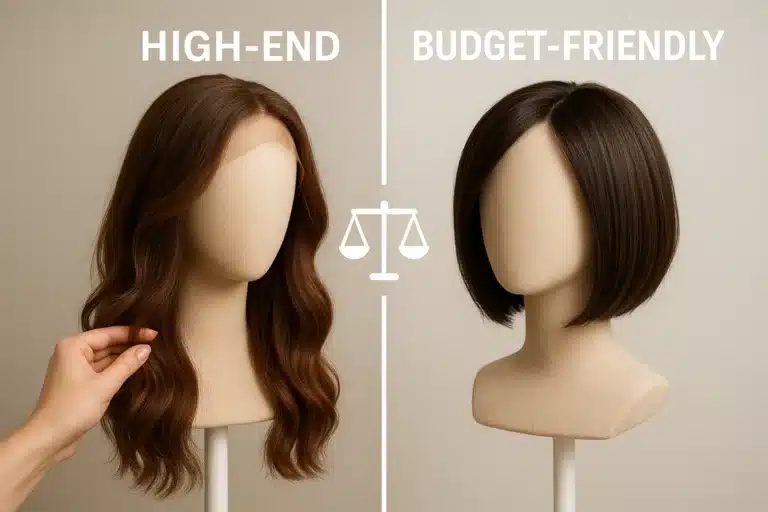
If you are navigating hair loss in New England, you already know that finding the perfect hairpiece is about much more than just walking into a shop and pointing at a mannequin. It’s a deeply personal, sometimes emotional journey. Many women begin this process feeling overwhelmed by industry jargon, jumping from terms like “Remy” and “lace front” to “monofilament.” You want hair that feels like your hair—something that moves naturally in the wind walking down Comm Ave and matches the fine, delicate texture many of us naturally possess.
While exploring local options, consulting a comprehensive guide to the best wig stores in Boston is an excellent first step to understanding the city’s hair replacement landscape. But if you are specifically looking for the pinnacle of luxury, realism, and longevity, your search will inevitably lead you to a very specific niche: European human hair. Let’s demystify what makes this hair type the gold standard, and exactly where you can find these premium pieces in the city.
The Luxury Benchmark: Why Bostonians Choose European Hair
When beginning their search, many buyers wonder why there is such a vast price difference between various human hair options. The secret lies in texture matching and the science of the hair cuticle.
Most human hair wigs on the market are sourced from Asia or South America (often labeled as Brazilian or Indian hair). While beautiful, this hair is naturally thick, dark, and coarse. To match the finer texture and lighter colors of the typical Boston consumer, this hair must undergo heavy chemical processing.
European hair, frequently sourced from Slavic and Russian regions, is naturally fine, silky, and comes in a variety of lighter shades. Because it requires little to no processing to achieve a fine texture, it moves, bounces, and reflects light exactly like a natural head of fine hair. For those searching for the best european human hair wigs, this natural texture match is the ultimate draw.
The “Processing” Mystery: Demystifying Hair Origin
To truly understand the value of European hair, we need to talk about the “Processing Mystery.”
When thicker hair is processed to mimic fine European hair, factories use an acid bath to strip away the hair’s outer layer—the cuticle. To make the hair feel soft again, it is coated in a heavy silicone layer. It looks gorgeous in the salon, but after a few washes, the silicone rinses away, leaving the hair prone to severe tangling and matting.
Authentic European hair maintains its natural, healthy cuticle. Because it isn’t acid-stripped, it retains its natural moisture and strength. This is the defining characteristic of true high end wigs—the hair behaves predictably month after month, year after year.
The Boston “Gold Standard” List: Premium Salons & Boutiques
Navigating the local retail landscape requires knowing which salons specialize in education and high-quality sourcing rather than just pushing inventory. Here is a curated look at the luxury landscape for wigs boston ma:
- The Salon at 10 Newbury: Located in the heart of Boston’s luxury shopping district, this salon is famous for its “empathy-first” concierge approach. They excel at guiding clients through the emotional journey of hair loss, focusing heavily on professional consultations to shorten the learning curve for first-time buyers.
- Wigs by Sylvia: Situated just outside the city on the North Shore, this boutique is a destination for those specifically hunting for premium European human hair. They offer a highly personalized, private fitting experience.
- Wig World Boston: A staple with a strong local presence. While they carry a wide variety of inventory, booking a consultation to view their premium European lines provides a great opportunity to feel the texture differences in person.
The Fitting Masterclass: Beyond Small, Medium, and Large
Buying a premium wig isn’t like buying a hat; sizing is a complex art. A $3,000 European hair wig will look unnatural if the cap construction and fit aren’t perfectly tailored to your scalp.
When visiting these Boston boutiques, pay attention to:
- The Four Finger Rule: A proper fitting ensures the hairline begins exactly four finger-widths above your brow bone. Anything lower looks unnatural.
- French vs. Swiss Lace: European hair is often tied to delicate lace. Swiss lace is highly invisible but very fragile. French lace offers a better balance of durability and invisibility for daily wearers.
- Monofilament vs. 100% Hand-Tied: For sensitive scalps (especially for those undergoing medical treatments), a 100% hand-tied cap where every single hair is individually knotted provides the softest, most breathable experience.
The Longevity Math: Understanding the Cost-Per-Wear
Sticker shock is the most common hurdle when exploring European human hair. However, reframing the purchase through the lens of “Cost-Per-Wear” often creates a massive aha moment.
Let’s look at the math:A high-quality synthetic blend might cost $800, but with daily wear, friction from collars and coats will cause it to degrade in about 3 to 4 months. Over four years, you might buy 12 of these, totaling $9,600.
A premium virgin European human hair wig might cost $3,000. With proper maintenance and rotation, these pieces regularly last 3 to 4 years. That breaks down to roughly $2.00 a day. When viewed as a long-term investment in your daily confidence, the premium option is often the more economical choice.
A Buyer’s Certification Checklist: Spotting Authentic European Hair
When you step into a Boston salon, you want to be an empowered, informed buyer. Use this checklist to verify you are getting authentic European hair:
- The Cuticle Test: Run your fingers up the hair shaft (from tip to root). You should feel a slight resistance. If it feels completely slick in both directions, the cuticle has been stripped and coated in silicone.
- Weight-to-Length Ratio: European hair is fine and light. If a long wig feels exceptionally heavy, it is likely sourced from a coarser origin.
- Color Depth: Unprocessed European hair naturally features subtle highlights and lowlights. If the color is a flat, solid, uniform dye job, be cautious.
Navigating Medical Insurance in Boston
If your hair loss is due to a medical condition like alopecia or chemotherapy, you may not have to bear the cost alone. Many Boston-area hospitals, including Mass General and Brigham and Women’s, have patient navigators who can help. When speaking to your insurance provider, always use the medical term “Cranial Prosthesis” rather than “wig.” Many premium Boston salons are experienced in providing the exact specialized receipts required for insurance reimbursement.
Frequently Asked Questions (FAQ)
What is the exact difference between European hair and Remy hair?
“Remy” is not a hair origin; it is a manufacturing technique meaning all the hair cuticles are facing the same downward direction to prevent tangling. A wig can be Asian Remy, Indian Remy, or European Remy. “European” refers specifically to the origin and texture of the hair.
Can I color or heat-style a European human hair wig?
Yes! Because authentic European hair is typically virgin or minimally processed, it handles heat tools (curling irons, straighteners) beautifully. You can also have it custom-colored by a professional stylist, though it is always recommended to deposit color (go darker) rather than lift color (bleach), which damages the hair over time.
How do I protect my investment during Boston winters?
Boston’s dry winter air and heavy wool coats can cause friction and static. To protect your European hair wig, use professional-grade, sulfate-free hydrating serums, and consider wearing a silk scarf around your neck to prevent the hair from rubbing against coarse winter fabrics.
Taking the Next Step in Your Journey
Losing your hair can feel like losing a piece of your identity, but taking control of your options is the first step toward reclaiming your confidence. With nearly two decades of experience helping individuals through this transition, we know that education is your greatest asset.
Take your time. Visit the Boston boutiques mentioned above, touch the hair, and ask detailed questions about cap construction and origin. Remember, you aren’t just shopping for a product—you’re partnering with professionals who should be as invested in your comfort and confidence as you are.