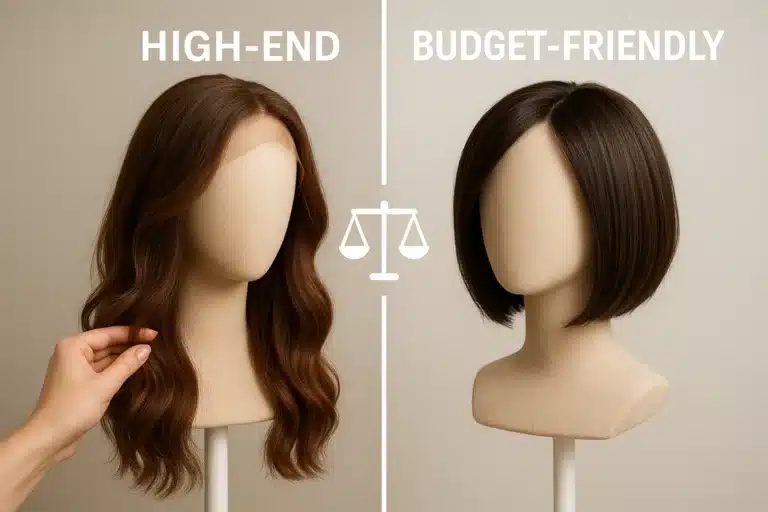
There is a specific moment that almost every wig wearer experiences at the beginning of their journey. It’s the “Unboxing Paradox.” You’ve spent hours browsing online, researching styles, and finally hitting “purchase” on a piece that looked flawless on the model. But when it arrives and you place it on your head, something feels… off. It might feel too heavy, the hairline might sit too low, or the color that looked like a cool ash blonde on your screen reads surprisingly warm in your bathroom mirror.
This isn’t necessarily a fault of the product; it is simply the nature of mass manufacturing versus personalized anatomy. A wig out of the box is a canvas, not a finished portrait. For many first-time wearers, navigating the in-store vs. online wig shopping dilemma is the difference between wearing a piece that feels like a “helmet” and one that feels like a natural extension of yourself. The secret to bridging that gap lies in professional in-store customization—a suite of artistic and technical services that transform a standard product into a bespoke solution.
The “Design Studio” Mindset: Beyond the Retail Experience
To understand the value of customization, we have to shift how we view wig shopping. It is easy to think of a wig store as a simple retail outlet—you pick a style, pay, and leave. However, a high-quality local boutique operates more like a design studio.
When you purchase online, you are buying a “universal” fit and style. Manufacturers intentionally produce wigs with 10-20% more density (hair thickness) than the average person needs. They do this to ensure full coverage over the wefts (the internal structure) and to accommodate various head sizes. However, without professional intervention, this extra density can result in the dreaded “wiggy” look—where the hair sits too high on the head or looks unnaturally thick at the hairline.
The Science of the Perfect Cut
One of the most transformative services available in-store is professional thinning and texturizing. Unlike a standard haircut, cutting a wig requires a specific understanding of fiber physics and cap construction.
- De-Bulking: A specialist uses thinning shears to carefully remove weight from specific internal areas of the wig. This reduces the “helmet” effect, allowing the hair to lay flat against the head for a more realistic silhouette.
- The Four-Finger Rule: Placing a wig correctly is an art. A common mistake is pulling the wig too far down, shrinking the forehead. Stylists teach the “Four-Finger Rule”—measuring the distance from the brow bone to determine the natural hairline placement—and then trim the lace or bangs to frame the face perfectly at that height.
- Face-Framing: Customizing layers to hit your specific cheekbone or jawline creates movement. This is what turns a generic style into a look that highlights your best features.
For those interested in the technical side of how specialized tools create these effects, exploring advanced wig cutting layering techniques can reveal just how much precision goes into every snip.
The “Screen to Skin” Color Gap
Have you ever ordered a “Strawberry Blonde” wig that looked pink under your office lights but orange in the sun? This phenomenon is known as metamerism—the way colors shift appearance under different light sources.
Online photos are often taken under studio strobe lighting, which is vastly different from the environment you live in. In-store color matching bridges this gap through:
- Biological Color Matching: A stylist looks at your skin’s undertones (cool, warm, or neutral) to recommend shades that vibrant your complexion rather than washing you out.
- Lighting Simulation: In a physical store, you can view the fiber under LED, fluorescent, and natural window light to ensure the color holds up in all environments.
- The Shadow Root Technique: For a more natural look, stylists can explain how “rooted” colors (darker at the base) mimic natural hair growth. This adds depth to the lace-front area, creating the illusion that the hair is growing directly from your scalp.
Medical Fittings and Cranial Mapping
For clients experiencing hair loss due to medical reasons, the fit is not just about aesthetics—it is about security and comfort. A “one-size-fits-most” cap often fails to account for the nuances of cranial shape.
Professional wig fitting involves more than just measuring the circumference of the head. It involves “cranial mapping”—assessing the flatness of the nape or the height of the crown. A professional stylist can perform alterations such as:
- Taking in the Nape: sewing the elastic adjustments to prevent the wig from riding up.
- Ear Tab Adjustment: ensuring the structured ear tabs sit flush against the temple without digging into the skin or interfering with glasses.
These subtle adjustments are what allow a wearer to move with confidence, knowing their hair is secure.
Beyond the Basics: Character and Event Styling
While many clients seek natural, everyday looks, the local wig shop is also a hub for theatrical and character transformation. The search for specific looks, like a “Denji wig styled” or intricate cosplay designs, often leads people to realize that “out of the bag” character wigs rarely defy gravity on their own.
Professional stylists use steam and specialized holding products to freeze synthetic fibers into architectural shapes that online tutorials often fail to replicate durability. Whether it is a “Mommy Makeover” style that needs to survive a busy day or a high-concept costume piece, having a professional set the style ensures it lasts. If you are unsure which style suits you best, a wig styling face shape guide can be an excellent starting point before your appointment.
Frequently Asked Questions
Q: Can I cut a synthetic wig myself?
A: While minor trims are possible, synthetic fiber is unforgiving. Unlike human hair, it does not grow back. Professional stylists use specific tools that slice through the tough fiber without fraying the ends, which is critical for longevity.
Q: Why does my wig look different than the website photo?
A: Most website photos show wigs that have been professionally styled for the shoot. The “box hair” you receive is the raw version. In-store customization bridges that gap.
Q: Is customization expensive?
A: Think of it as insurance for your investment. The cost of a trim or fitting is minimal compared to the price of a wig you never wear because it doesn’t feel “right.”
Q: How do I maintain the style after I leave the store?
A: Your stylist will provide a maintenance plan. Learning about the essential services wig shops offer can help you plan for long-term care, such as professional washing or steaming to restore the fiber’s texture.
The Verdict: Invest in the Finish
Buying a wig is an emotional and financial investment. While the convenience of online shopping is undeniable, the artistry of in-person customization turns a manufactured product into a personal statement. By opting for professional cutting, color matching, and fitting, you aren’t just buying hair; you are buying the confidence that comes from knowing your look was designed specifically for you.
If you are ready to move from “wearing a wig” to “owning your look,” visiting a local expert is the most powerful step you can take.