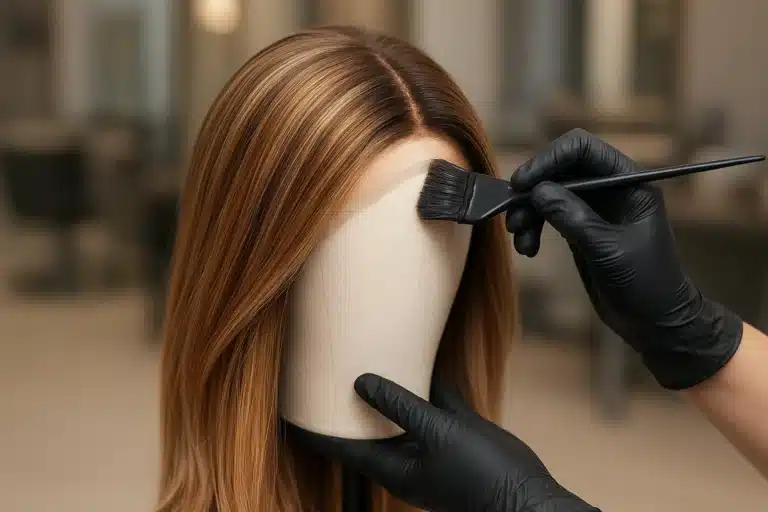
Have you ever looked at a wig that seemed technically perfect—silky fibers, beautiful cut, great volume—but something about it felt just a little “off” when you tried to picture it on yourself? Often, the secret to undetectability isn’t just the style of the hair, but the depth of the color at the scalp. For many first-time wig wearers, the choice between a solid color and a rooted shade is the surprising variable that changes a piece from “wearing a wig” to “wearing hair.”
Understanding this distinction is the first step in your journey. While understanding the style is key, Finding Your Perfect Wig Color is the other half of the equation for achieving a truly seamless and natural appearance that complements your unique features. Today, we are going to demystify the “root” debate, moving beyond industry jargon to help you understand the mechanics of realism and style.
The Core Concept: Dimension vs. Uniformity
To make the best choice for your personal aesthetic, it helps to understand exactly what manufacturers mean when they talk about “rooted” versus “non-rooted” styles.
Non-Rooted Wigs: The “Fresh Salon” Look
A non-rooted wig features the same color from the very tip of the hair strand all the way down to the base of the cap. Whether it’s a rich chocolate brown or a platinum blonde, the color is uniform.
- The Aesthetic: This mimics the look of hair that has just been freshly dyed at a salon. It is vibrant, consistent, and bold.
- The Vibe: It implies a polished, high-maintenance look where no regrowth is visible.
Rooted Wigs: The “Natural Growth” Look
Rooted wigs feature a darker color at the base (the “root”) that gradually blends into the main base color of the wig. This root area can range from a subtle “shadow” to a dramatic, fashion-forward ombré.
- The Aesthetic: This mimics the natural biological process of hair growth. Even if you color your biological hair, a tiny fraction of darker root is almost always visible within weeks.
- The Vibe: It implies authenticity, depth, and ease.
The “Shadow Effect”: Why Roots Trick the Eye
Why do rooted colors often look more realistic? It comes down to a visual phenomenon we call the “Shadow Effect.”
When biological hair grows out of a scalp, the density of the follicles creates a natural shadow at the root. Even on natural blondes, the hair closest to the head appears slightly darker than the ends, which have been exposed to sunlight and styling.
Non-rooted wigs, especially in lighter colors, can sometimes lack this optical depth. Without that subtle darkening at the base, the transition from forehead to hair can look abrupt or “flat.” A rooted wig artificially recreates this shadow. This depth tricks the observer’s eye into believing the hair is growing directly out of the scalp, blurring the line where the wig material ends and your skin begins.
Weighing Your Options: A Comparative Guide
Neither style is “better”—they simply serve different purposes. Here is a breakdown to help you align your choice with your lifestyle.
| Feature | Rooted Wigs | Non-Rooted Wigs |
|---|---|---|
| Realism | High. Mimics natural regrowth and adds dimension. | Variable. Can look very natural in dark colors, but requires confidence in lighter shades. |
| Maintenance | Low. The darker root hides the “knots” in the wig cap better, often requiring less makeup to conceal. | Medium. Lighter non-rooted wigs may require concealer on the part line to mimic a scalp. |
| Style Profile | Casual, modern, “lived-in” luxury. | Classic, polished, bold fashion statement. |
| Skin Tone Compatibility | Acts as a buffer, allowing you to wear colors that might otherwise wash you out. | Requires a precise match to your skin tone to avoid clashing. |
| Price Point | Often slightly higher due to the complex dyeing process. | generally more budget-friendly standard pricing. |
How to Choose the Right Style for YOU
At Wig Superstore, we believe the right wig is the one that makes you feel most like yourself. However, if you are stuck between the two, use this framework to decide.
1. Check Your Eyebrows
This is the most practical “cheat code” for wig selection.
- If you have dark eyebrows and want to wear a blonde or light red wig, a rooted color is usually the safer, more natural choice. The dark root ties the light hair to your dark brows, creating a cohesive look.
- If you have very light or sparse eyebrows, a non-rooted wig or a very subtly rooted wig may be better, as a harsh dark root might overpower your features.
2. Consider Your “Bio Hair”
Are you wearing a wig that allows some of your natural hair to show (like a topper or a half-wig), or are you tucking it all away?
- If you have biological hair underneath that is dark, a rooted wig helps blend the hairline if any stray hairs escape.
- If you have full hair loss or very light grey/white bio hair, a non-rooted wig might actually look more natural, as sudden dark roots could look out of place against a fair scalp.
3. The “Buffer” Technique
Do you love a color that is technically too warm or too cool for your skin tone? A rooted wig can save the day. The root color (usually a neutral brown or dark blonde) acts as a buffer zone between your face and the main wig color. This separation allows you to wear trendy shades—like icy platinum or fiery red—without them clashing with your complexion.
Decoding the Label: A Quick Guide to Color Codes
When you browse our collections, you might see letters attached to color names. Here is a quick glossary to help you spot rooted styles:
- R (Rooted): The standard. Usually indicates a darker root that is fairly distinct.
- SS (Shadow Shade): Common with brands like Raquel Welch. This indicates a softer, more subtle root that looks like a natural shadow rather than distinct regrowth.
- RT or -R: Often indicates a traditional root.
- Ombré: A dramatic transition where the dark root extends further down the hair shaft, transitioning into a lighter color at the ends.
When NOT to Choose a Rooted Wig
While rooted wigs are trending for their realism, there are specific scenarios where a non-rooted wig is actually the superior choice:
- The “Classic” Updo: If you plan to pull the hair up into a high ponytail or elaborate updo, be careful. Depending on the cap construction, a dark root can sometimes look “stripey” or patchy when the hair is pulled backward, revealing the mechanical coloring pattern.
- Naturally Silver/White Hair: If you are embracing a full grey or silver look to match a transition from natural grey hair, a dark root can sometimes defeat the purpose. Many women prefer a non-rooted, multi-tonal grey blend that mimics natural aging patterns where the hair is lightest at the temples.
- The Retro/Vintage Look: If you are channeling a 1940s or 50s aesthetic (think Marilyn Monroe), a non-rooted platinum is historically accurate and stylistically appropriate.
Frequently Asked Questions
Q: Can I add roots to a non-rooted wig myself?
A: While there are DIY methods using root sprays or markers, we generally advise caution. Synthetic fibers do not absorb color like human hair, and markers can transfer onto the lace cap or your skin. It is much safer to buy a wig that is pre-rooted by the manufacturer.
Q: Are rooted wigs harder to style?
A: Not at all! In fact, they can be easier. Because the root obscures the knots (where the hair is tied to the cap), you often spend less time trying to make the part line look realistic with makeup or plucking.
Q: Will the root color match my natural hair color?
A: Most manufacturers use “universal” root colors—typically a medium to dark brown. You don’t need it to be an exact match to your biological hair for it to look natural; it just needs to be in the same tonal family as your eyebrows or eyelashes to create that grounding effect.
Conclusion
Choosing between rooted and non-rooted wigs isn’t about right or wrong—it’s about the story you want to tell with your style. Whether you prefer the dimension and ease of a Shadow Shade or the bold brightness of a salon-fresh solid color, the technology behind modern wigs ensures you can find a piece that looks beautiful.
Remember, the goal is confidence. By understanding how color placement affects realism, you are now equipped to look past the pretty photos and choose the wig construction that works for your face, your complexion, and your life.