Hair loss is a deeply personal journey, one that often feels overwhelming when you first realize your reflection doesn’t quite match how you feel inside. But there is a profound sense of empowerment that comes with reclaiming your narrative. When you transition from feeling like you have to wear a wig to discovering a piece that makes you feel uniquely beautiful, the entire experience changes.
If you are navigating this path in the Pacific Northwest, you aren’t just looking for a product—you’re looking for an experience that honors your dignity and personal style. Finding the right guidance is crucial, which is why exploring the best wig stores in Seattle WA is your first step toward finding a piece that moves, feels, and looks exactly like your own natural hair.
Whether you are seeking a solution for medical hair loss or simply looking to invest in a high-end aesthetic enhancement, Seattle’s luxury wig market offers concierge-level service. Let’s demystify the luxury wig experience, so you know exactly what to look for, what questions to ask, and how to navigate the high-end boutiques in the Emerald City.
The “Hair Hierarchy”: Decoding the Price Tag
When you step into a luxury boutique, you might experience a bit of sticker shock. High-end human hair wigs often range from $2,000 to over $5,000. To understand why, you have to understand the “Hair Hierarchy.”
Not all human hair is created equal. The origin, processing, and intactness of the hair cuticle drastically dictate how the hair behaves, especially in Seattle’s famously damp climate.
- European Hair (The Pinnacle): Highly prized for its fine denier (thickness), European hair perfectly mimics the natural flow, bounce, and shine of Caucasian biological hair. It requires very little processing, meaning the cuticle remains intact. If you are searching for the best european human hair wigs, you are looking at the top tier of the market.
- Virgin Hair: This refers to hair that has never been chemically treated, dyed, or permed by the donor. It is incredibly strong and allows for custom coloring by a boutique stylist.
- Remy Hair: A high-quality option where all the hair cuticles run in the same direction. This prevents the matting and tangling often seen in lower-quality wigs, ensuring longevity and a smooth texture.
The Cost-Per-Wear Formula
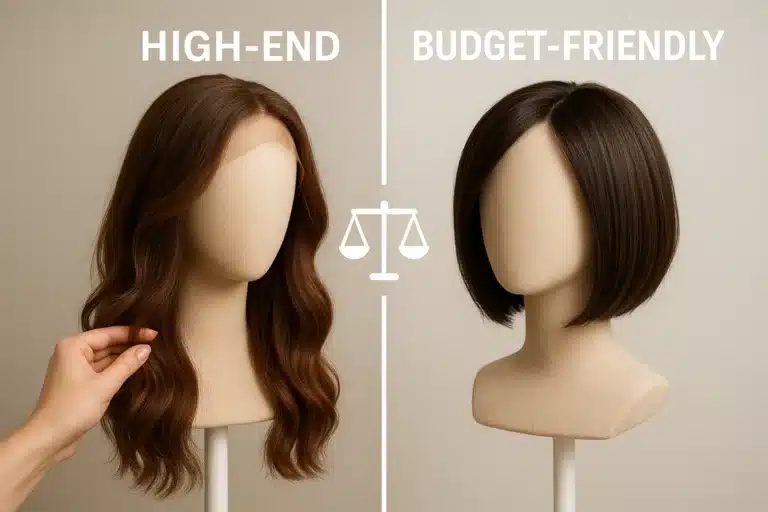
It’s easy to look at a $3,000 price tag and feel hesitant. But consider the “Cost-Per-Wear” formula. A $700 standard wig might degrade, frizz, or lose its shape within 6 months of daily wear. A meticulously crafted, hand-tied European hair wig, when properly cared for, can last 2 to 3 years. Over time, the luxury option is not only more realistic and comfortable—it is often more cost-effective.
Inside the Seattle Boutique Experience
Purchasing luxury wigs is not a transactional retail event; it is a specialized consultancy. High-end Seattle boutiques prioritize privacy and emotional comfort.
Here is what you can expect from a top-tier fitting:
- The “No-Buzz” Assurance: Luxury salons offer completely private fitting rooms. There are no buzzing clippers from a neighboring salon chair, no mirrored storefronts, and no rushed consultations.
- The Three-Appointment Process: A true boutique experience is rarely completed in one day. It typically involves a Consultation (assessing your needs, scalp sensitivity, and measuring), a Fitting (trying on the cap and selecting the hair), and a Styling session.
- The “Aha” Moment (The Blank Canvas): Here is a secret most beginners don’t know: the highest quality human hair wigs arrive un-styled. They are designed to be a blank canvas with excess lace and uniform length. They won’t look perfect straight out of the box. They require a licensed stylist to cut the lace, customize the hairline, and layer the hair perfectly to your face shape.
A Glimpse into Seattle’s Elite Wig Landscape
The Seattle luxury wig market is anchored by a few established players who provide exceptional service. Knowing their specialties can help you choose the right environment for your needs.
- William Collier Design (Belltown): Known as a benchmark for luxury in the city, they operate as an “Atelier” and specialize in high-end brands like Follea. Their approach is clinical yet incredibly warm, focusing heavily on the client’s emotional journey. They excel at serving clients navigating medical hair loss.
- Maison de Wigs (Lynnwood): Dominating the northern suburbs, this boutique bridges the gap between fashion and necessity. They are particularly well-known for their extensive “Topper” collections, ideal for women experiencing localized thinning who don’t yet need a full wig.
- Specialty Human Hair Shops: Across the metro area, you’ll find specialized boutiques focusing heavily on the customization of high-end pieces, treating them as both medical necessities and aesthetic investments.
Navigating the Pacific Northwest Elements: Cap Construction
Seattle’s unique climate—with its constant moisture and humidity—requires a wig that won’t frizz or trap excessive heat. Furthermore, if you are undergoing chemotherapy or dealing with alopecia, your scalp will be highly sensitive.
This is where cap construction becomes just as important as the hair itself.
The Scalp Comfort Chart
- 100% Hand-Tied (Best for Medical Need): Every single hair is tied by hand to a soft, stretchy, silk-like spandex material. It provides the softest touch against a bare scalp and moves most naturally in the Seattle wind.
- Monofilament Top (Best for Realism): Features a sheer mesh at the crown that allows your natural scalp color to show through. This allows you to part the hair anywhere you like, offering incredible styling versatility.
- Lace Front (The “Invisible Edge”): Essential for an undetectable hairline. A premium lace front should pass the “Four-Finger Rule” (your hairline should start about four finger-widths above your eyebrows) and seamlessly blend into your forehead.
For those requiring medical wigs, prioritizing a hand-tied cap with a monofilament top is universally recommended by top Seattle consultants.
Washington State Insurance Guide for Medical Wigs
If you are losing your hair due to a medical condition, your luxury wig may be partially or fully covered by your health insurance. However, knowing the right terminology is half the battle.
- Never use the word “Wig”: Insurance companies classify “wigs” as cosmetic fashion accessories.
- Use “Cranial Prosthesis”: When asking your doctor for a prescription, ask them to write it for a “Cranial Hair Prosthesis” for medical hair loss (include the specific medical code, such as alopecia or chemotherapy-induced alopecia).
- Check Your Out-of-Network Benefits: Many boutique shops do not bill insurance directly. You will likely need to pay upfront for the best human hair wigs and submit the specialized receipt to your insurance company for reimbursement.
Your Pre-Consultation Checklist
Ready to visit a Seattle boutique? Use this checklist to prepare:
- [ ] Gather Inspiration: Bring photos of how your biological hair looked before hair loss, or photos of styles and colors you’ve always wanted to try.
- [ ] Check Your Insurance: Call your provider and ask specifically about coverage for a “Cranial Prosthesis.”
- [ ] Don’t Wash Your Hair (If dealing with active shedding): If you are in the middle of active hair loss, the manipulation of washing can cause distress. A good consultant will work with you exactly as you are.
- [ ] Bring a Support Person: Bring a trusted friend or family member whose opinion you value—and who makes you feel confident.
Frequently Asked Questions (FAQ)
Is a human hair wig really worth the investment over synthetic?
It depends on your lifestyle. Synthetic wigs hold their style in the Seattle rain beautifully and are lower maintenance. However, human hair offers unmatched longevity, natural movement, and the ability to heat-style (curl or straighten) and custom-color the hair. If you want the most realistic look possible for daily wear over several years, human hair is worth the investment.
Can I color a luxury human hair wig?
Yes, but with a major caveat: it should only be done by a professional who understands wig hair. Unlike hair growing from your scalp, wig hair cannot repair itself. Depositing color (going darker) is generally safe, but lifting color (bleaching) can damage the hair cuticles permanently.
How do I find a reputable location near me?
When searching for the best wig shop, look beyond just star ratings. Read reviews to see if clients mention terms like “private rooms,” “compassionate,” and “custom fitting.” A reputable shop will always offer a thorough, pressure-free consultation before showing you price tags.
Will high humidity ruin my human hair wig?
Just like biological hair, human hair wigs will react to humidity. A luxury boutique can treat your wig with professional-grade smoothing serums and teach you moisture-blocking styling techniques specifically tailored for the Pacific Northwest weather.
***
Finding the perfect wig is more than a purchase; it’s a profound step toward feeling like yourself again. By understanding the terminology, knowing what to expect from a luxury boutique, and prioritizing your own comfort, you are well on your way to discovering a beautiful, natural-looking solution that empowers you every time you look in the mirror.