You’re holding a wig that got you through one of the most challenging chapters of your life. It provided comfort, confidence, and a sense of normalcy when you needed it most. But now, it’s sitting in a box at the back of your closet. What do you do with a hairpiece you no longer need, but can’t quite bring yourself to throw away?
Perhaps your hair is growing back, or maybe you’re simply upgrading your look and exploring the best wig stores in Seattle, WA for a fresh, new style. Whatever your reason for moving forward, your old wig still has incredible potential. In a city renowned for both its world-class medical facilities and its deep commitment to environmental sustainability, your used hairpiece has a meaningful “afterlife” waiting for it.
Welcome to the ultimate guide to the Seattle support cycle. Here, we’ll explore exactly how to bridge the gap between charitable giving and environmental responsibility, ensuring your used wig stays out of the landfill and either helps a fellow patient or gets responsibly recycled.
The Plastic Truth: Why Wig Disposal Matters
Before we dive into where to take your wig, it’s essential to understand what you are holding. This is where many well-intentioned people experience a major “aha!” moment.
Newcomers to the world of hairpieces often confuse “hair donation” (cutting off ponytails of naturally grown hair) with “wig donation” (giving away a completed, wearable unit). They also tend to misunderstand the materials involved. Unless your wig is 100% human hair, you are likely holding a synthetic piece. Synthetic wigs are brilliantly engineered from synthetic polymers—essentially, specialized polyester, acrylic, or PVC plastics.
Because they are essentially plastic, throwing a synthetic wig into the garbage means it will sit in a landfill for centuries. In an eco-conscious city actively pursuing Zero Waste goals, simply tossing a wig is a missed opportunity. Whether your piece is brand new, gently used, or heavily matted, there is a specialized disposal path for it.
The “Donation-Ready” Test
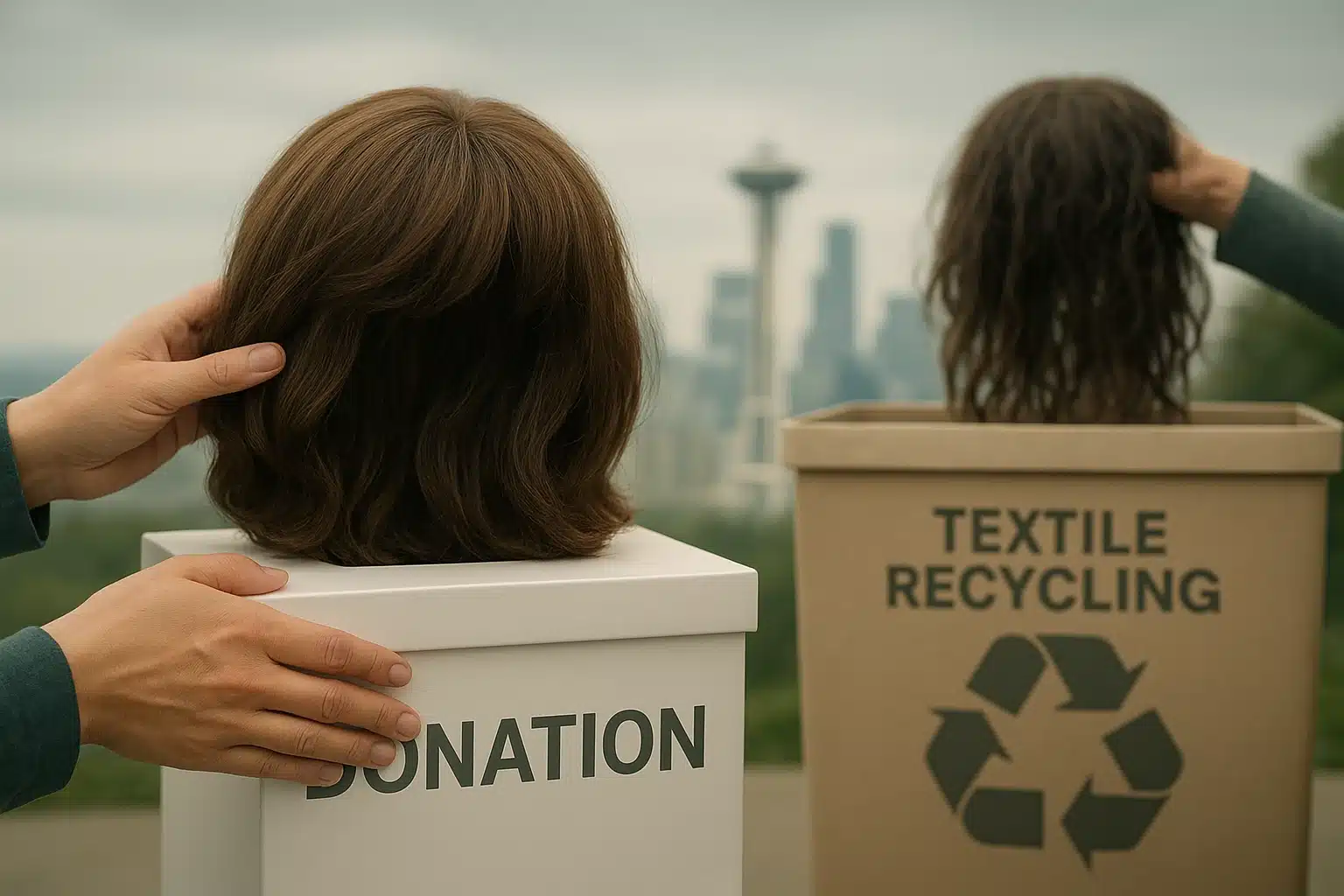
How do you know if your wig is destined for a cancer patient in First Hill or a textile recycling center in King County? Run it through this simple “Yes/No” checklist:
- Is the cap intact? (No massive tears or severely stretched elastic)
- Are the hair fibers relatively smooth? (No severe, unbrushable matting at the nape of the neck)
- Is it free of permanent odors? (Smoke, heavy perfumes, or mildew)
If you answered YES to all three, your wig is “Donation-Ready” and can directly help an individual experiencing medical hair loss.If you answered NO to any of these, your wig is “Past Its Prime” and should be routed to a textile recycling program.
Where to Donate Gently Used Wigs in Seattle
If your used Seattle wig is still in great, wearable condition, several local and national organizations would be thrilled to receive it. Just as the local community comes together for various medical needs—from blood drives to CPAP donation Seattle programs like Bridge Disability Outreach—there is a robust network for hairpiece redistribution.
Local Medical Institutions
Seattle’s premier medical centers often have resources dedicated to patient aesthetics and comfort.
- Fred Hutch – Shine Store: Located in the South Lake Union area, the Shine store is a dedicated oncology specialty shop. While their acceptance policies for used items occasionally shift based on current health guidelines, they are a phenomenal local resource and a primary touchpoint for patient support.
- Swedish Cancer Institute: Another pillar of the Seattle medical community, Swedish offers patient support services that occasionally partner with local salons or donation drives to provide head coverings to those in need.
Local Salon Partners
Several compassionate local salons, such as Salon Voda or Blown Away Seattle, periodically participate in wig donation drives or can point you toward their favored local charities. Partnering salons often help wash and style used units before they are passed on to a new owner.
National Networks with Local Impact
If local drop-offs aren’t currently accepting items, you can leverage national programs that redistribute back to the community:
- EBeauty Community: They run a national wig exchange program. You box up your gently used wig, ship it to them, and they clean, sanitize, and send it to a cancer patient who cannot afford one.
- Hair We Share: While famous for accepting ponytail donations, they also have programs that process and redistribute high-quality human hair wigs.
If you are a part of workplace giving initiatives like the CFC Seattle give campaigns, or organizations that strive to give voice to Seattle patient advocacy groups, reaching out to your community liaison can also uncover hyper-local, pop-up wig drives.
The Sustainability Solution: Recycling “Past Their Prime” Wigs
What if your synthetic wig is tangled beyond repair, fried from heat damage, or the lace is torn? Please don’t throw it in your kitchen trash can.
King County Threadcycle
Because synthetic wigs are essentially woven plastic fibers, they fall under the umbrella of “textiles.” King County’s Threadcycle program is an incredible, often-underutilized resource. While their educational materials primarily highlight torn jeans and single socks, many of their partner drop-off locations and collection bins accept all clean, dry textile materials.
When you recycle through these programs, materials that cannot be reused as apparel are shredded. The synthetic fibers from your old wig can be transformed into industrial wiping cloths, insulation, or soundproofing materials. By recycling your damaged synthetic wig, you are directly saving specialized plastics from entering local landfills.
How to Prep Your Wig for a Second Life
Whether you are donating to a cancer charity or bagging it up for a textile recycling bin, hygiene is critical. Follow this 3-step preparation tutorial:
- Wash and Condition: Gently submerge the wig in a basin of cool water mixed with a wig-safe shampoo. Rinse thoroughly with cool water.
- Air Dry Completely: Never donate a damp wig. Let it air dry completely on a wig stand. Shipping or bagging a damp wig will cause mildew, ruining the piece and forcing the charity to throw it away.
- Bag and Tag: Once 100% dry, gently fold the wig, place it in a clean Ziploc bag, and press the air out. If you know the brand, style name, or color code, write it on a piece of paper and slip it into the bag. This acts as a “Donation Slip” and saves charities hours of sorting time!
Frequently Asked Questions About Wig Disposal
Can I donate a wig that has been custom-cut?
Yes! As long as the wig is in good condition, custom cuts are perfectly fine. Many patients prefer shorter, customized styles. Just make sure to wash it before donating.
Will regular thrift stores take my old wigs?
While some generic thrift stores might accept them, it is highly recommended to donate to specialized medical charities. Generic thrift stores often lack the resources to properly sanitize and style wigs, and they may end up throwing them away if they don’t sell quickly.
Are human hair wigs recycled differently than synthetic ones?
Human hair is an organic material and will eventually biodegrade, unlike synthetic plastic fibers. However, if a human hair wig is ruined, its structural cap is still likely made of nylon or lace (synthetic). It is best to treat damaged human hair wigs as textiles and route them through programs like Threadcycle.
Taking the Next Step
Your journey with hair loss or hair enhancement is deeply personal, but the end of a wig’s life doesn’t have to be a closed door. By taking a few extra minutes to wash, bag, and properly route your old wig, you become a vital part of the Seattle support cycle. You’re not just cleaning out your closet; you’re offering a renewed sense of dignity to someone facing a difficult diagnosis, or protecting the beautiful Pacific Northwest environment we call home.
When you’re ready to find the next perfect piece to match your evolving style, remember that the right educational resources and compassionate expertise can make all the difference in your shopping experience. Take your time, explore your options, and wear your next style with the confidence of someone who knows how to give back.