Anyone who has navigated hair loss knows the emotional anticipation of finding that perfect new style. But there’s a quiet crisis many don’t talk about until it’s too late: the physical toll of an itchy, irritated scalp. You might spend hours researching the most reputable wig shops in Seattle to find a beautiful match, only to discover that wearing it feels like wrapping your head in scratchy wool.
Whether you’re navigating post-treatment sensitivities, dealing with alopecia, or simply have a naturally delicate scalp, comfort isn’t a luxury—it’s an absolute necessity. If you find yourself constantly adjusting, scratching, or removing your hairpiece the second you get to the car, you aren’t alone. This guide bridges the gap between beautiful hair and medical-grade comfort, exploring the science behind scalp sensitivity and revealing the best hypoallergenic wig cap options available right here in the Pacific Northwest.
The Science of Sensitivity: Why Standard Wig Caps Fail
When you wear a wig, your scalp is introduced to a unique microclimate. Standard cap constructions are perfectly fine for casual wearers with full heads of hair, but for total or partial hair loss, standard wefted caps often fail for three scientific reasons:
- Heat Trapping: Seattle’s temperate, often humid climate can cause standard synthetic materials to trap body heat, accelerating sweat production and bacterial growth.
- Fiber Friction: The standard machine-sewn wefts and exposed knots of hair can repeatedly rub against a bare scalp, acting like mild sandpaper over the course of an eight-hour day.
- Adhesive Reactions: Traditional wigs often require tapes or liquid adhesives to stay secure, which contain chemicals that frequently trigger contact dermatitis.
Understanding this helps us map out a true “Comfort Grade Scale,” moving away from standard commercial options and toward specialized, hypoallergenic materials designed specifically to act as soothing barriers.
The “Big Three” Hypoallergenic Materials
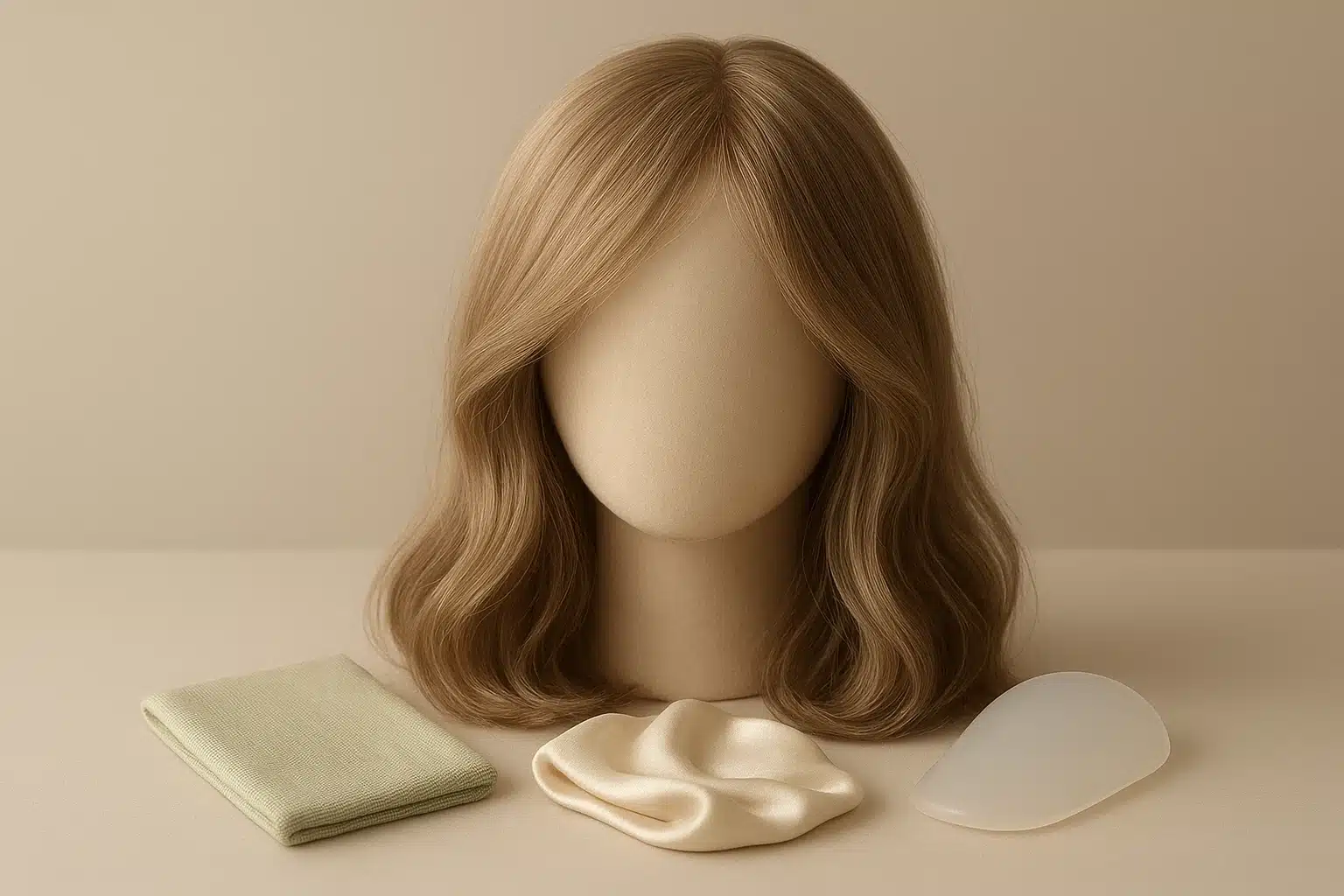
If you have a sensitive scalp, your shopping journey shouldn’t start with the hair on the outside; it must begin with the material on the inside. Here are the three gold-standard hypoallergenic materials you should look for.
Bamboo: The Moisture-Wicking Champion
Bamboo is a revelation for scalp comfort. Naturally antibacterial, incredibly soft, and highly breathable, bamboo excels at temperature regulation.
The “Aha” Moment: You don’t always need to buy a brand new, expensive medical wig to achieve comfort. A $10 to $20 bamboo wig liner can instantly transform a $500 itchy wig into a wearable piece. By utilizing this “Barrier Method,” the bamboo absorbs sweat and prevents the rougher cap materials from ever touching your skin.
Silk and Double-Monofilament: The Natural Barrier
In a standard hand-tied or monofilament wig, individual hairs are hand-knotted into a micro-mesh cap. While this looks incredibly natural, those tiny knots on the inside of the cap can feel prickly against a bare scalp.
Enter the “double-monofilament” cap. This construction features a second, silky layer of glass-silk or soft mesh sewn directly over the knots. It provides the ultra-realistic look of hair growing directly from the scalp while ensuring that only a smooth, buttery layer of silk touches your skin.
Medical-Grade Silicone: The Adhesive-Free Revolution
For years, people with complete hair loss had to rely on chemical adhesives to keep their wigs secure. Today, medical-grade silicone has changed the landscape entirely.
Silicone is biologically inert, meaning it almost never causes allergic reactions. Advanced medical caps use strategically placed silicone panels that gently grip the bare scalp using your body’s natural heat. It creates a secure, vacuum-like seal without a single drop of glue or tape, entirely eliminating the risk of adhesive-induced dermatitis.
Finding Specialized Care in the Seattle Area
Seattle’s wig landscape is wonderfully diverse, but when you have a sensitive scalp, you need to know exactly where to look. The market is generally divided into a few key areas of specialization:
- Hospital-Affiliated Boutiques: Places like the Fred Hutch Shine Store operate as non-profit oncology boutiques. Their primary focus is on medical-grade comfort for patients undergoing chemotherapy. They are exceptional resources for bamboo liners, gentle sleep caps, and prioritizing immediate physical comfort.
- High-End Medical Boutiques: Local establishments like William Collier Design specialize in top-tier medical hair loss solutions. They are known for carrying advanced silicone-gripper caps (like the Follea line) which provide that crucial adhesive-free security for those with alopecia.
- Specialty Craftsmanship Shops: Stores such as Master Hair Care offer extensive options in fully hand-tied and double-monofilament constructions, providing excellent middle-ground solutions for those needing both breathability and a natural look.
When you book a “sensitive scalp consultation” at a specialized boutique, expect them to ask about your medical history, any known contact allergies, and your daily lifestyle before they ever show you a hair color swatch.
The Care Protocol: Protecting Your Hypoallergenic Cap
Investing in a hypoallergenic wig cap is only half the battle; how you maintain it dictates how long it stays comfortable. Many scalp reactions are actually caused by the products used to clean the wig, not the wig itself.
- The “Alcohol-Free” Rule & The Witch Hazel Swap: Most beginners use standard scalp cleansers or astringents to prep their skin. Many of these contain high levels of alcohol, which dries out the scalp and exacerbates itching. Swapping harsh toners for natural, alcohol-free Witch Hazel is a major game-changer for daily comfort.
- Skip the Fabric Softener: Never wash your bamboo liners or silk caps with commercial fabric softeners. They leave behind an invisible chemical film that traps heat and frequently causes allergic reactions on sensitive skin.
- Zinc-Based Lotions: If your scalp is naturally dry or irritated, treating your skin with a soothing, zinc-based lotion at night can help rebuild your moisture barrier, making daytime wig-wearing much more comfortable.
Is it an Allergy or an Irritant? A Quick Checklist
If your scalp is red and itchy, identifying the culprit is essential.
It’s likely an IRRITANT (Friction) if:
- The redness goes away shortly after removing the wig.
- The discomfort is located specifically where the wig seams or combs press into the scalp.
- Your head feels hot, sweaty, and prickly, rather than burning.
It’s likely an ALLERGY (Contact Dermatitis) if:
- The redness lingers for days after wearing the piece.
- You experience blistering, flaking, or a burning sensation.
- The reaction perfectly matches the areas where you applied tape or adhesive.
Frequently Asked Questions for Sensitive Scalps
Does Medicare in Washington cover hypoallergenic cranial prostheses?
Often, yes. If your hair loss is due to a medical condition (like alopecia or chemotherapy), many insurance plans—and sometimes Medicare, depending on secondary coverage—will cover a portion of a “cranial prosthesis.” You will need a prescription from your doctor using that specific terminology, rather than the word “wig.”
Is bamboo better than silk for scalp cooling?
Yes. While silk is incredibly smooth and excellent for preventing friction, bamboo is highly porous. It wicks moisture away from the scalp up to four times faster than cotton or silk, making it the superior choice for cooling in Seattle’s warmer summer months.
How do silicone grippers work without adhesive?
Medical-grade silicone reacts to the natural warmth of your skin. As your body heat warms the silicone panels, they create a gentle, natural suction against a bare scalp. Because it relies on surface area contact, this works best for individuals with total hair loss.
Can I make my current wig hypoallergenic?
While you can’t change the cap construction of a wig you already own, you can introduce hypoallergenic barriers. Sewing a soft velvet band into the rim of the wig, or wearing a thin bamboo liner underneath, can drastically reduce friction and irritation without requiring you to buy a completely new hairpiece.
Taking the Next Step Toward Comfort
Experiencing hair loss is challenging enough without the added burden of physical pain. Remember that an itchy, burning scalp is not just “part of wearing a wig”—it is a sign that your current cap construction or adhesive is working against your body’s natural chemistry.
By understanding the differences between bamboo barriers, double-monofilament silk, and medical-grade silicone, you can advocate for your own comfort. As you continue your educational journey, take the time to explore more about wig cap constructions, material types, and care routines to ensure your next hairpiece feels just as beautiful as it looks.