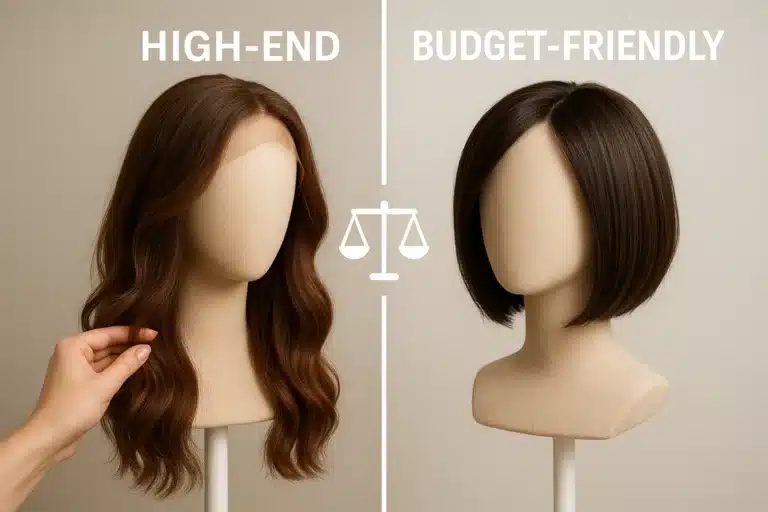
You’ve likely found yourself staring at a computer screen, toggling between two browser tabs: one showing a wig for $45 and another for $450. On the surface, they might look surprisingly similar in the photos. This moment of paralysis is something almost every new wearer experiences. You want to feel confident and beautiful, but you also want to be financially responsible.
The truth is, the price tag on the wig is just one part of the story. Successful wig wearing isn’t just about buying hair; it’s about investing in a system that keeps you looking natural and feeling secure. By understanding the full scope of what goes into a successful purchase, you can avoid common pitfalls. This approach serves as your foundational budgeting for your perfect wig strategy, ensuring your first experience is a positive one rather than a costly experiment.
The “Hidden Wig Economy”: Why the Sticker Price Isn’t the Whole Story
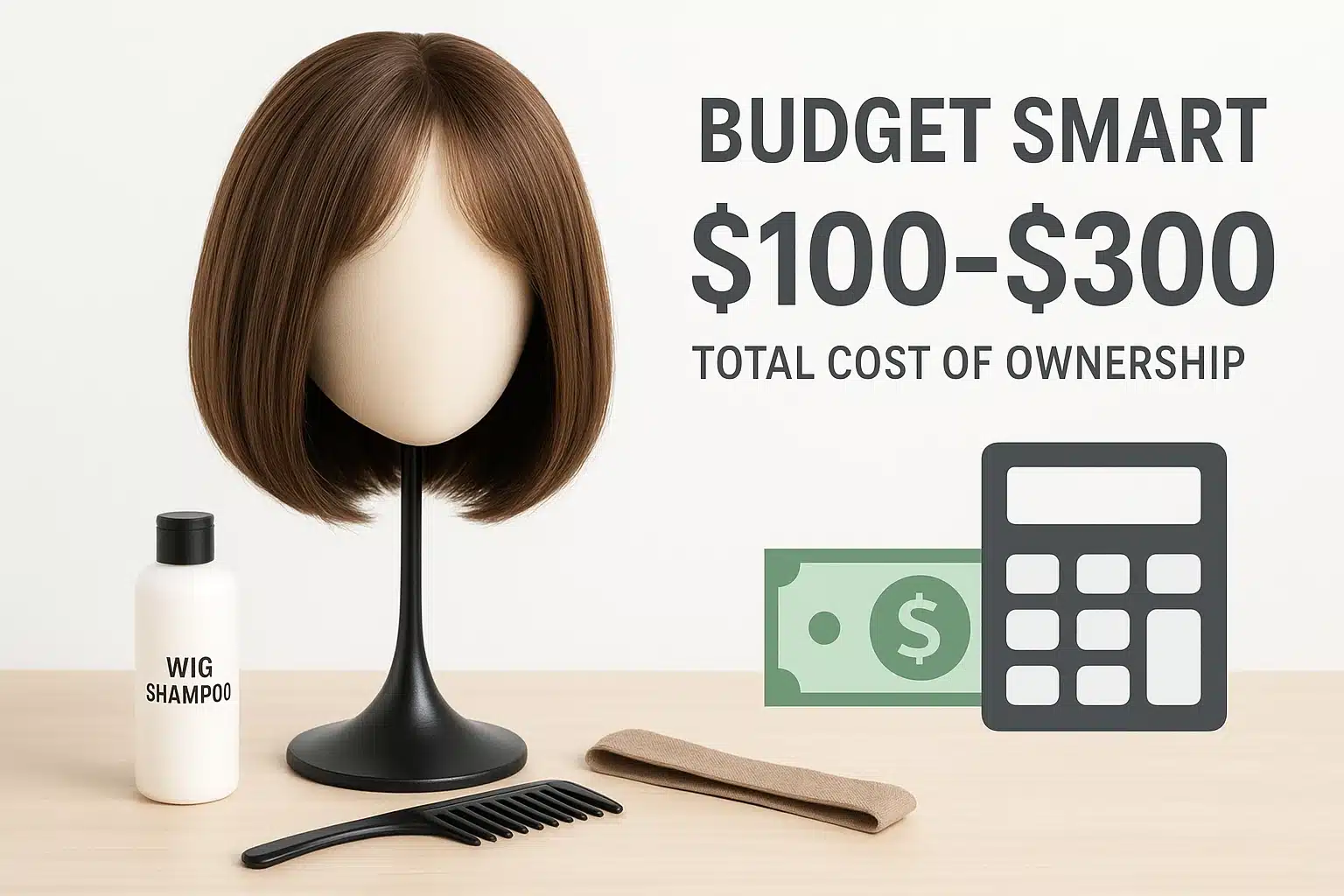
When you buy a car, you don’t just budget for the vehicle; you budget for gas, insurance, and maintenance. Buying a wig is remarkably similar. There is a concept we call the “Total Cost of Ownership” (TCO), which is the true cost of wearing hair over time.
Many first-time buyers fall into the “Cheap Wig Trap.” This happens when you purchase a $30 or $40 unit to save money, only to realize it requires $100 worth of specialized products, heavy customization, and constant replacement to look realistic. Within two months, you might have spent more than you would have on a higher-quality piece that looked great right out of the box.
To build a realistic budget, you need to look beyond the hair itself and consider the “ecosystem” required to maintain it.
The “Starter Kit” Standard: Budgeting for Essentials
If you are building your budget from scratch, you must allocate funds for the “non-negotiables.” These are the tools that ensure your wig stays on your head, stays tangle-free, and retains its style. A good rule of thumb is to set aside an additional $50–$75 for your initial accessory kit.
Security and Comfort
The most beautiful wig in the world won’t make you feel confident if you are constantly worried about it slipping. While some wigs come with adjustable straps, many beginners find that specific wig bands to secure wigs are essential for daily wear. A velvet wig grip, for example, creates friction that keeps the wig in place without the need for messy glues or tight clips that can irritate a sensitive scalp.
Care and Maintenance
You cannot use standard drugstore shampoo on a wig. Standard hair care products often contain sulfates and parabens that strip the moisture from synthetic fibers and human hair wigs alike, leading to a dry, frizzy appearance. Your budget should include:
- Wig-specific Shampoo and Conditioner: Formulated to clean without stripping fibers.
- Wide-Tooth Comb: Essential for detangling without stretching or breaking the hair.
- Wig Stand: Necessary for drying your wig and storing it properly to maintain its shape (a Styrofoam head or a collapsible plastic stand both work well).
The “Sweet Spot” Strategy: Finding Balance
For a first-time wearer, where should you aim? Research and customer feedback suggest that the $100–$300 range is the “sweet spot” for an introductory purchase.
In this price range, you typically move away from costume-grade materials and into “medical grade” or high-end synthetic fibers. These wigs often feature better cap constructions, such as monofilament tops (which make the part look like natural skin) or lace fronts (which create a realistic hairline).
When searching for the best wigs for beginners, this mid-tier category offers the highest return on investment. You get a unit that looks natural to the naked eye and behaves like real hair, but you aren’t yet committing to the four-figure investment often required for premium human hair wigs.
Calculating Cost-Per-Wear (CPW)
One of the most helpful ways to frame your budget is to stop looking at the total price and start looking at the Cost-Per-Wear (CPW). This simple calculation helps you determine the true value of your investment.
The Formula:(Cost of Wig + Cost of Accessories) ÷ Expected Number of Wears = Cost Per Wear
Scenario A: The “Bargain” HunterYou buy a $50 wig. Because the fiber quality is lower, it tangles easily and starts to frizz after 30 days of daily wear.
- Total Cost: $50
- Days Worn: 30
- Cost Per Wear: $1.66 per day (plus frustration and self-consciousness).
Scenario B: The “Smart” InvestorYou buy a high-quality synthetic wig from a reputable brand for $250. It lasts for 6 months (approx. 180 days) with proper care.
- Total Cost: $250
- Days Worn: 180
- Cost Per Wear: $1.38 per day.
Surprisingly, the more expensive wig is often cheaper in the long run because it requires less frequent replacement and looks better for longer.
Lifestyle-Based Budgeting
Your lifestyle dictates your budget just as much as your bank account does.
- The Daily Wearer: If you plan to wear your wig 8+ hours a day, investing in brands like Revlon wigs can be a wise choice. Their reputation for durable, ready-to-wear synthetic styles means you spend less time styling and more time living your life.
- The Occasional Wearer: If you only need hair for special events or specific outings, you can afford to stay on the lower end of the “sweet spot” range, as the wig won’t undergo the daily friction that breaks down fibers.
Frequently Asked Questions
How much should I save for my very first wig?
For a satisfying experience that balances quality and cost, aim to save between $200 and $350. This covers a high-quality synthetic wig ($150–$250) and your essential “starter kit” of care products and accessories ($50–$75).
Is human hair worth the extra cost for a beginner?
Generally, no. Human hair wigs are significantly more expensive (often $800+) and require high maintenance (styling, blow-drying, moisture replenishment). For a first wig, high-quality synthetic fibers are usually better because they hold their style through washes (“shake-and-go”) and allow you to get used to wearing hair without the stress of ruining an expensive piece.
Can I just use my regular hairbrush?
Avoid using standard brushes with little balls on the ends of the bristles. These can snag the fibers and pull them out of the cap, causing permanent damage. A wide-tooth comb or a specialized wig brush is a small investment that extends the life of your wig significantly.
Taking the Next Step
Setting a budget is about managing expectations and ensuring that your journey into wearing wigs is sustainable and stress-free. By factoring in the hidden costs and focusing on Cost-Per-Wear rather than just the sticker price, you are setting yourself up for success.
Remember, the goal isn’t just to buy a wig; it’s to buy confidence. Starting with a realistic budget ensures that your investment pays off every time you look in the mirror.