Over the last decade, we’ve collectively started asking harder questions about the products we buy. We want to know if our coffee is fair trade, if our cosmetics are cruelty-free, and if our clothing was made by workers earning a living wage. We’ve watched major fashion brands face intense scrutiny over their supply chains, sparking a movement toward transparency. Yet, when it comes to the wig industry—a deeply personal space often navigated by individuals experiencing hair loss—that same level of transparency is frequently missing.
Understanding the conscience behind quality human hair wigs requires looking past glossy marketing and into the actual collection practices of the supply chain. If you are beginning your journey into hair replacement, you are likely encountering a maze of buzzwords and “eco-friendly” promises that sound wonderful but lack substance. This phenomenon, known as greenwashing, makes it incredibly difficult to separate the brands making a genuine positive impact from those simply utilizing clever marketing.
Here is your comprehensive guide to decoding industry jargon, spotting red flags, and ensuring your purchase aligns with your personal values.
The Jargon Decoder: Quality vs. Conscience
The first step in avoiding greenwashing is understanding the vocabulary brands use to sell wigs. Often, words that imply ethical sourcing are actually just describing the physical quality of the hair. Let’s break down the most common culprits.
The “Remy” Deception
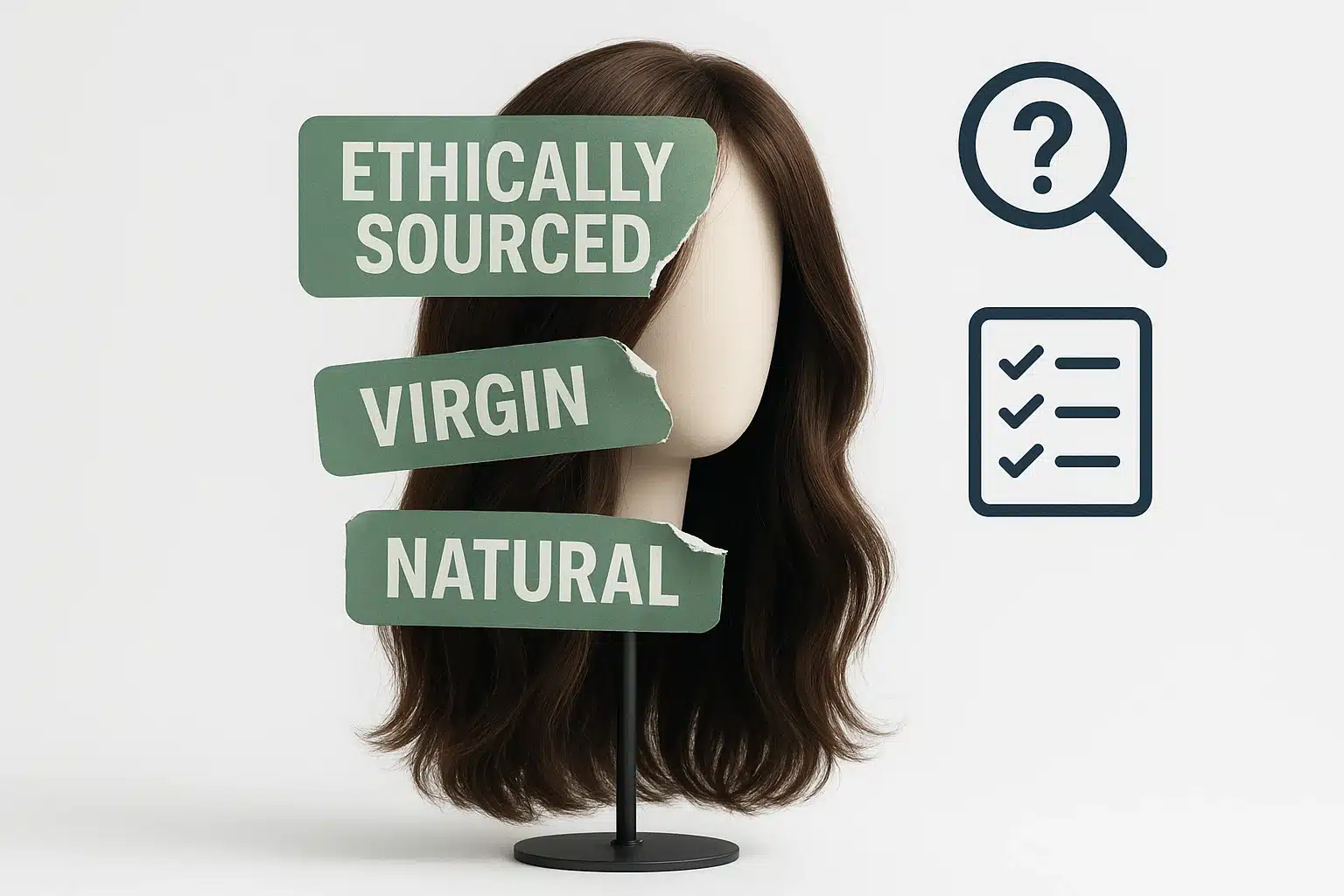
If you’ve browsed for human hair wigs, you’ve seen the word “Remy.” Many shoppers assume this is a certification of ethical sourcing. In reality, Remy simply refers to a quality grade. It means the hair cuticles are kept intact and aligned in the same direction, which prevents tangling and ensures a smooth, natural look. It is a fantastic indicator of quality, but it tells you absolutely nothing about how the donor was treated, whether they were fairly compensated, or if they were coerced.
The “Virgin” Hair Myth
Similarly, “Virgin” hair is highly sought after because it refers to hair that has never been chemically treated, dyed, or bleached. While it denotes premium quality, a label of “100% Virgin Hair” does not equate to 100% ethical hair. The human cost of the supply chain remains entirely hidden behind this descriptor.
The “Cost = Ethics” Fallacy
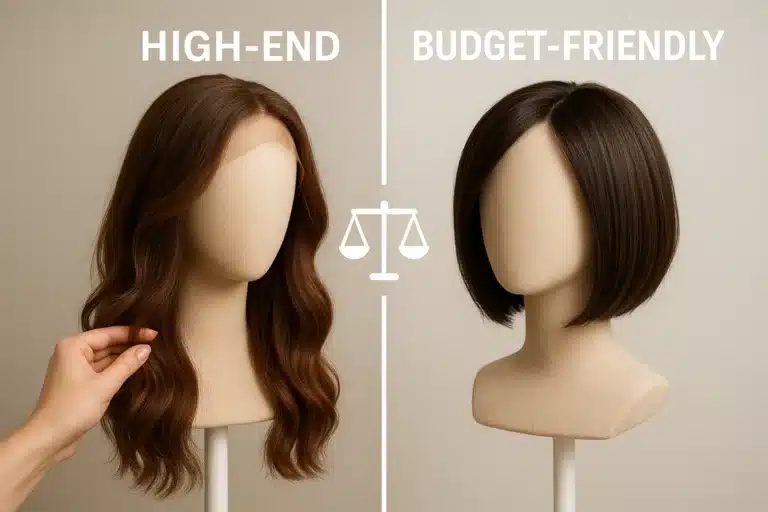
It is natural to assume that a premium price tag means the people at the bottom of the supply chain are being paid well. Unfortunately, in the hair industry, this is largely a fallacy. Without verified transparent sourcing, a high price tag simply means the middlemen—the brokers and processors between the donor and the final brand—are pocketing the “ethical premium.”
The 5 Levels of Wig Industry Greenwashing
Greenwashing occurs on a spectrum. By learning to identify these five levels of deceptive marketing, you can evaluate brands with the eye of an investigative journalist.
Level 1: Vague “Ethical” Labels
Brands using terms like “ethically sourced” or “responsibly gathered” without providing a dedicated page explaining exactly how they achieve this are relying on vague claims. If there is no detailed narrative about their supply chain, the label is empty.
Level 2: The “Temple Hair” Shield
Many brands proudly state their hair comes from “Indian Temples,” where individuals voluntarily tonsure (shave) their heads as a religious offering. While the initial act is voluntary and culturally significant, what happens next is often murky. The temples auction the hair to distributors. Greenwashing occurs when a brand uses the word “Temple” to imply total ethical purity, without acknowledging the complex, multi-layered black market that sometimes surrounds the brokers who buy and process this hair.
Level 3: The “Eco-Friendly Synthetic” Spin
In the debate between synthetic and human hair, some brands market synthetic wigs as the “eco-friendly, cruelty-free” alternative to human hair. What they fail to mention is that most synthetic hair is made from PET (polyethylene terephthalate)—a type of plastic. While it avoids the human ethics dilemma, marketing a petroleum-based product that will sit in a landfill for hundreds of years as an “eco-warrior” choice is textbook greenwashing.
Level 4: The Illusory “Direct to Donor” Claim
Some companies claim they pay donors directly, bypassing middlemen. While direct-to-donor is the gold standard of ethical hair sourcing, it is incredibly rare and logistically difficult. If a brand claims this but cannot provide transparent sourcing maps or general regional data on donor compensation, it’s a red flag.
Level 5: Fake Certifications
Unlike the food industry (which has USDA Organic) or the diamond industry (which has the Kimberley Process), the wig industry currently lacks a universal, centralized regulatory body for ethical sourcing. If a brand displays a flashy, self-designed “100% Certified Ethical” badge, they have likely created that certification themselves.
“Fallen Hair” vs. “Forced Hair”: Shifting the Narrative
As you dive deeper into ethical hair sourcing, you will discover an emerging and profoundly ethical alternative: “Fallen Hair.”
Instead of cutting or shearing hair from donors—which in unregulated markets can lead to coercive practices or forced cutting—some progressive supply chains focus on collecting naturally shed strands. Donors (often women in rural communities) collect the hair that naturally falls out during their daily brushing routines.
Brokers visit these communities and pay the women directly for their collected fallen hair. This provides a supplementary income stream for the donors that is 100% non-coercive. The hair is then meticulously sorted, sanitized, and aligned by skilled workers. When brands highlight fallen hair collection models, it shifts the narrative from “less bad” to “actively empowering.”
Your Sourcing Red Flag Checklist
When you’re evaluating a new wig provider, keep this checklist handy. If a brand exhibits more than one of these red flags, it’s time to ask deeper questions:
- Unusually Low Prices for Human Hair: Authentic, ethically sourced human hair is resource-intensive to gather and process. If a price seems too good to be true for 100% human hair, someone in the supply chain is likely being exploited.
- Lack of Geographic Origin: The brand says “Imported” but cannot specify the country, region, or community the hair originates from.
- Buzzword Word Salad: The product description relies entirely on words like Remy, Virgin, and Pure without mentioning the human element of the sourcing.
- No Supply Chain Transparency: The website lacks an “Ethics,” “Sustainability,” or “Our Story” page detailing their relationship with their manufacturers and sourcers.
The Question Script: 3 Non-Negotiable Questions to Ask Brands
You have immense power as a consumer. If you love a wig but aren’t sure about the brand’s ethical standing, send them a quick email. How they respond (or if they respond at all) will tell you everything you need to know.
Feel free to copy and paste this script:
“Hi [Brand Name] Team, I am very interested in purchasing your [Product Name] wig, but I am committed to shopping with brands that prioritize transparent supply chains. 1. Can you tell me exactly which country and region the hair for this wig is sourced from? 2. Do you use a ‘fallen hair’ collection method, temple hair, or direct-cut donors? 3. How do you verify that the original donors are fairly compensated for their hair? Thank you for your time and transparency!”
A truly ethical company will welcome these questions and have clear, unapologetic answers ready. A greenwashing company will respond with vague marketing copy or ignore the email entirely.
Frequently Asked Questions (FAQ)
Is synthetic hair better for the environment than human hair?
It depends on your definition of environmental impact. High-quality synthetic wigs bypass the complex human-rights issues associated with hair harvesting, making them a great cruelty-free option. However, because they are made from synthetic polymers (plastics), they are not biodegradable. The most sustainable approach to synthetic hair is investing in high-quality pieces that last longer, rather than constantly replacing cheap, fast-fashion wigs.
What does “ethically sourced” actually mean in the wig industry?
Because there is no global legal definition, “ethically sourced” generally means the hair was given completely voluntarily, the donor was fairly and safely compensated, and the workers who processed the hair operate in safe conditions with fair wages.
Can a brand entirely prove their human hair is ethical?
Total 100% transparency is incredibly difficult in the current landscape because hair often passes through multiple rural brokers before reaching a factory. However, the best brands practice “radical honesty.” They will admit the system isn’t perfect, but they will happily show you the specific steps they take to vet their suppliers, trace their origins, and minimize exploitation. Look for progress and transparency, not just perfection.
Continuing Your Educational Journey
Navigating hair loss or a change in your appearance is already an emotional journey; you shouldn’t have to carry the burden of deceptive marketing on top of it. By learning to decode industry jargon and asking the right questions, you are protecting both your peace of mind and the well-being of communities around the globe.
Remember, the goal isn’t to find a flawless system—because one doesn’t exist yet—but to support brands that prioritize compassionate customer care, quality manufacturing, and a genuine commitment to doing better. As you continue to explore your hair replacement options, trust your instincts, utilize your new investigative tools, and choose pieces that make you feel beautiful, confident, and aligned with your values.