Imagine holding a beautifully crafted human hair wig. It’s soft to the touch, moves with an effortless, natural sway, and holds a style just like bio-hair. But before it became a source of renewed confidence, whose head did it grow on? Every exceptional wig has a backstory, and for the conscious consumer, understanding that story has never been more important.
When navigating hair loss, you want a solution that makes you feel beautiful inside and out. Exploring ethical sourcing and sustainability: the conscience behind quality human hair wigs is the critical first step in ensuring your journey to confidence doesn’t compromise someone else’s well-being. While modern synthetic wigs offer fantastic ready-to-wear convenience, human hair remains the ultimate gold standard for longevity and natural movement. But that human element requires a deeply human-centric, transparent supply chain.
Let’s grab a cup of coffee and trace the fascinating, often misunderstood journey of human hair—from a donor in a rural village to the wig block on your dresser.
The Transparency Gap: Moving Beyond the Buzzwords
If you’ve spent any time shopping for hair, you’ve likely been bombarded by terms like “Remy,” “Virgin,” or “European grade.” But here is the industry’s best-kept secret: these are quality descriptors, not ethical guarantees.
Historically, the human hair trade has operated in a “trust gap.” On one end of the spectrum, humanitarian organizations highlight the risks of exploitation in unregulated regions. On the other end, premium brands boast about flawless hair cuticles. As a consumer, you are left in the middle, trying to figure out if your purchase is actually ethical.
True thought leadership in the hair space means mapping this out with complete transparency. Let’s break down the five crucial checkpoints of the global hair trade.
Phase 1: The Origin
The journey always begins with a donor, primarily in regions across India, China, and Southeast Asia. How the hair leaves the donor’s head is the most critical ethical distinction in the entire industry: the difference between “cut hair” and “fallen hair.”
The “Fallen Hair” Trap
Much of the cheap human hair sold online is “fallen hair.” This is hair collected from salon floors, hairbrushes, and even shower drains. Because the roots and ends are mixed up, the hair naturally wants to tangle and mat. To fix this, brokers subject the hair to harsh chemical processing. The donors (or gatherers) are paid pennies for this swept-up hair.
The “Cut Hair” Standard
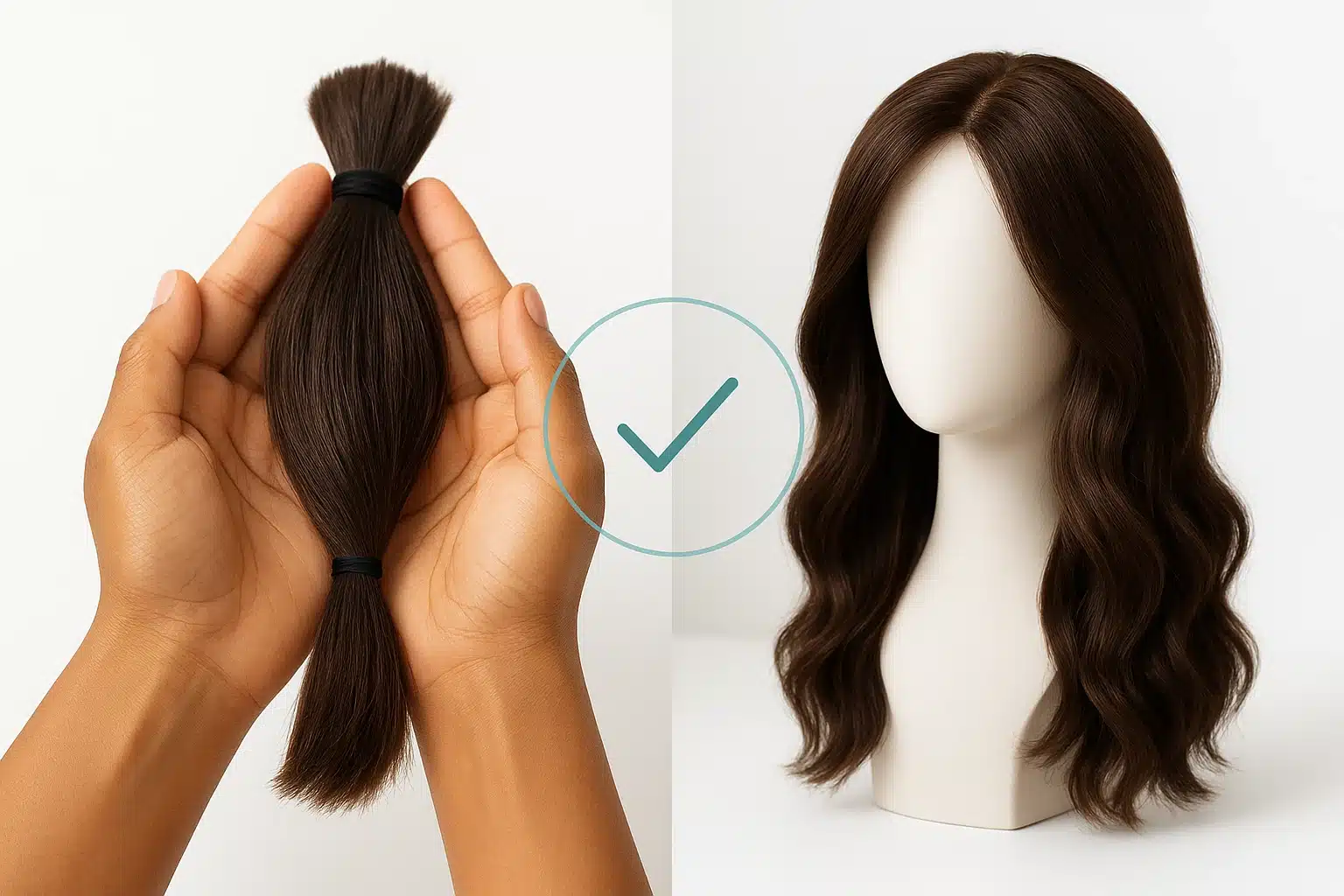
Ethical sourcing relies on “cut hair.” In this scenario, a donor voluntarily grows their hair out, ties it into a ponytail, and has it cleanly cut. This keeps all the cuticles facing the exact same direction (this is what “Remy” actually means). More importantly, the donor is fairly compensated. In some highly regulated premium regions, a donor can receive upwards of $350 per 100 grams of high-quality cut hair. It is a mutually beneficial exchange that empowers the donor financially.
Phase 2: The Middleman
Unless hair is donated at a large religious temple (like the famous Tirumala Temple in India, where funds from auctioned hair go back into community infrastructure), it is usually gathered by local agents.
This stage is often the “black hole” of transparency. Unregulated brokers can exploit vulnerable donors, paying them far below market value. Ethical hair companies bridge this gap by enforcing strict Vendor Codes of Conduct. They require Certificates of Origin, ensuring that every batch of hair can be traced back to an audited, fair-trade aggregator rather than an exploitative middleman.
Phase 3: The Processing Hub
Once gathered, the hair is shipped to processing hubs. This brings us to a major industry misconception: The “Italy Myth.”
Many consumers search for “Italian Hair,” believing it originates from Italy. In reality, Italy and the broader UK are historically renowned for processing and refining hair, not necessarily growing it. The raw hair itself usually still comes from India or Asia.
The Chemical Checkpoint
Here is where ethical sourcing directly impacts the quality of your wig. Remember the “fallen hair” we talked about earlier? Because its cuticles are misaligned, processing factories must dump the hair into a highly corrosive acid bath to entirely strip the hair of its outer cuticle. It’s an environmental nightmare and leaves the hair feeling like straw once the temporary silicone coating washes off.
Ethically sourced, ponytail-cut hair skips the acid bath entirely. Because the cuticles are perfectly aligned, the hair only requires gentle sanitization and double-washing. By insisting on fair-trade hair, you are simultaneously voting for eco-friendly, low-chemical processing. Good karma truly equals good hair.
Phase 4: The Craft
Once the raw material is perfectly prepped, it makes its way to the artisans who build the wig cap.
If you’ve ever wondered why premium human hair wigs carry a higher price tag, the answer lies in the intense labor of love required to make them. Depending on the different types of wig caps, a single piece can take days to create.
For a fully hand-tied wig, skilled artisans use a tiny needle to individually knot strands of hair into a fine, breathable lace material. This process, known as hand-ventilation, can take upwards of 40 to 60 hours for a single wig. Ethical brands mandate Social Compliance Audits at these facilities, ensuring that these master craftsmen and women are working in safe environments, earning fair living wages, and are never subjected to forced labor.
Phase 5: The Delivery and Your Audit Checklist
The final phase is the shipment to distribution centers in the USA or UK, and eventually, to your doorstep. But your role as an educated consumer starts long before you click “add to cart.”
You have the power to change the industry by asking the right questions. Here is your quick vendor audit checklist:
- “Do you use cut hair or fallen/swept hair?” (You only want cut hair).
- “Can your suppliers provide a Certificate of Origin?” (Ensures traceability).
- “Are your manufacturing facilities subject to Social Compliance Audits?” (Protects the artisans making your wig cap).
- “Is this hair processed with acid baths?” (Ethical Remy hair does not require aggressive acid stripping).
Frequently Asked Questions
Is “Remy” hair automatically fair trade?
No. “Remy” simply refers to the technical alignment of the hair cuticle (all hairs facing the same downward direction). While Remy hair is vastly superior in quality, the term alone does not guarantee that the donor was paid fairly or treated ethically.
Why is ethical human hair more expensive?
When you buy ethically sourced hair, you are paying for three things: fair compensation for the individual who grew it, eco-friendly processing that avoids harsh acid baths, and fair wages for the skilled artisans who spend 40+ hours hand-tying the wig cap. It is an investment in human dignity as much as it is an investment in a beautiful product.
How can I be sure the wig I’m buying isn’t from forced labor?
Look for brands that openly discuss their supply chain transparency. Reputable companies that have been in the industry for decades prioritize partnerships with factories that strictly adhere to United Nations Global Compact standards and regular independent Social Compliance Audits.
Your Next Steps in the Journey
Losing your hair is a deeply personal, often emotional experience. Regaining your confidence through a beautifully crafted wig should feel empowering from start to finish. By understanding the journey of human hair—from a fairly-compensated donor to a meticulously hand-tied wig cap—you can make choices that align with your values.
You don’t just have to settle for beautiful hair; you can insist on beautiful practices. Take this knowledge, use the audit checklist, and move forward in your hair restoration journey with the absolute confidence of an informed, compassionate consumer.