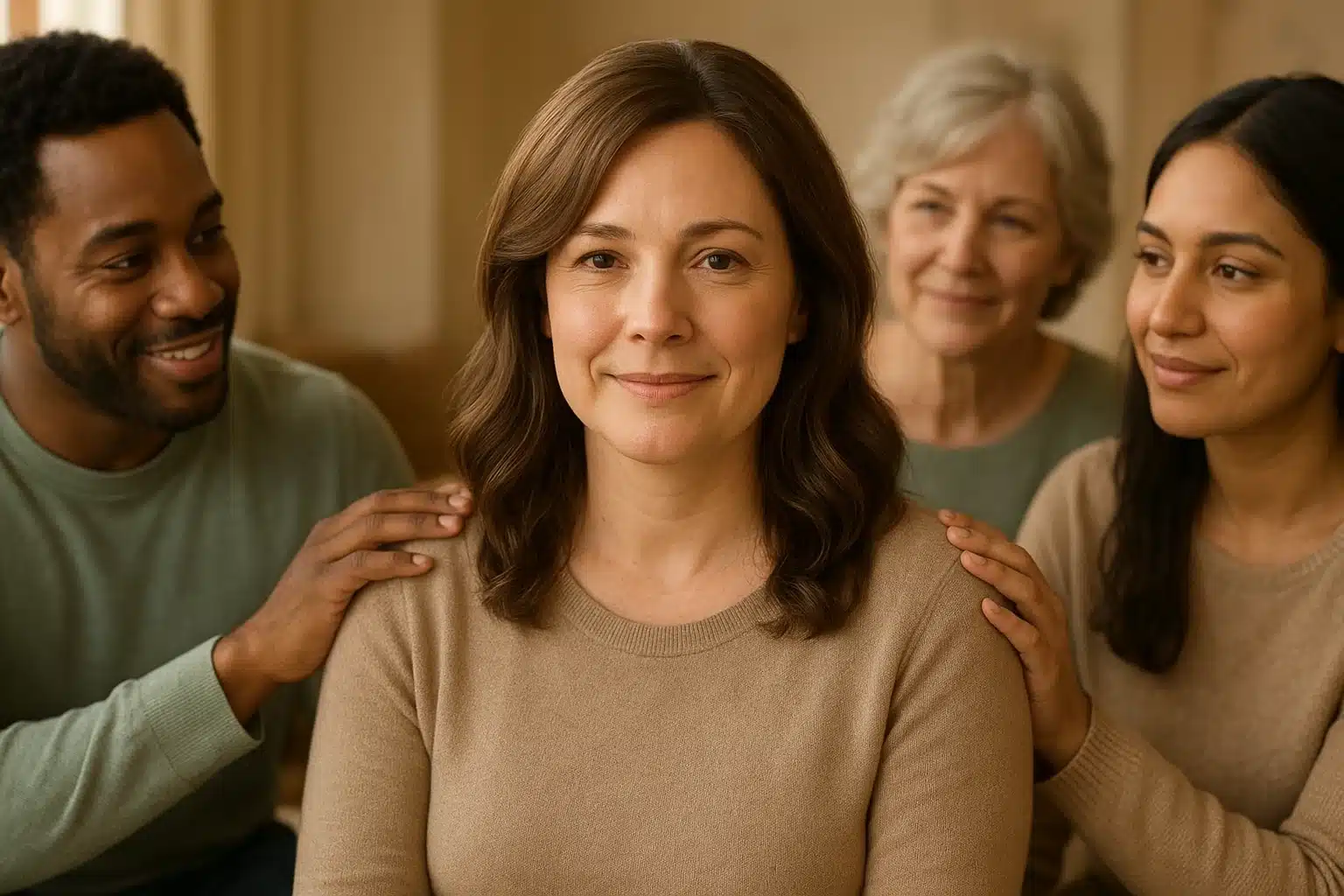
When you first experience hair loss, whether it’s gradual thinning or sudden shedding, the world can feel incredibly small. It’s a moment often marked by silence—standing in front of the mirror, processing changes that feel intensely personal and isolating. But for many women, the turning point isn’t finding the perfect wig; it’s finding the courage to let someone else in on the secret.
Opening up about hair loss transforms a solitary struggle into a shared experience. While the technical aspects of wig-wearing are important, we’ve found that the emotional foundation is what truly determines success. In fact, reading through real stories of wig journeys reveals a common thread: those who thrive often have a circle of support—a partner, a sister, or a best friend—who helped them navigate the transition from anxiety to acceptance.
The Silent Struggle: Why You Shouldn’t Walk Alone
The “Wig Journey” is rarely a straight line. It is a cycle of emotions that typically moves through three distinct phases: Denial, Experimentation, and Confidence.
In the beginning, fear is the dominant emotion. Beginners often ask questions like, “Will everyone know?” or “Will I look like myself?” These aren’t just practical questions about fiber texture or cap construction; they are deep-seated anxieties about identity and social acceptance.
Trying to navigate these fears alone can lead to “analysis paralysis”—spending hours researching but never taking the step to purchase or wear a wig because the emotional barrier is too high. A support system acts as a bridge. They provide the external perspective needed to shatter the internal myths we build up in our minds.
The 3 Pillars of a Strong Support System
Support comes in many shapes and sizes. Through our years of connecting with this community, we’ve identified three distinct roles that loved ones often play. Recognizing these roles can help you ask for exactly what you need.
1. The Emotional Anchor (The Listener)
This person doesn’t need to know anything about lace fronts or monofilament tops. Their role is simply to provide a safe harbor for your feelings. They are the ones you can text when you’re having a bad hair day or feeling vulnerable.
- The “Aha” Moment: Realizing that you don’t need them to fix the hair loss; you just need them to hear your pain so you don’t have to carry it alone.
2. The Confidence Booster (The Validator)
This is the friend who helps you see what you can’t see in the mirror. When we are self-conscious, we tend to fixate on the flaws—the hairline, the density, the part. The Confidence Booster sees the whole picture.
- The “Aha” Moment: When a friend looks at you wearing a new piece and says, “You look like you again,” it validates that the wig isn’t a disguise, but a restoration of self.
3. The Practical Helper (The Logistics Lead)
Sometimes, support is hands-on. This might be a partner who helps you measure your head circumference to ensure the right fit, or a friend who watches tutorials with you to learn how to wash and care for the fiber.
- The “Aha” Moment: Realizing that wig care doesn’t have to be a lonely chore. It can be a bonding activity where you learn a new skill together.
Real Stories: How Love Transformed the Experience
The abstract concept of support becomes powerful when we look at how it plays out in real living rooms and bedrooms.
Sarah and the “First Outing”Sarah had purchased a high-quality synthetic wig but kept it in the box for three weeks. “I was terrified that people would stare,” she recalls. Her husband, sensing her hesitation, didn’t push her. Instead, he suggested a low-stakes outing: a drive to a coffee shop where they wouldn’t even get out of the car.
- The Impact: That small step, supported by a partner who understood her fear, broke the seal. “He held my hand while I adjusted the wig in the visor mirror. He didn’t say ‘it looks fine.’ He said, ‘I see my beautiful wife.’ That gave me the courage to eventually walk into a grocery store, and later, back into my office.”
Elena and the “Honest Mirror”Elena was overwhelmed by the sheer number of styles available. She was gravitating toward styles that “hid” her face, rather than flattered it. Her sister stepped in as the “Honest Mirror.”
- The Impact: “My sister told me gently, ‘That one looks like a helmet, but this one brings out your cheekbones.’ She turned wig shopping from a tragic necessity into a fashion montage. We laughed for the first time in months regarding my hair. That laughter was the best medicine.”
Addressing the Elephant in the Room: Common Fears & Myths
A strong support system is your best defense against the myths that plague new wig wearers.
Myth: “Everyone will notice it’s a wig.”
The Reality: We are often our own harshest critics. We analyze our hairline from two inches away in harsh bathroom lighting.How Support Helps: A trusted friend stands at a conversational distance (3-4 feet) and provides a reality check. They can confirm that to the rest of the world, it just looks like a great hair day.
Myth: “Wearing wigs will damage my remaining biological hair.”
The Reality: When done correctly, wearing a wig is a “protective style” that allows your natural hair to rest and grow without heat styling or environmental damage.How Support Helps: Fear of damage often comes from rushing the process. A supportive friend can help you research proper scalp care routines or assist with braiding your natural hair underneath, ensuring your biological hair stays healthy.
A Guide for the Supporters (Share This Section)
If you are reading this because you love someone who is losing their hair, you might feel helpless. You can’t grow their hair back, but you can be the reason they regain their confidence.
What to Say:
- “I’m here to help you find a solution that makes you feel comfortable.”
- “You don’t have to figure this out today. We can take it one step at a time.”
- “Would you like me to help you browse styles, or do you prefer to do that alone?”
What to Avoid:
- Toxic Positivity: Avoid saying, “It’s just hair, it grows back.” To the wearer, it is a loss of identity. Validate the grief before jumping to the solution.
- Unsolicited Medical Advice: Unless asked, avoid suggesting oils, diets, or miracle cures. They have likely already tried them all.
Building Your Own Circle
Not everyone has a partner or family member ready to step into this role, and that is okay. The definition of family is flexible.
If you don’t have an immediate circle, look to the wider community. There are vibrant online groups and forums where women share their triumphs and struggles. At Wig Superstore, we view ourselves as part of that extended circle. Our goal is to provide not just a product, but the compassionate expertise and educational resources that empower you to make the right choice for your life.
Frequently Asked Questions About the Wig Journey
How do I tell a new partner I wear a wig?
Honesty, timed correctly, is usually best. Many women find that bringing it up casually once trust is established removes the stigma. Remember, confidence is attractive. Owning your look (“I love this hair, it makes getting ready so easy”) sets a positive tone for the conversation.
Can I really rely on my friends for styling advice?
Yes, but choose the right friends. Look for friends whose style you admire and who have a history of being kind but honest. If a friend doesn’t know about wigs, send them a few educational articles (like this one!) so they understand the basics of what to look for.
What if my family doesn’t support my decision to wear hair?
This can be difficult. Some family members may feel you are “hiding” or may not understand the emotional toll of hair loss. In these cases, it is vital to set boundaries. Explain that this is for your mental health and confidence. Often, once they see the positive change in your demeanor, their resistance fades.
Is it normal to feel emotional even after finding a great wig?
Absolutely. Acceptance is a journey, not a destination. You may have days where you love your wig and days where you miss your biological hair. A good support system understands that these feelings can coexist.
Ready to explore more?Your journey is unique, but the path is well-trodden by thousands of women who have found their confidence again. Whether you are looking for your first piece or simply browsing to see what’s possible, remember that you are not just shopping for hair—you are reclaiming your self-image. Take your time, lean on your support system, and know that we are here to help you every step of the way.