The moment you realize hair loss is becoming a defining part of your daily reality, the world can suddenly feel very small. You are likely currently navigating a complex maze of medical advice, product evaluations, and emotional adjustments. It is a phase characterized by intense research and, often, a profound sense of isolation.
However, the most successful journeys through hair loss—those that lead to restored confidence and peace of mind—are rarely undertaken alone. While finding the perfect wig is a tangible solution to the physical aspect of hair loss, finding your “tribe” is the solution to the emotional one.
At Wig Superstore, we have spent nearly two decades witnessing the transformative power of community. We know that discerning clients aren’t just looking for a product; they are looking for validation, understanding, and a path forward. This guide is designed to help you build a robust support ecosystem, moving you from solitary research to empowered connection.
The Science of Support: Why You Shouldn’t Go It Alone
Before we discuss where to find support, it is vital to understand why it is a non-negotiable component of your evaluation journey. You might feel that hair loss is a private battle, but clinical data suggests that shared experience is a critical form of therapy.
According to research published by the National Institutes of Health (PMC6899973), participation in support groups significantly decreases feelings of isolation and improves overall mental health outcomes for patients. When you engage with others who are navigating similar challenges—whether it’s Alopecia Areata, chemotherapy-induced hair loss, or androgenetic alopecia—you are doing more than swapping stories. You are validating your evaluation criteria.
Hearing how others selected their hair systems, how they manage daily maintenance, and how they handled the “first wear” anxiety provides evidence that reduces the perceived risk of your own decisions. It transforms the abstract fear of the unknown into a manageable, shared reality.
Navigating Online Communities: The Digital Safety Net
For many, the first step into community happens behind a screen. The anonymity of the internet allows you to ask vulnerable questions without fear of judgment. However, the quality of online communities varies drastically.
Peer-to-Peer Forums
Platforms like HairLossTalk dominate the landscape because they offer deep segmentation. Whether you are a man or woman, seeking medical treatments or cosmetic solutions, these forums allow you to filter discussions by your specific condition. This segmentation is crucial when you are in the research phase, as it allows you to compare notes with people who have the exact same specific needs as you.
Social Media Groups
Organizations like Alopecia UK run private Facebook groups that offer a more conversational, volunteer-led environment. These spaces are excellent for real-time feedback. For example, if you are currently debating between synthetic options or investing in the best human hair wigs, posting a query in these groups often yields immediate, honest reviews from long-term wearers. You get unfiltered insights into longevity, styling versatility, and comfort that manufacturer descriptions simply cannot convey.
The Rise of Teletherapy
The digital landscape is also evolving professionally. Emerging trends in teledermatology and teletherapy (PMC10552455) highlight a shift toward virtual clinical support. Accessing a therapist who specializes in body image and hair loss via Zoom can bridge the gap between medical treatment and emotional acceptance, ensuring you have professional coping strategies in your arsenal.
The Power of In-Person Connection
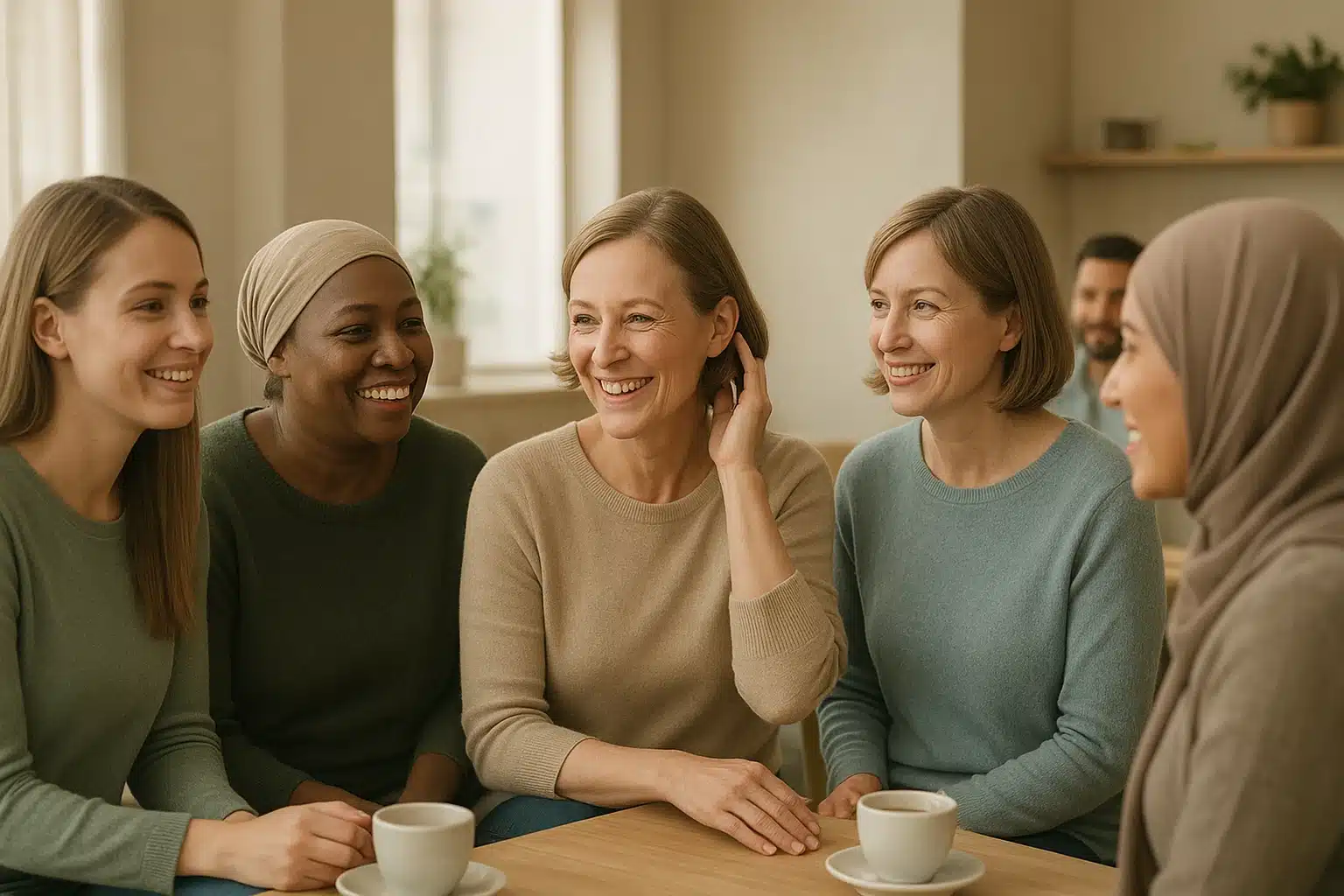
While digital tools are efficient, there is a unique resonance in face-to-face interaction. Being in a room where you don’t have to explain yourself—where your experience is the default, not the exception—is incredibly powerful.
Finding Local Chapters
Trusted organizations like the National Alopecia Areata Foundation (NAAF) and Bald Girls Do Lunch maintain authoritative directories of support groups. NAAF, for instance, focuses on research-backed support and offers listings for meetings across the United States. These gatherings often feature a mix of emotional storytelling and practical workshops.
The “Hybrid” Meetup
We are seeing a trend where groups like Bald Girls Do Lunch are transforming traditional meetups into hybrid online-offline events. This approach combines the intimacy of a local lunch with the accessibility of a webinar, ensuring that even if you cannot travel, you can still “sit at the table.”
Local Retailers as Community Hubs
Sometimes, support comes from the professionals you choose to do business with. A compassionate retailer does more than sell a product; they provide a sanctuary. Whether you are visiting a high-end salon in a major metropolis or searching for wig stores in boise idaho, the goal is to find a physical space where empathy leads the conversation. These local interactions often serve as informal support groups, where licensed professionals can offer personalized advice that respects your dignity.
Building Your Inner Circle: Friends, Family, and Therapists
External communities are vital, but your daily support system—your friends and family—plays the most immediate role in your journey. However, loved ones often struggle with how to help. They may offer well-meaning but dismissive platitudes like, “It’s just hair.”
Educating Your Circle
Part of your strategy should involve educating your inner circle. Share the resources you find. When you explain that your search for a wig isn’t vanity but a quest for identity, you change the dynamic. Inviting a trusted friend to help you browse styles or evaluate color swatches can turn a stressful decision into a bonding experience.
Professional Therapy
Hair loss is a form of grief. Engaging a therapist, particularly one familiar with the psychological impact of medical conditions, provides a safe space to process that grief. This professional support complements the peer support found in groups, creating a holistic safety net.
Next Steps: Moving from Isolation to Action
You are currently in a phase of evaluation—assessing wigs, retailers, and now, support systems. By integrating community into your decision-making process, you gain access to a wealth of collective wisdom that empowers you to make the right choice for your lifestyle.
At Wig Superstore, we believe that high-quality products and compassionate care go hand in hand. We encourage you to use the directories provided by NAAF or Alopecia UK to find your local tribe. And when you are ready to select the hairpiece that helps you feel like yourself again, we are here to provide the industry expertise and premium selection you deserve.
Frequently Asked Questions
Do support groups actually help with the stress of hair loss?
Yes. Research indicates that support groups significantly lower anxiety and feelings of isolation. While they do not treat the physical hair loss, they are effective in improving quality of life and treatment adherence.
How do I find a support group if I want to remain anonymous?
Online forums like HairLossTalk or private Facebook groups allow you to participate with varying levels of anonymity. You can observe and read discussions (“lurk”) until you feel comfortable sharing your own story.
Are online wig communities reliable sources of information?
Generally, yes, but it is important to look for moderated communities. Groups run by established organizations like Alopecia UK or NAAF are monitored to ensure information is accurate and the environment remains supportive rather than toxic.
Can I bring a friend or partner to a support group meeting?
Most support groups, especially those focused on alopecia or medical hair loss, welcome loved ones. Having a support person present can help them better understand what you are going through and how to support you effectively.
Is professional therapy necessary for hair loss?
While not mandatory, therapy is highly recommended if hair loss is affecting your self-esteem, social life, or causing depression. Teletherapy has made accessing specialists easier than ever, allowing you to get help from the privacy of your home.